Fiji – Yasawas Part 3 – Night Snorkel & Bull Sharks

Although I spent most of my time in Fiji in the water, I did take the opportunity to visit a local village during my stay. Many of the people who worked at the hotel I stayed at came from this nearby village. We had a tour guide for our visit and he said that a lot has changed since the resort was built. Walking around town, there were solar panels providing electricity to many houses as well as backup water tanks. Most houses had moved their kitchens indoors out of the rain. We were able to peek inside the local church, medical offices, and school but none of these were in session.

The most interesting thing for me was the lali drum in the center of the village near the church. When it is hit, it makes a deep resonant sound that calls villagers in for meetings or to celebrate an event. Lali drums are still used today and continue to play an important role in Fijian culture and traditions.

Fijian church, lali drum, alphabet paintings on school wall

I had already done a night dive, but I figured I could squeeze in at least one more night adventure at the next place I stopped. It ended up being a good one. I saw a Partridge Tun Snail that was over a foot long and slowly making its way along the seafloor. Their main source of food is sea cucumbers which are also much more plentiful at night. There were also a couple of turtles and reef sharks ominously swimming around us. Every so often I’d catch a glimpse of a tail or a fin. Reef sharks are generally not aggressive and they feed on tiny fish and crustaceans. They seemed to be mostly curious about the group of humans in the water while keeping their distance.
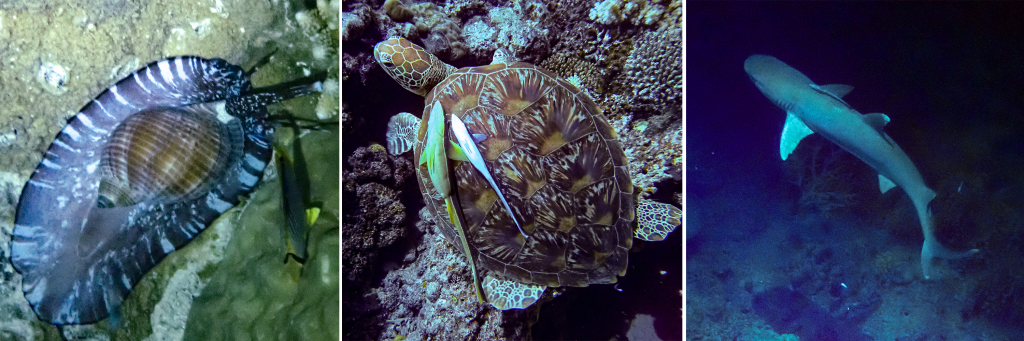
Partridge Tun Snail, Green Sea Turtle (with remoras on its back), Blacktip Reef Shark

Sea cucumbers come out in force in the evening hours. I continue to delight in all the shapes, sizes, and textures that they come in. They are so strange and loveable, looking like giant blobs making their way ever so slowly across the ocean floor.
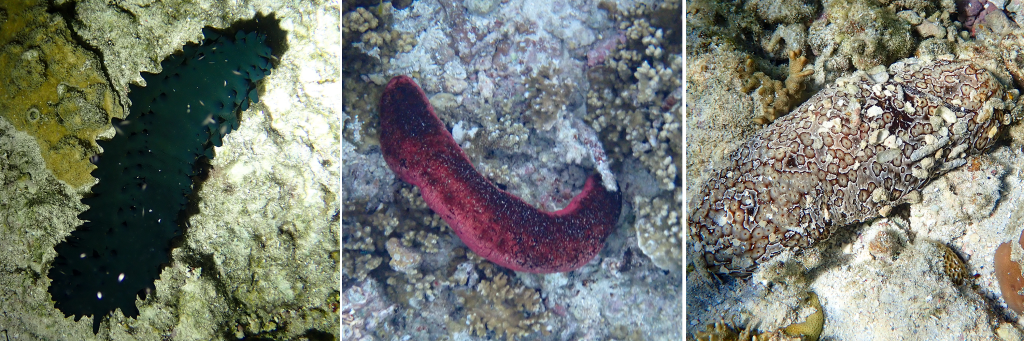
Greenfish Sea Cucumber, Pinkfish Sea Cucumber, Leopard Sea Cucumber

The one in the photo below is a bit smaller, but while in Fiji I saw a Graeffe’s Sea Cucumber that was over two feet long. During the same night snorkel, our guide also managed to spot another day octopus out and about after dark. I’m beginning to think this species needs a new common name, although plenty of people insist they do see them during the day as well. At first glance, the Lion’s Paw Sea Cucumber looks almost like a snake lying on the seafloor. Once it starts moving, though, it resembles a wrinkled, expandable garden hose slowly inching its way across the ocean floor.
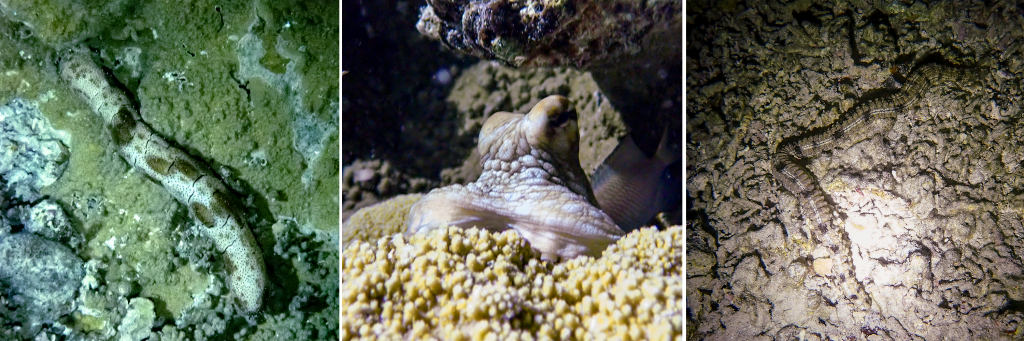
Graeffe’s Sea Cucumber, Day Octopus, Lion’s Paw Sea Cucumber

To be honest, I’m generally not that into fish. Some species, like the lagoon triggerfish (also the state fish of Hawaiʻi), are relatively easy to identify because their patterns are so unique and distinctive. When I first started snorkeling, I often felt overwhelmed trying to identify and name different species. After each trip, I would go home, download my photos, and carefully upload them to iNaturalist so I could learn their names. That approach was genuinely helpful. I began to recognize different fish shapes and groupings, even if the specific species names did not always stick.

In many ways, that is still how I think about fish. Does it fit into a group I already recognize? Or does it stand out as something distinctive? Are the patterns interesting? Does it have an unusual color pattern or a unique shape? Any of these traits might prompt me to reach for my camera and pay closer attention when identifying it later on iNaturalist.

There is no single right way to learn about sea life. It is perfectly fine to snorkel or scuba dive and simply appreciate the beauty of coral reefs without knowing any names. For me, learning some of their names adds another layer of enjoyment. Names open the door to a deeper understanding, giving me access to each species’ story, behavior, diet, and role within its ecosystem.
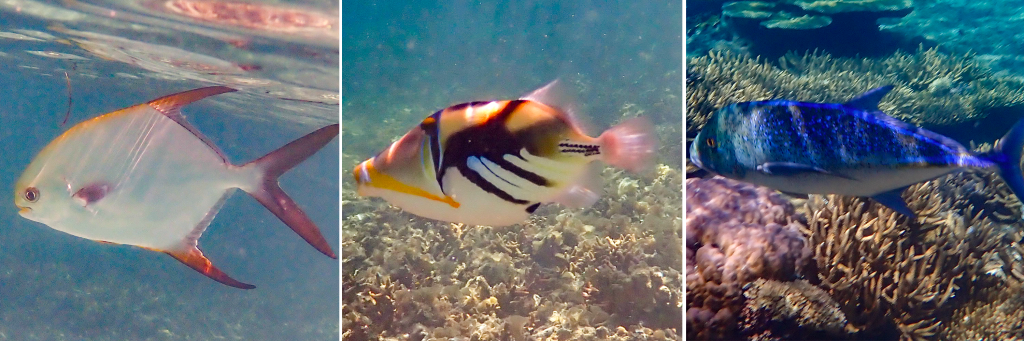
Snubnose Dart, Lagoon Triggerfish, Bluefish Trevally

These giant clams also have a symbiotic relationship with dinoflagellates, just like the corals I mentioned in the last blog, a relationship known as photosymbiosis. The phytoplankton carry out photosynthesis and produce sugars that provide about 60-70% of the energy the clam needs to function. The rest of its diet comes from particles it filters out of the surrounding water.
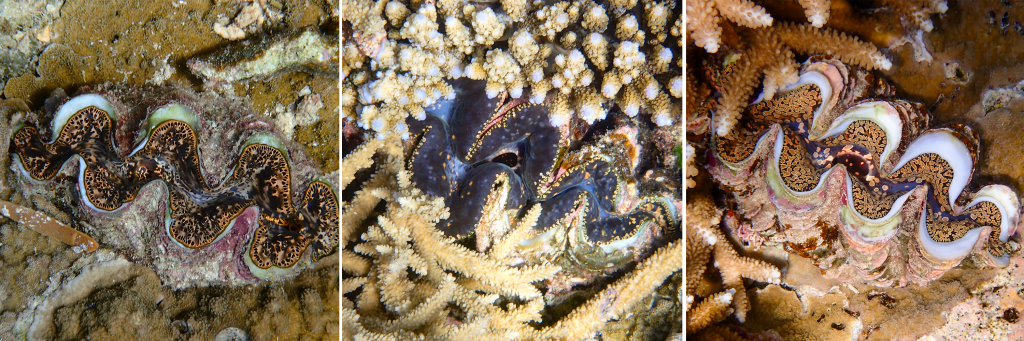
Small Giant Clam, Small Giant Clam, Noah’s Giant Clam

The clam has two openings in its mantle: the incurrent siphon, which it uses to draw water in, and the excurrent siphon, which it uses to expel water. In between, it filters detritus and plankton from the water and transports them to its mouth for digestion.
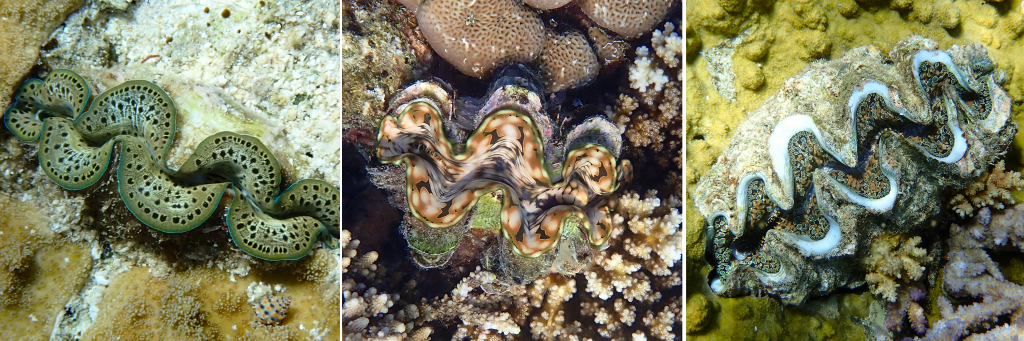
Small Giant Clam, Fluted Giant Clam, Noah’s Giant Clam

The first time I snorkeled with a California Leopard Shark I remember how my breath caught just for a moment, before my brain could remind my body to calm down and just enjoy the experience. Leopard Sharks are harmless, but much of the media surrounding sharks has turned all sharks into feared creatures far out of proportion to the actual risk they pose. We are about 50 times more likely to die from being struck from lightning than being attacked by a shark.

Nonetheless, I’ve had to learn to manage my fear and recognize real risk versus perceived risk. The black and white reef tip sharks in the photos above rarely ever attack humans. There are a handful of records of them biting humans, but generally they are shy and remain apart from divers.

There are however three species that account for the most shark attacks: Great White Sharks, Tiger Sharks and Bull Sharks. I have absolutely no interest in cage diving with Great White Sharks, but one resort in Fiji has been offering daily Bull Shark dives for over two decades, and I signed up.
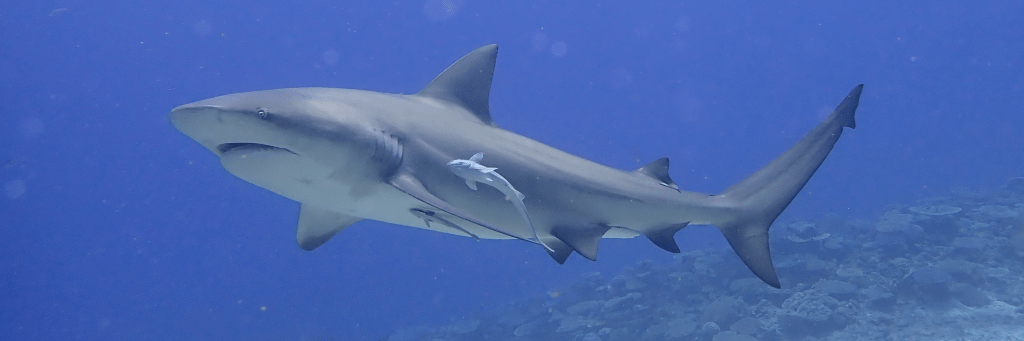
Bull Shark (with two remoras close by)

Remoras are interesting fish with a suction-disk on top of their heads that allows them to attach to the undersides of larger animal. They eat the leftover morsels that the sharks don’t grab, as well as waste 💩 that comes from their hosts.
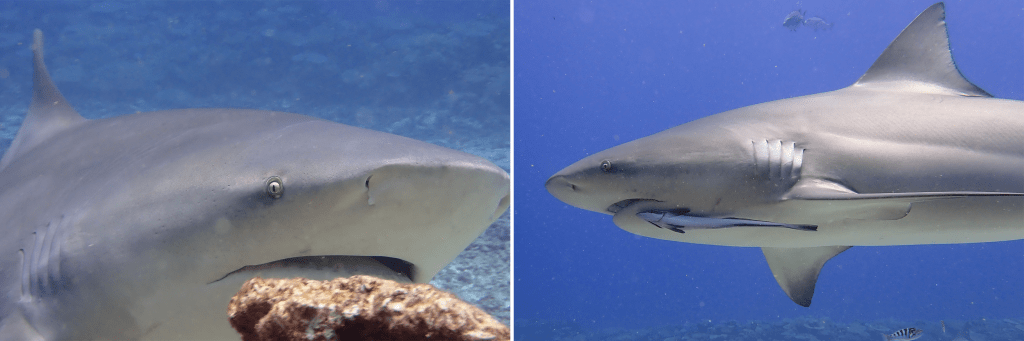
close up of Bull Shark face, Remora attached to bottom of shark’s head

Bull Sharks have the scientific name Carcharhinus leucas. The first part comes from the Greek karcharos which means sharp and rhinos which means nose. Leucas from the Greek word for white which apparently refers to their white underbelly.

This dive is very different from regular scuba dives. The dive starts with a swim over a shelf and then descends to a viewing platform. All the tourists crouch on their knees behind a rock wall and everyone has a bodyguard standing behind them. Each bodyguard has a metal pole that ends in a triangle shape (see photo below). They use this pole to gently guide the shark away from the tourists when they get too close. Once everyone is ready, other staff members start feeding the sharks fish heads. Tours happen twice a day and the sharks are really good at showing up for meal times.
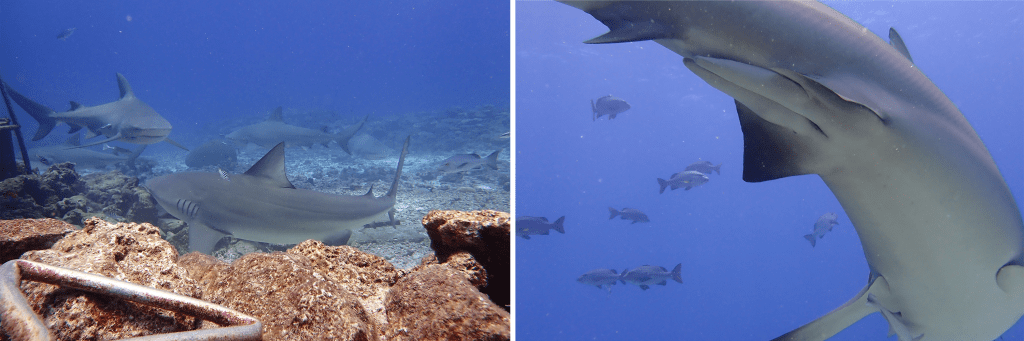
bodyguard pole, male shark’s reproductive organs called claspers

In the picture above, the male shark’s claspers are also visible. For whatever reason, male sharks have two organs that can be used to inseminate a female shark. They only use one at a time during intercourse, apparently whichever one is more convenient based on which side they are on.

The sharks did get very close and often swam right next the divers. I thought the whole experience was magical and surreal. There were several giant sharks swimming around me, but inside I just felt completely calm. I felt safe and protected by my bodyguard and just very lucky to have the experience.
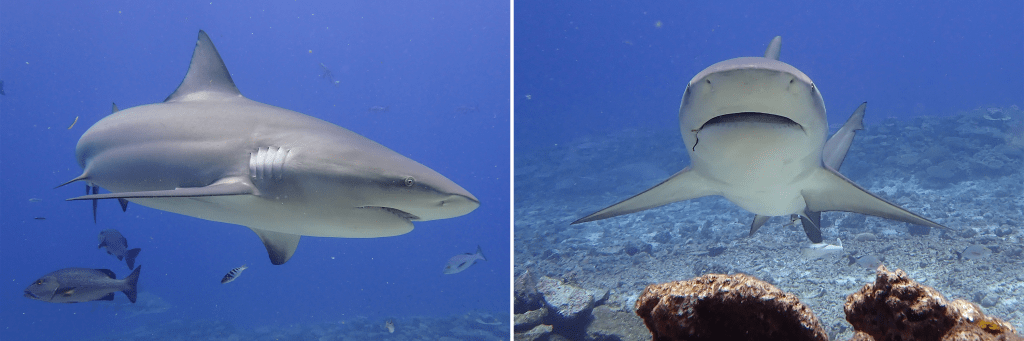
more shark close-ups (notice the hook on the shark’s mouth)

This video doesn’t fully capture the experience, but it at least gives a small taste of what it was like. (I recommend watching it in full screen.) Also, I want to give a big thank you to the scuba staff photographer who taught me how to properly use white balance at depth so my photos are finally coming out much closer to their true colors.
Fiji – Yasawas Part 2 – Coral Reefs

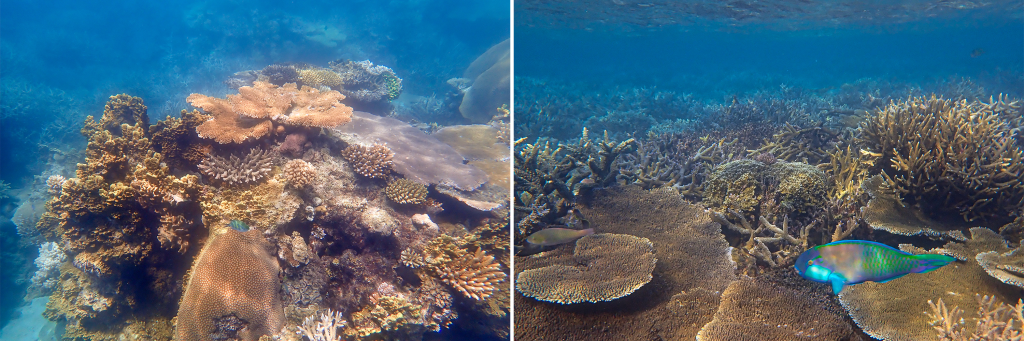
I slowly made my way down the Yasawas, stopping at a couple resorts along the way back to the main island. It is impossible to capture how stunning it is to swim out from shore and be surrounded by yards of coral reefs in crystal clear waters.

Although corals can grow in a variety of environments, most coral reefs are found between 30°N and 30°S latitudes. Corals are small animals that capture and eat plankton using stinging cells, similar to jellyfish. However, they also host a type of symbiotic plankton called dinoflagellates. These dinoflagellates perform photosynthesis and produce sugars that corals use for energy to grow, build, and survive. In return, corals provide the dinoflagellates with a safe place to live.

A single coral structure contains hundreds of genetically identical individuals living together as a colony. This cooperative structure allows them to sustain themselves and build the protective coral skeleton that shelters the entire colony. Corals require abundant sunlight and nutrient-poor water to thrive. When nutrient levels rise (particularly nitrogen, phosphorus, potassium, and iron), algae can flourish, overgrow the coral, and block the sunlight they depend on for survival.

coral reefs stretching forever

The beautiful colors of coral reefs come from the dinoflagellates living within them. When ocean temperatures rise too high, the chloroplasts in these organisms become stressed and release oxygen. This oxygen damages the coral’s cells, and the coral expels the dinoflagellates for behaving badly. This process is known as coral bleaching, and such events are becoming more common as ocean temperatures continue to rise in these regions.

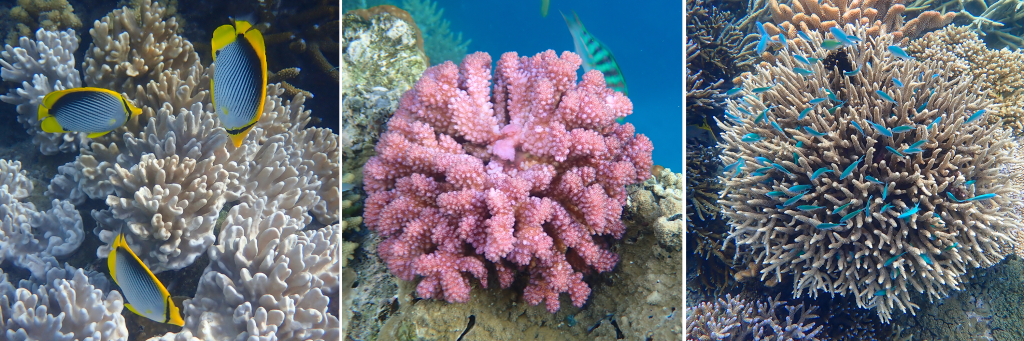
Blackback Butterflyfish with corals, Cauliflower Coral, Black-axil Chromises

If the water cools down in time, corals may allow the dinoflagellates to return. However, if the water remains too warm for too long, the corals can become permanently bleached. This is because corals obtain up to 90% of their energy from their symbiotic plankton and often die when that energy source is lost.

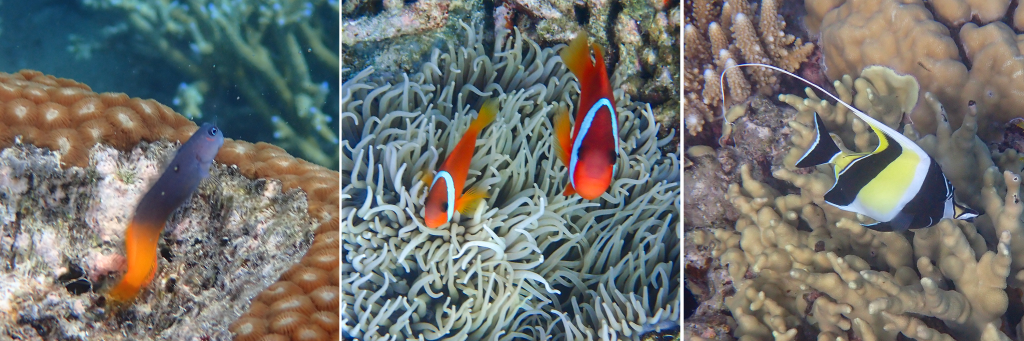
Bicolor Blenny, Fiji Tomato Clownfish, Moorish Idol

Coral reefs cover less than 1% of the ocean floor, yet they are among the most important ecosystems in the ocean because they serve as nurseries for many species. They provide shelter and protection where young organisms can hide and grow until they are large enough to fend for themselves.

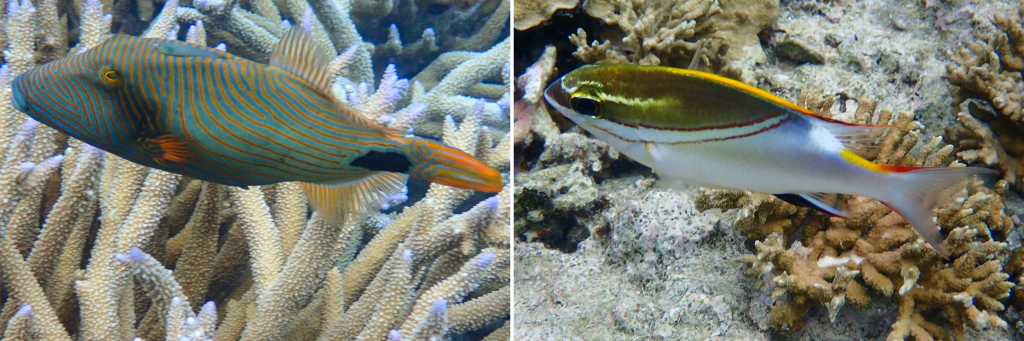
Orangestripe Triggerfish, Bridled Monocle Bream

Corals are considered to be foundation species, because the entire coral reef ecosystem wouldn’t exist without their skeletons. These animals create an area that allows all these other organisms to thrive.

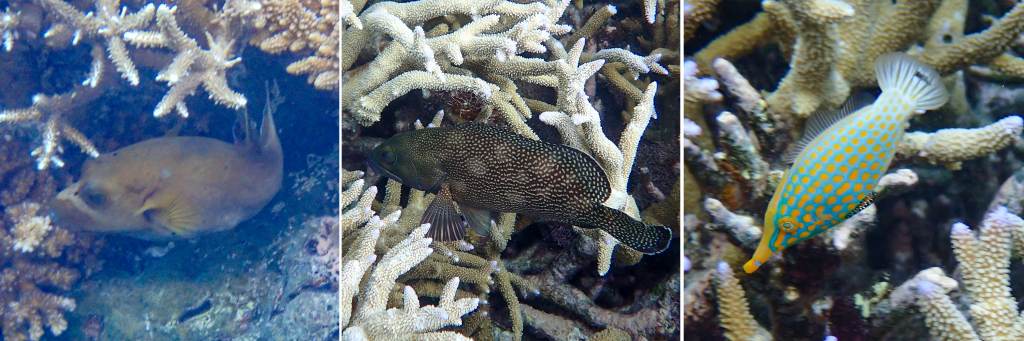
Blackspotted Puffer, Specklefin Grouper, Longnose Filefish

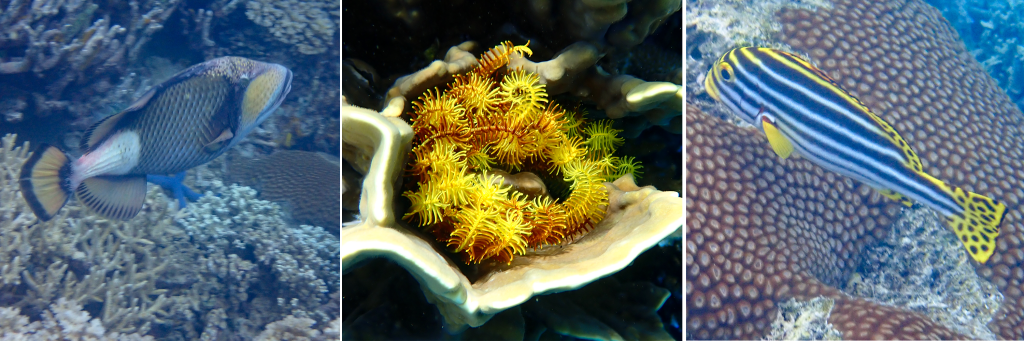
The corals in these photos are part of a Marine Protected Area. In this case, this means that people cannot fish or remove species from the area. As fish and other organisms mature within the MPA, they gradually move into surrounding waters, where they can help repopulate other regions or become part of the food web for humans and other animals. Marine Protected Areas allow organisms, especially fish, to grow large enough to reproduce and sustain future generations.

Titan Triggerfish, Bushy Feather Star, Oriental Sweetlips

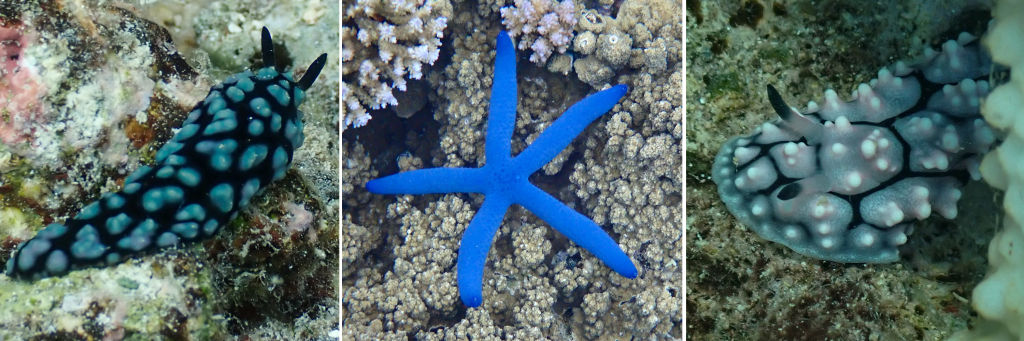
As always, I went out looking for nudibranchs, and although there weren’t very many, I did manage to find a couple hiding between the corals.

Pustulose Wart Slug, Blue Linckia, Krempf’s Phyllidiopsis

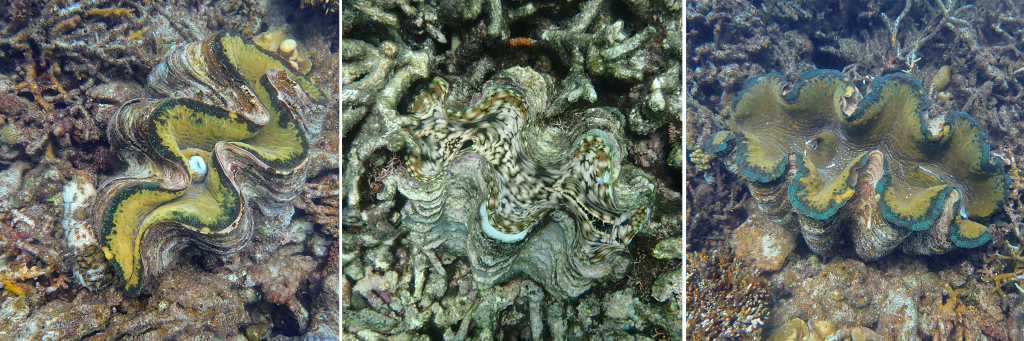
Giants clams of all kinds continue to be my other favorite invertebrate find. The patterns on their mantles are intricately colored and vary dramatically between individuals.

Gigas Giant Clam, Fluted Giant Clam, Gigas Giant Clam

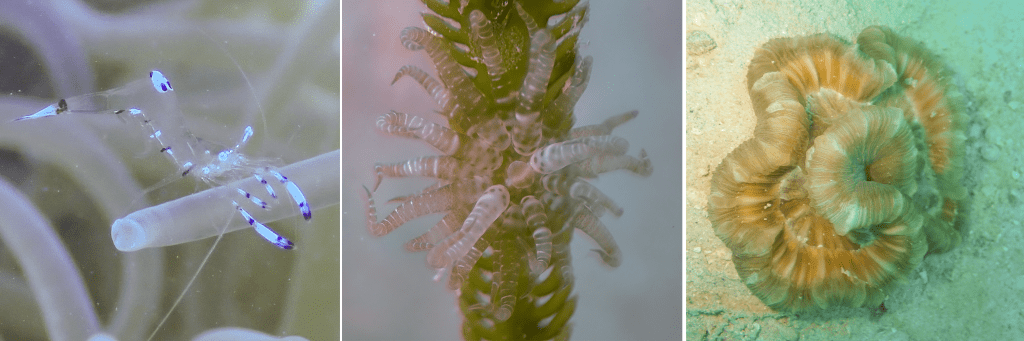
I had heard rumors of some tiny nudibranchs down in the sandy bottoms, so I signed myself up for a muck dive. This is basically looking through sediment for weird, camouflaged organisms. I didn’t find any nudibranchs unfortunately, but I did see transparent shrimp and this tiny, patterned anemone attached to a blade of seaweed.

Sarasvati Anemone Shrimp, Swimming Anemone, Banana Coral

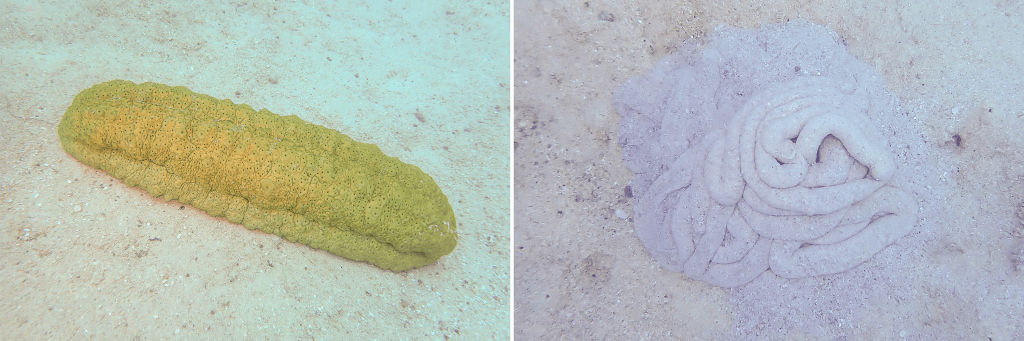
The most ridiculous muck dive find was a giant yellow sea cucumber that was over two feet long. Sea cucumbers feed on detritus (poop and decaying organic matter) from the ocean floor. They ingest sand, digest the organic material within it, and then get rid of the remaining sand out of their back end. Nearby was evidence of its recent activity, a large mound of sandy poop that was at least a foot across.

Herrmann’s Sea Cucumber (over 2 ft long), giant pile of sea cucumber poop (1 ft across)

Fiji Wonderings

Jet-lagged and still coping with time differences, I woke up at 5am to the tapering end of a massive rain storm. I stumbled out of bed, grabbed my headlamp, and pulled my sneakers on to head out on a “mountain” hike. Mountain is truly a bit of an exaggeration for a steep hill located on a small island in the Yasawas of northwestern Fiji. Winding behind the staff quarters, I glanced up to a see a 4-inch spider hovering around her eggs high up in a web stretching from the fence to the building behind it. As I left the property, the hike headed mostly up at an angle that would’ve been challenging on a dry day, but was made even more complicated by the water running through the middle of the path. I eventually just embraced the squishy mud and started making steady progress to the top. Somewhere along the way, I noticed footsteps in the mud, sometimes in a flat shoe, sometimes with toes spread wide. Yet it seemed to be just one person walking due to the gait and placements of the steps.

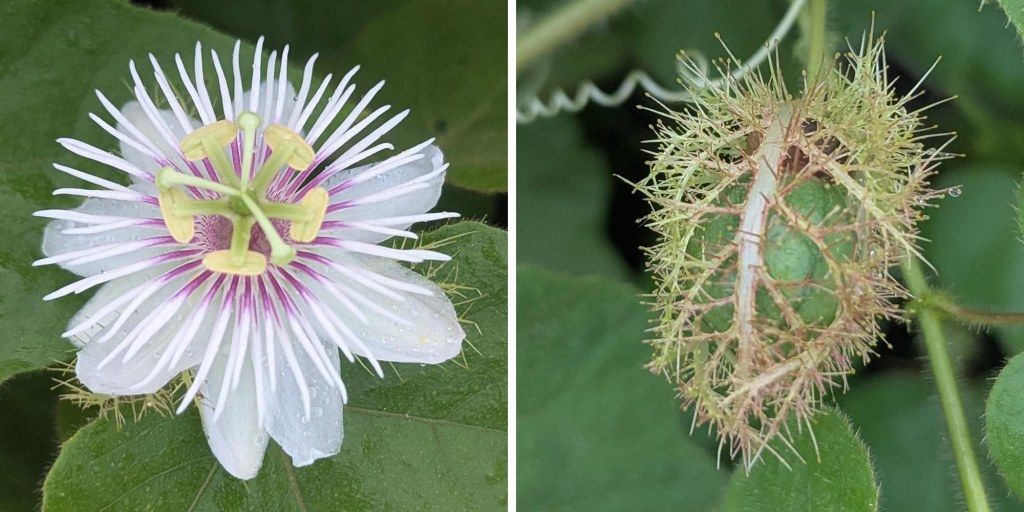
Through the cover of trees, I walked, stopping briefly to check out a passion flower plant. They all have an outer ring of rounded petals, followed by a ring of slender multi-colored petals sticking straight out. In the scientific literature, these are called corona filaments: corona like the outermost plasma surrounding the sun, filament like the tiny wire that burns so brightly in an incandescent bulb. These skinny petals form a ring around the dangling male anthers, filled with pollen, ready to be brushed away on the back of a visiting bumblebee. The hanging, sticky female stigmas are situated even higher, above the male organs, ready to hold on to pollen from other plants arriving via those same pollinators.

passion flower and passion fruit

I know this plant well since a vine of passion flower grows on my back fence at home. I was confident in my ability to recognize it, but this passion fruit was different. Instead of the round purple fruits that deflate into a squashed balloon when they’re ready to eat, this passion fruit was green and enclosed in a green cage of spiky, sticky protrusions clearly meant to protect. It looked other worldly and yet this was natural armor, created through years of gradual modifications. Whenever I see a new plant, my mind jumps to two questions: Can I eat it? Is it native? 1 Out there, on the “mountain,” I had no phone service, so I shelved these questions for later and kept walking.

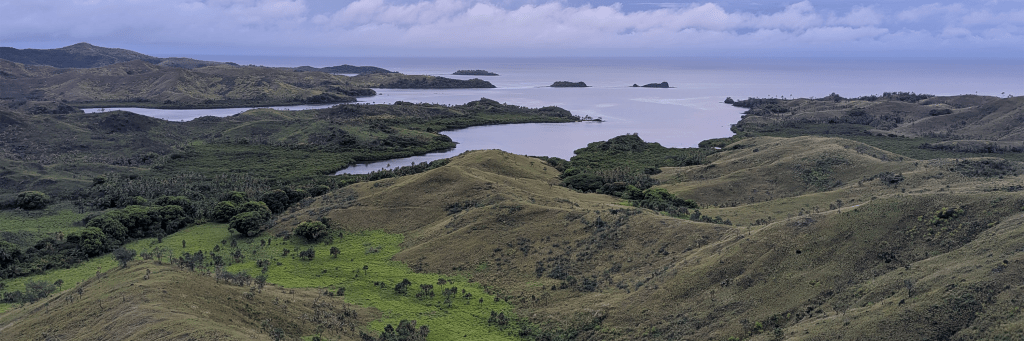
I passed the one other person who climbed the mountain before me that morning. He was wearing flip flops and the footprints from the start of the hike started to make sense. When he got to the muddy part of the hill, he took off his sandals when they got stuck and tried a barefoot approach. He nodded a hello and I did the same, silently acknowledging the strange and awkward fellowship of two random people who felt the need to rise before the sun was up in order to solo climb a ridiculously muddy hill during a break in a downpour. No words were necessary, this was not the time to disturb his serenity or mine. I followed the trail towards the open ocean to the north, which was rapidly appearing in my view along the edge of the hillside.

view towards the northern end of Nacula Island

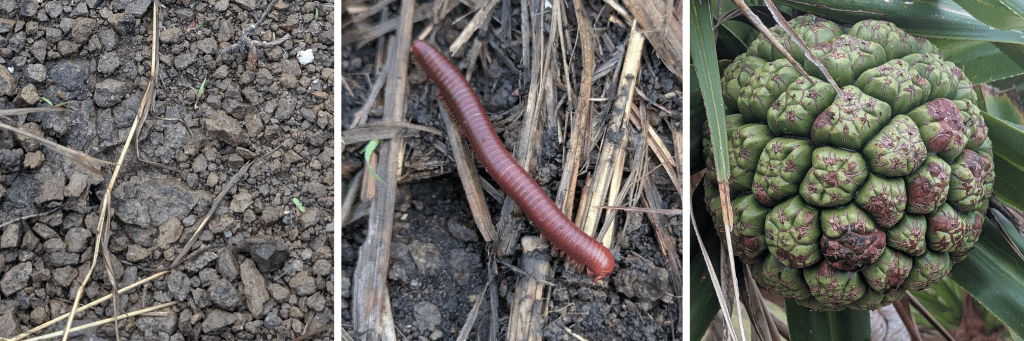
As I squatted to rest and embrace the view, I noticed the reddish brownish rock beneath my feet. Volcanic in origin, probably basalt, formed underwater and then brought up to the surface. I had more questions: How did these volcanic islands pop out of the Indian Ocean? Were they formed from hot spots or is this on the edge of a subduction zone? How long ago did this happen? 2 Curiosity is a restless creature. Once you open the gate, it carries you off with no promise of where you’ll end up.

The view over the north side of the island was stunning. The sun had risen during my hike, but it was hidden behind the clouds. The path forward looked like a solid descent to the ocean on the north side, and I wasn’t in the mood to climb back up, so I turned around and started hiking back. On the way, I saw a millipede crossing my path. Or was it a centipede? Was it poisonous? Is it centipedes or millipedes that are poisonous? I wasn’t sure what I was looking at, so I snapped a photo to identify on iNaturalist later. 3

Before I reached the steep hill back down to the hotel, I came across a hala tree which was identifiable because of its bumpy faintly-pineapple shaped fruit. They’re very common throughout the Pacific Islands because they grow in rough soil and salty environments. On a previous trip to Hawaiʻi, I’d learned that Polynesians used to weave the leaves into giant canoe sails. These were the sails that took early explorers thousands of miles across the ocean.

basalt, Rusty Millipede, hala fruit

Sometimes I just have to laugh. I had gone on this hike to clear my mind and relax. By the time I returned to the hotel, I had ten more questions that I wanted answers for. But that’s also the beautiful part of staying curious about the natural world, it keeps me present in the world around me. All the questions are both grounding and expansive, somehow at the same time. When I make a new friend, it takes an investment of time, energy and care before the other person trusts me. Meeting a place is very similar, and slowly, little by little (with a little help from the internet), it reveals its secrets.

Footnotes

  1. The type of passionflower in Fiji I saw is known as Passiflora foetida, the stinking passionflower. While waiting for the sun to go down for my night scuba, my scuba guide confirmed it is edible, but not during the season that I was visiting. This species is not native to Fiji, but is native to the southwestern United States, parts of the Caribbean, Central America and South America. ↩︎
  2. The Yasawa Islands formed about 8 million years ago as part of a volcanic island arc. They developed above a subduction zone, where one tectonic plate was forced under another. As the descending plate sank into the mantle, it released water and other fluids, which lowered the melting point of the overlying mantle. This caused partial melting and generated magma that rose through the crust and erupted first on the seafloor and later above sea level, building the islands. ↩︎
  3. It was a Rusty Millipede (Trigoniulus corallinus). ↩︎