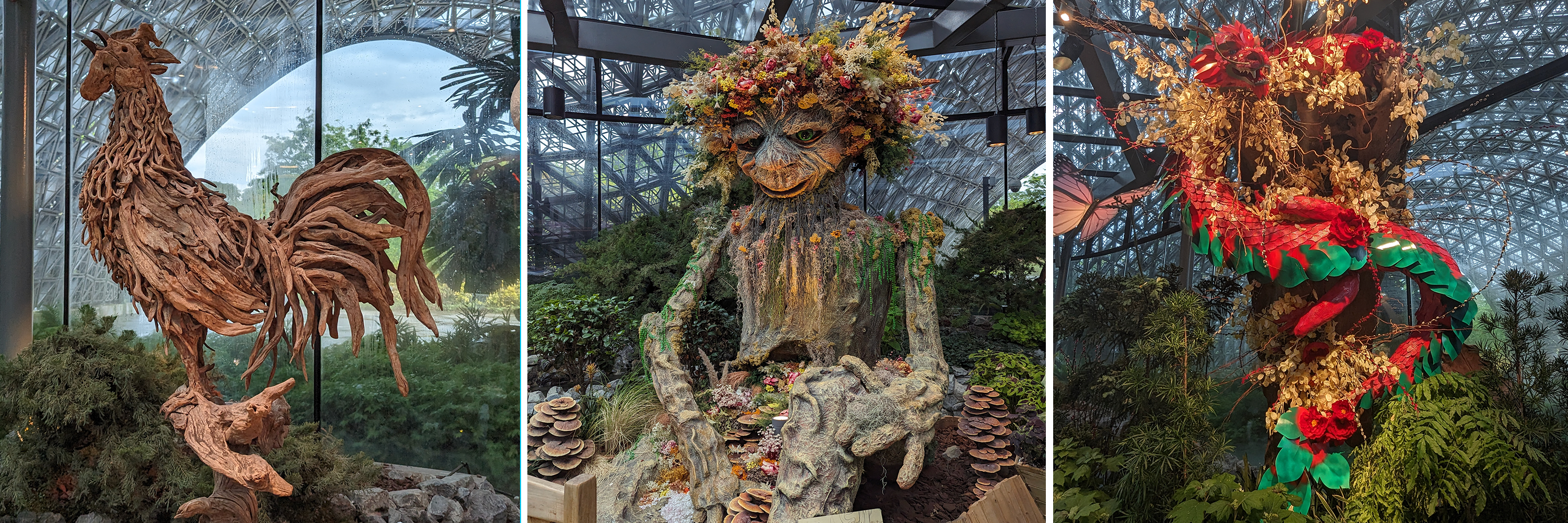
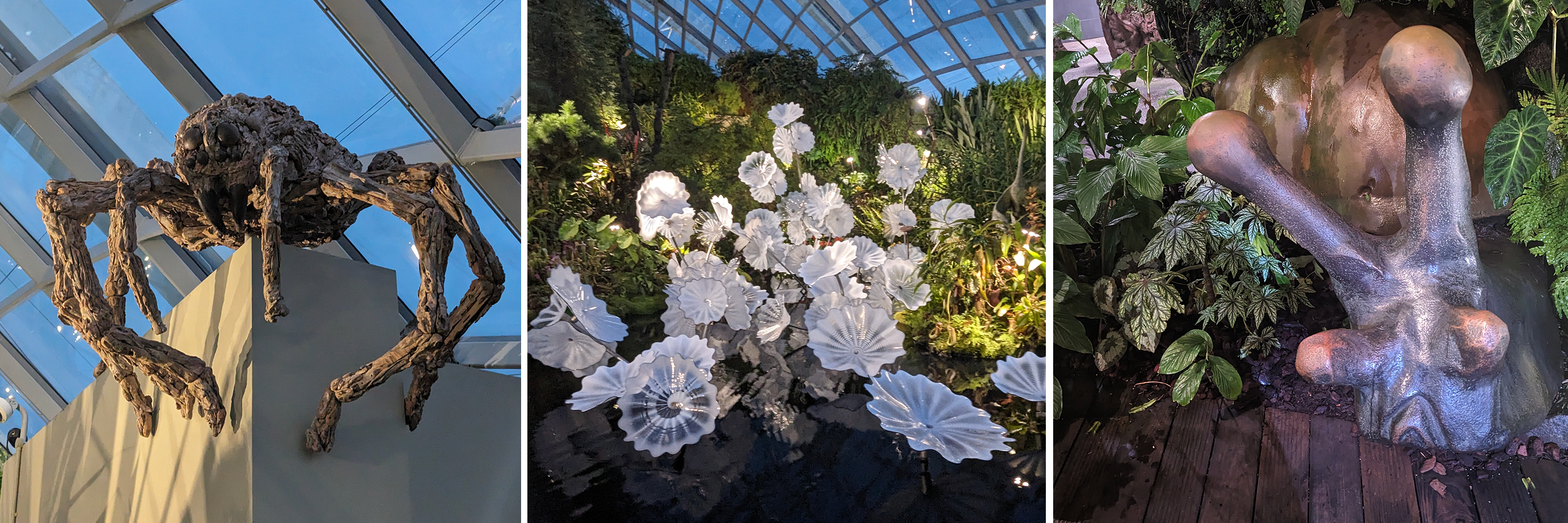
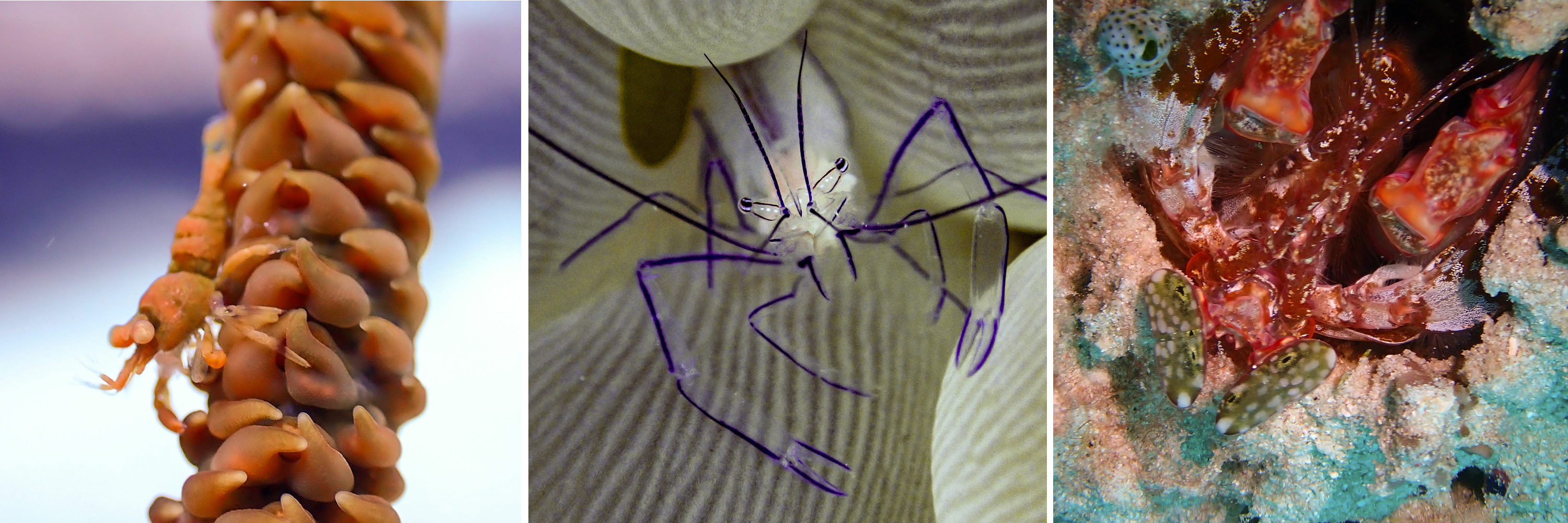
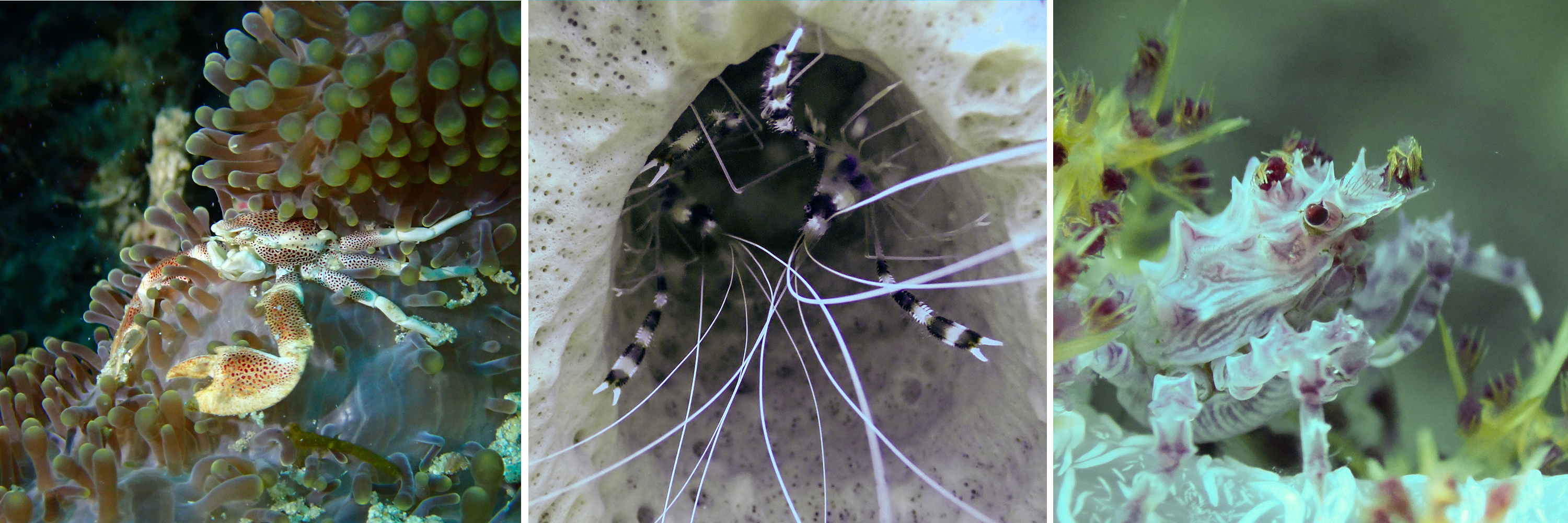
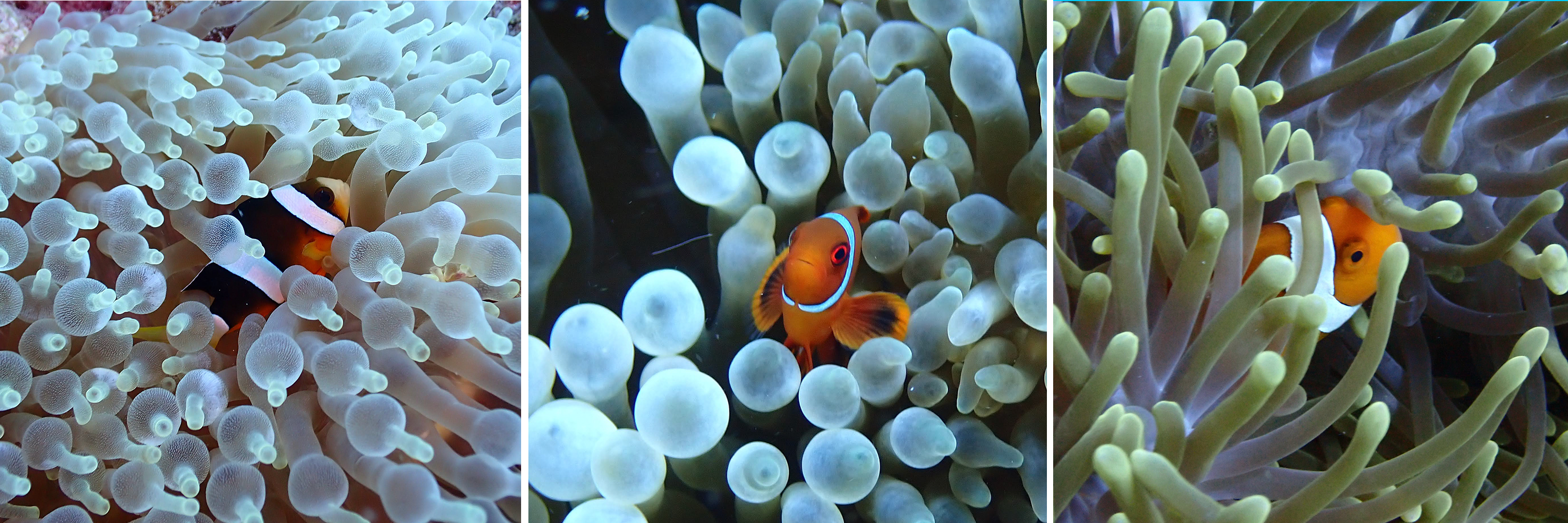
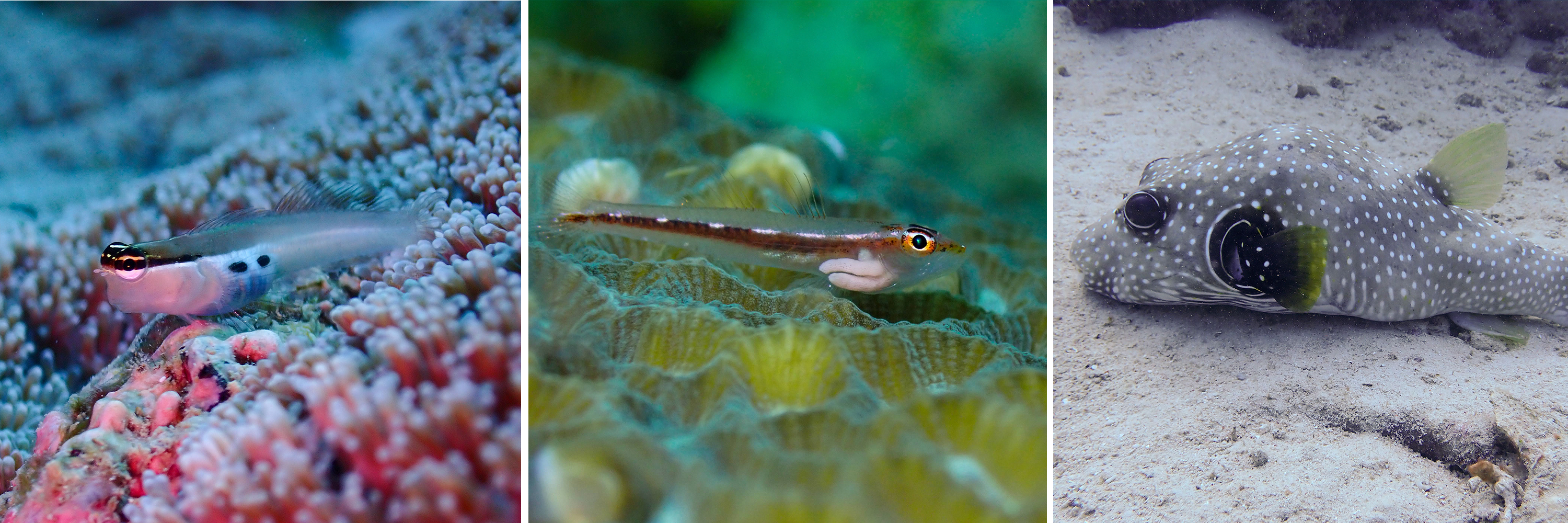
Here’s the second blog post filled with marine creatures from Indonesia. Remember you can click on an any image if you want to see it in more detail. First up are the arthropods – lots of crabs, shrimp, and lobsters.
Followed by some cuttlefish and a turtle. Most cuttlefish I’ve seen in aquariums are quite small, but these are a couple feet in length. They are incredibly still and you could swim right by one and not even notice. In fact, on my first dive I saw one and grabbed my guide’s leg to get his attention. He thought I was in some kind of distress, but quickly calmed down when he saw the cuttlefish I was fangirling over.
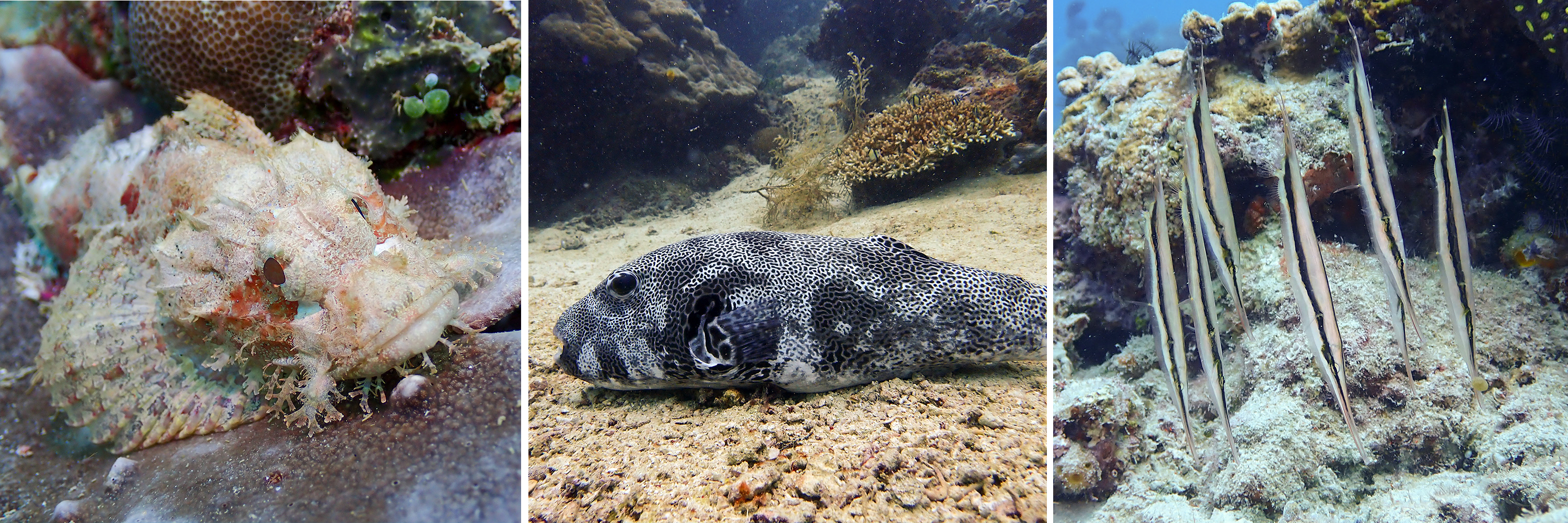
The crocodile flathead was a new one for me and I have so many questions about how the flap of skin over its eyes help or harm its vision. The harlequin sweetlips swims like a bat out of hell (see video below). My guide Maja took the photo of it where it looks so calm and I still have no idea how he did it, because it almost never stops moving.
Crocodile Flathead, close-up of its eye, Harlequin Sweetlips
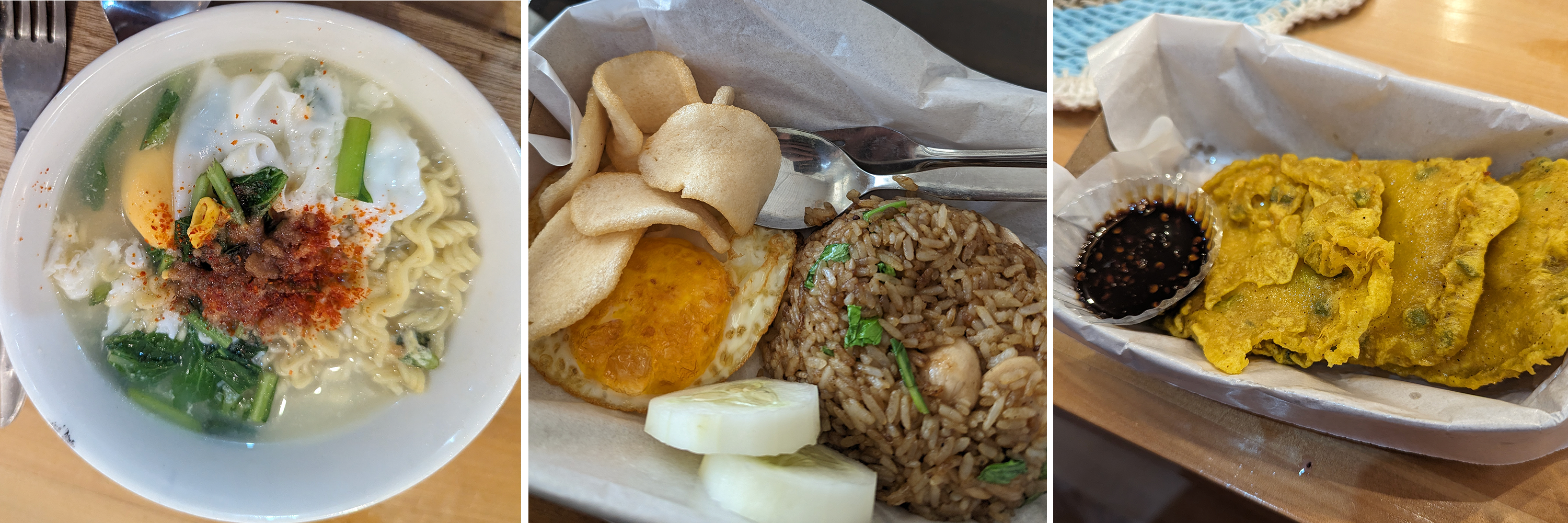
In Jakarta, there were always plenty of vegetarian options, but on Derawan Island, there was a lot less choice in general because the island was so tiny. However, I found a few places that offered up rice and noodle dishes that were meat-free. I ate a lot of tempeh while I was there for protein.
After getting my scuba certification while I was still in graduate school, I never went diving again. I did my certification dives in cold Monterey, California and when they had me clear my mask, it freaked me out to have my nose in such freezing water unable to breathe. I kept popping up to the surface because my weights were off and, at the time, I decided it was an expensive sport that I couldn’t really afford anyways.
However, when I was planning this trip, I realized I probably was just hiding behind my fears and I should try and tackle them. I booked a five-night stay on Derawan Island with scuba dives planned for three times a day with a private refresher lesson on the first day. I definitely was nervous and uncomfortable and right before we were supposed to go down, I had a very clear moment of “oh, hell no, I’m not doing this.” However, I was able to take a bunch of deep breaths and calm down and my very patient scuba dive instructor Maja helped me get through my initial moment of panic. Funnily enough, as soon as I was underwater, I was fine. I’ve been snorkeling for years and have all the underwater practices of clearing my mask and breathing through my mouth.
Fear is a lurking ghost that hides inside us, haunting our actions, until one day, we push through it and it’s just gone. As soon as I realized I could do it, and how beautiful it was down below, the fear vanished and instead, I was able to just enjoy all the beautiful scenery and marine life. I still struggled to adjust the air in my BCD and it was hard for me to stay still. But those are skills that come with practice and I was already improving in my few days of diving.
view from my above-water bungalow
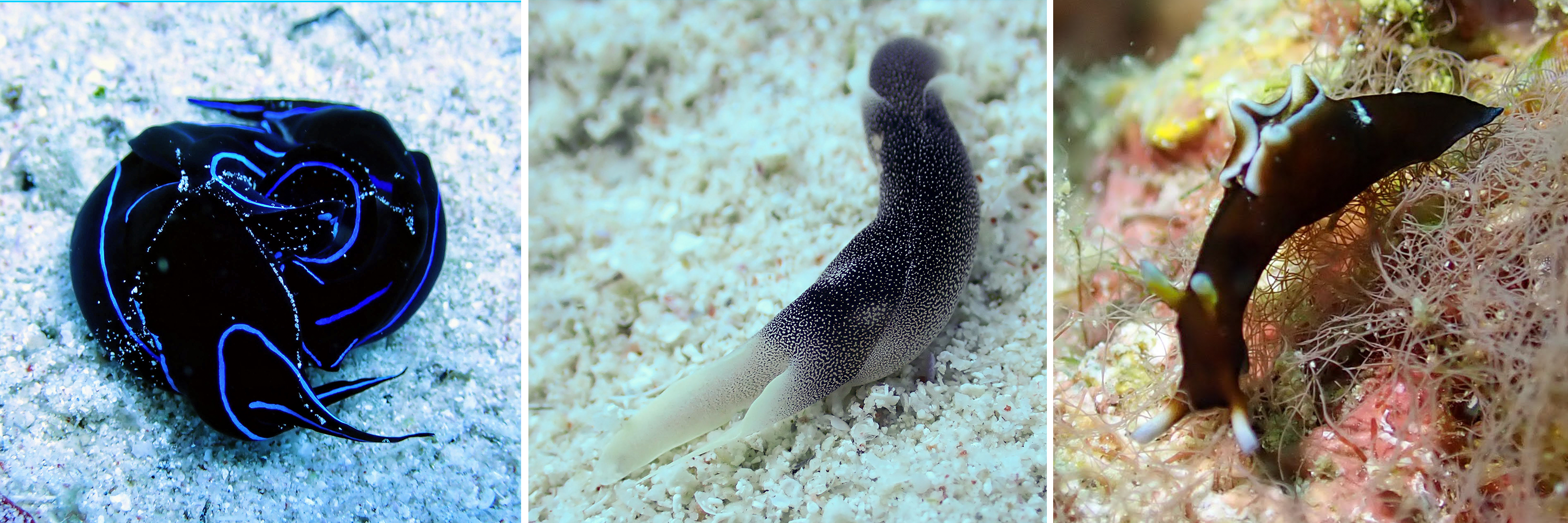
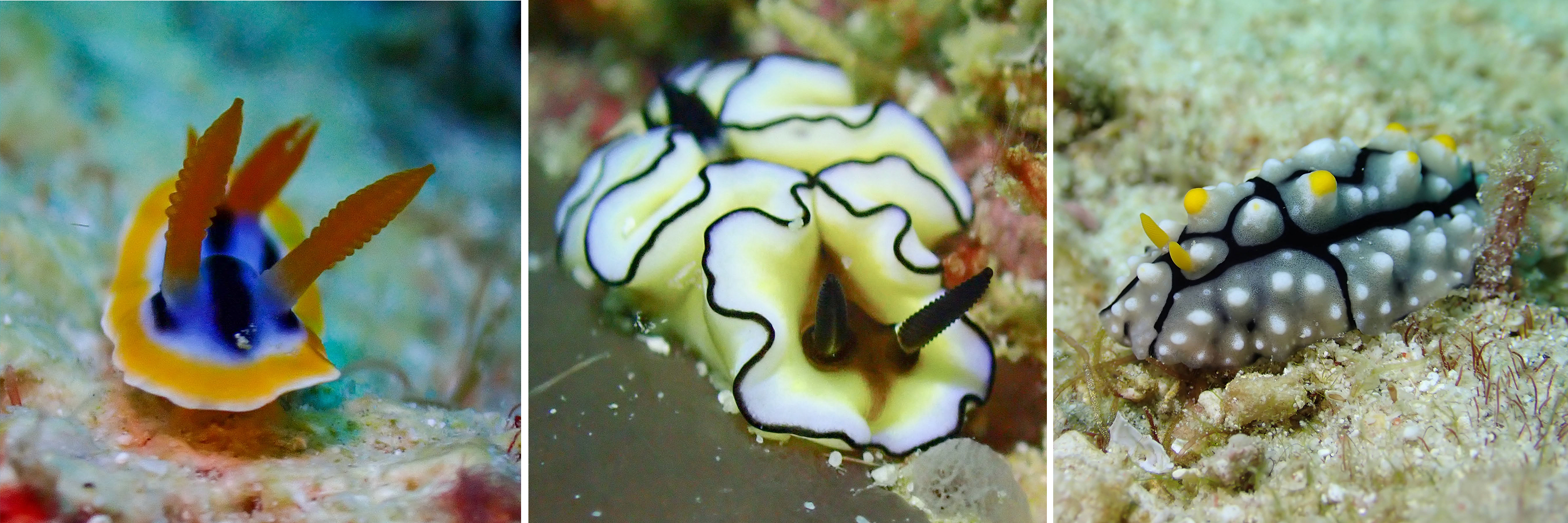
The next couple of blog posts are just lots and lots of pictures of cool marine life. Remember you can click on an any image if you want to see it in more detail. This post is mostly sea slugs, which is why I ended up in Indonesia in the first place. The Indo-Pacific Ocean has some of the most colorful and diverse varieties of nudibranchs in the world, and I’m positively obsessed with them. Some of these photos are mine, some of them are from Maja.
First up are some lovely tunicates. These are all invertebrates, but they are in the Phylum Chordata because they all have the beginnings of a rudimentary spinal cord called a notochord. They are the invertebrates that are most closely related to humans and these in particular were very colorful.
Golden Sea Squirt, Green Barrel Sea Squirt, Rhopalaea fusca
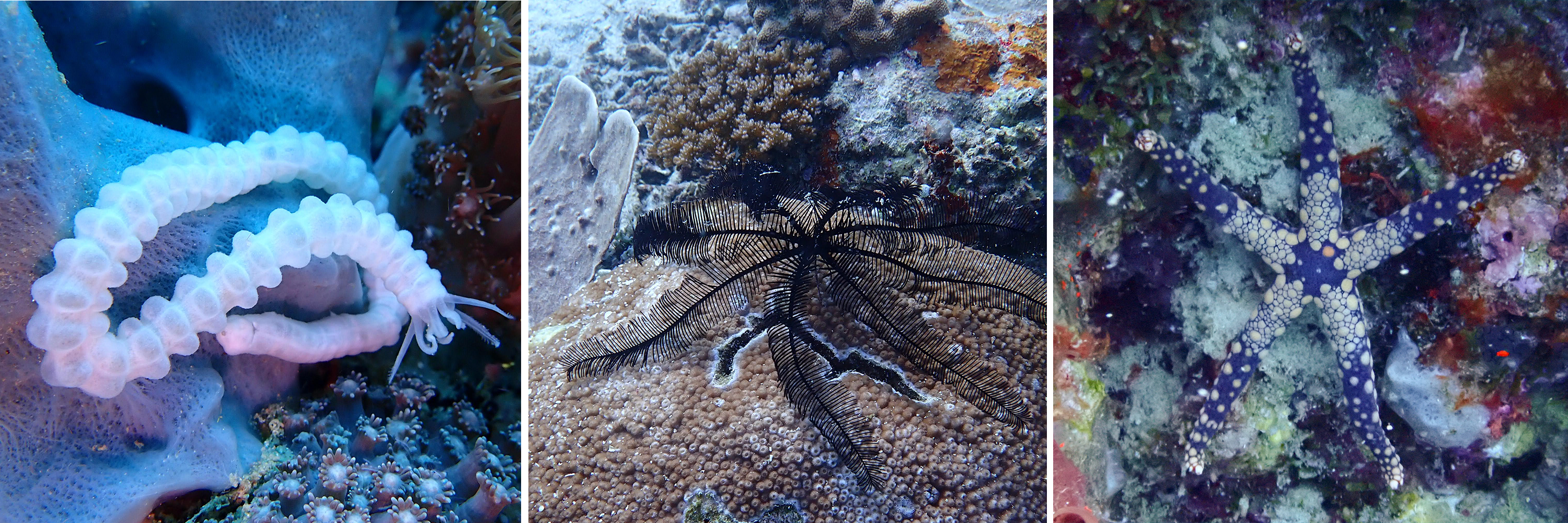
Next up are some lovely echinoderms: one sea cucumber and five sea stars. The variation in shape, size, color, and texture in sea stars is incredible.
Lampert’s Sea Cucumber, Spinose Feather Star, Pebbled Sea Star
Granulated Sea Star, Blue Linckia, Genus Nardoa Sea Star
This is what a sea cucumber looks like when it’s feeding. It uses its mouth parts to bring sand and the detritus it eats into its mouth. Eventually most of the sand comes out the other end and scientists think that at least half the world’s sand has traveled through the digestive tracts of sea cucumbers.
I’m a big fan of giant clams. They are huge, always a surprise, super colorful and patterned on the inside flesh.
And now, for the stars of the show: the nudibranchs! These are different from other sea slugs because of the two rhinophores they have on their forehead. They use them for sensing the world around them.
Generally speaking, travelers aren’t very fond of Jakarta. The airport is a long way from the city and there is one road that goes to the city that gets backed up. Between all the cars and motorcycles and pedestrians, the traffic is overwhelming. Although there is public transportation, it isn’t easy to navigate at first and usually tourists just jump in a taxi, but then they are sitting for an hour in bumper-to-bumper traffic to get to their location. It’s hot and humid year-round. Everyone I told that I was going to Jakarta responded with horror stories.
And yet, I kind of fell in love with Jakarta (a.k.a. the Big Durian) and there was a clear moment for me when it happened. I was walking out of a big mall and there was a bunch of xylophones set up outside. A group of older ladies, carrying mallets and wearing matching blue hijabs, denim shirts, and stylish batik bottoms took the stage. They started playing “Bohemian Rhapsody” by Queen and I just marveled at the whole experience. Muslim women performing music by the very queer Freddie Mercury as a huge crowd sang along. It was so heartwarming to see the interweaving of cultures in a way that brought everybody joy. I just couldn’t stop smiling. Even now, months later, when I watch this clip, it makes me happy.
For fun, here’s a clip of the men of PINKAN Indonesia playing “Have you Ever Seen the Rain?” Watch the constant stream of scooter and car traffic in the background.
Sightseeing
I did a fair share of the normal tourist stuff in Jakarta, starting with the National Monument (also known as Monas) which celebrates Indonesian independence. Its design was inspired by a rice mortar and pestle. If you’ve been reading this blog for a while, garudas are a running theme on this trip. I found garudas on every temple in Bhutan and in church pulpits in India, and they were here on this monument in Indonesia. They feature prominently on the official emblem of Indonesia. However, the politicized version is a bit more like an eagle, than how garudas are traditionally depicted in Buddhism and Hinduism.
National Monument (Monas), golden garuda decoration outside Monas, official emblem of Indonesia
While waiting to go to the top, I visited a museum dedicated to the history of Indonesian independence underneath the monument with giant dioramas of important events in the country’s history. After my number was called, I followed a bunch of school kids in matching blue uniforms on to the elevator and up to the observation deck.
view of Jakarta from the top of the National Monument
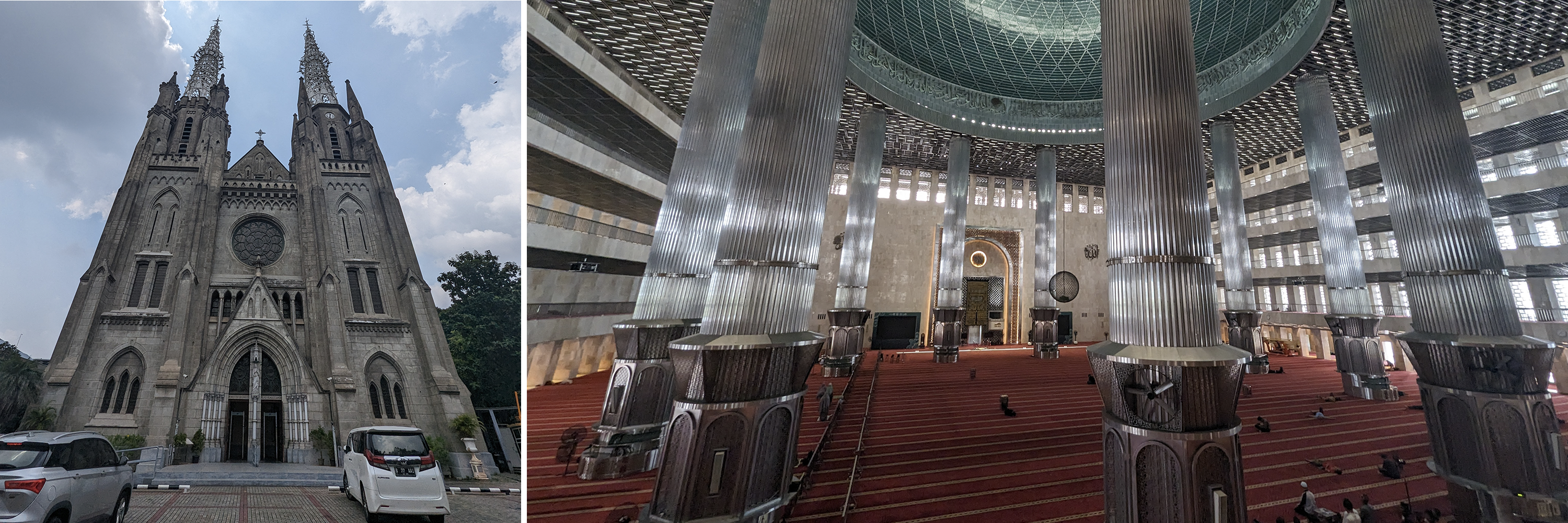
I then walked over to the Jakarta Cathedral which has two giant spires adorning either side of the entrance. Interestingly, the Istiqlal Mosque is right across the street. The mosque is named after the Arabic word for freedom. From the outside, the mosque looks like typical 1960’s concrete block office architecture. It barely resembles a mosque, except for the pointy minaret that sticks up on one side. There are seven entrances to the sprawling complex, which allow as many as 200,000 people to worship at once. The main room for prayers was exquisitely decorated and reminded me a lot of the main worship room in the mosque in Kampala, Uganda.
exterior view of Jakarta Cathedral, interior view of Istiqlal Mosque
Museums
My favorite museum was probably the Jakarta Textile Museum. The museum holds rows and rows of beautiful batik fabrics and weavings. At the very back of the museum in a separate building, they offer visitors a chance to make their own batik. Batik is a way of dyeing fabric by first applying wax to areas that will not be dyed. Then the fabric is dipped in color dye and removed, and then its dipped in hot water and the wax is removed. Through multiple steps of waxing and dying, very elaborate patterns can be produced.
Most complicated and large pieces are done with large stamps. However, applying the wax can also be done by hand using a batik pen called a canting. It has a small reservoir on top for holding the wax and then the artist must work quickly to apply the wax at the right angle as it flows from the pen tip.
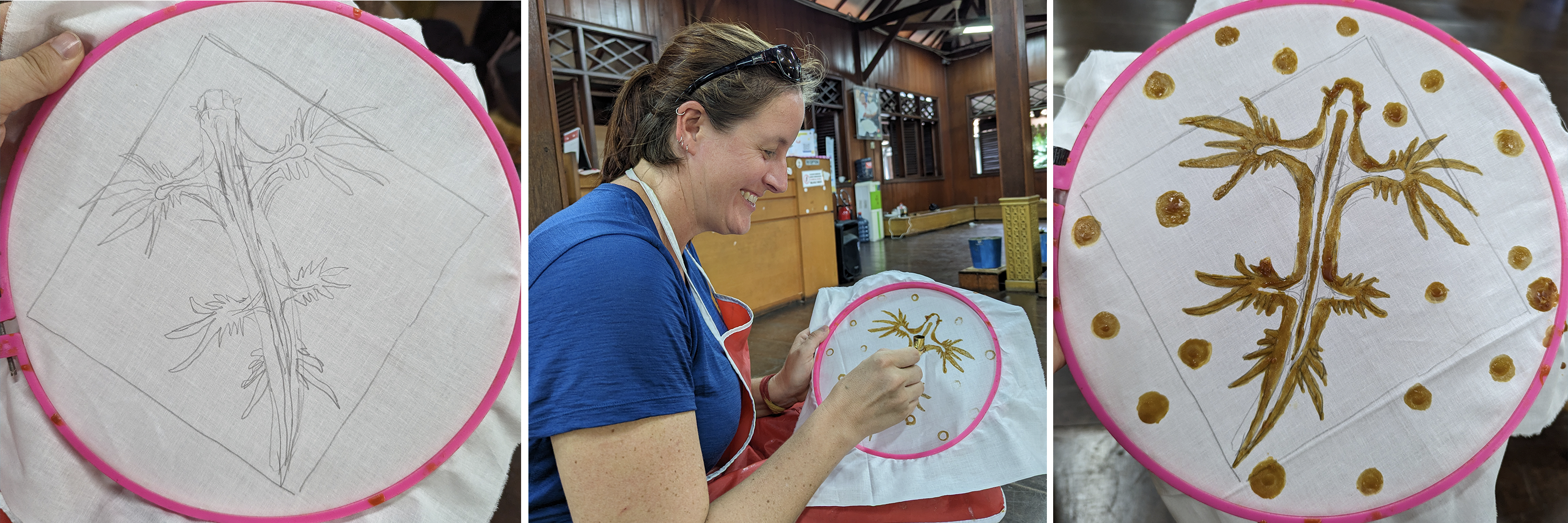
They gave me several very simple patterns to try, but instead I, of course, picked something much more difficult and decided to draw a blue dragon nudibranch. Applying the wax was challenging since it was hard to hold the pen at the proper angle without spilling it. My original design did not have all those big dots. I added them to cover up a bunch of wax dropping in the wrong place. I think they actually enhanced my final creation. What is it Bob Ross said? “We don’t make mistakes, we have happy accidents.” This process took a long time, because I had to apply wax to both the front and back sides so the dye didn’t go through.
original design, me applying wax, finished wax design
After I was done, one of the artists brushed on a light coat of wax along the edges to give it that textured border. Then he stuck my fabric in the dye, then into the hot water bath, and then on a clothesline to dry. That whole process took no more than ten minutes.
dipping design in blue dye, finished design waiting to dry, sculpture of the tool used to apply wax
The other museum I enjoyed a lot was the Kite Museum. This one is a bit outside of the center, so I hired a driver for a few hours from an app and off we went. I paid for him to visit the museum too since he’d never been there and he’d grown up in Jakarta. Kites are a part of the culture of many Indonesia islands, but especially Bali where there’s a huge festival held every year where people compete for best launch, longest flight, and best design. This museum had quite a collection of rare and special kites and at the end of the tour, they taught me how to make my own.
kite with elaborate characters, dengung kite, tour guide with elaborate life-sized kite
intricate kite with black design, owl kite, the kite I made at the end of my tour
Food
Indonesian food is definitely meat heavy, but Jakarta had a wide selection of vegetarian options. I found a vegan spot pretty close to the mall where the xylophone performance was held that served a meatless marangi satay. These are skewers marinated in sweet soy sauce and other spices before being grilled.
The Istiqlal Mosque had a whole food court in the complex and while waiting for the tour, I ate ketoprak which is basically tofu, veggies, rice cake, and rice vermicelli served in peanut sauce. The lady who made this for me and I communicated entirely through gestures, but we worked it out. It’s amazing what nonverbal communication can accomplish. I also ate some roti bakar at a fancy coffee shop, which is basically just grilled toast with some kind of filling, like coconut jam and butter.
vegan marangi satay, ketoprak, roti bakar
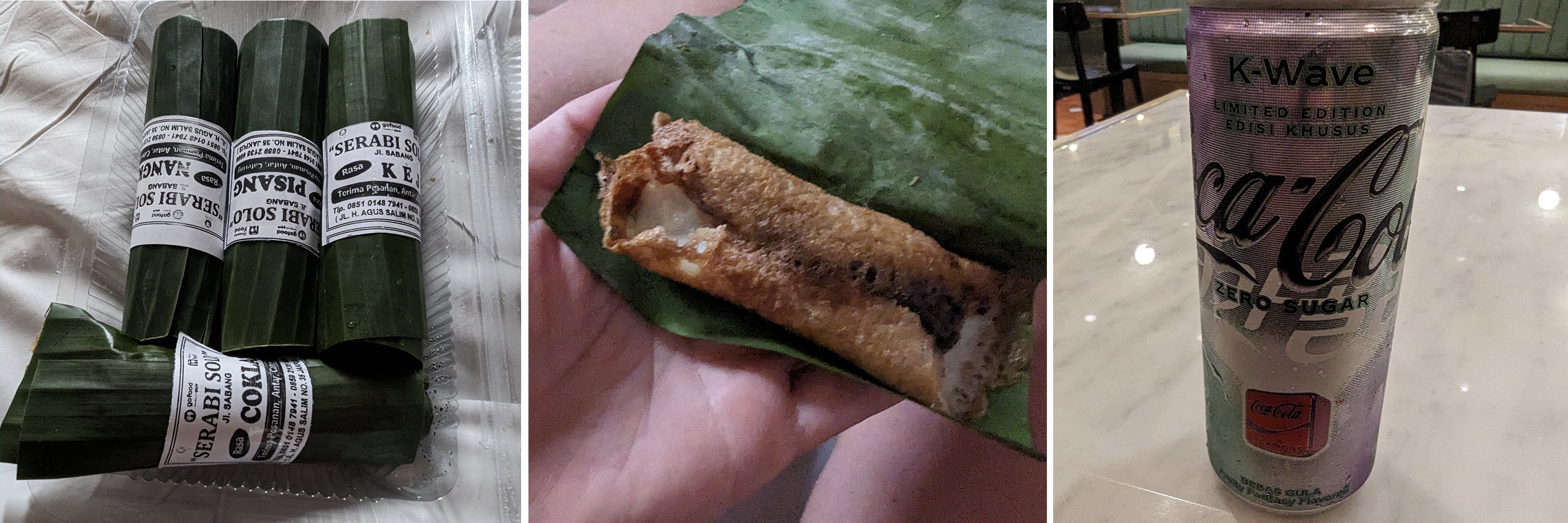
Serabi are pancakes that originally came from Java, the island Jakarta is on. Traditional ones are made from rice flour, coconut milk, and coconut sugar. I bought these from a guy on the street who wrapped them in leaves for easy transport. They were delicious.
serabi pancakes (one each of chocolate, cheese, jackfruit and banana), unrolled pancake, random Coca-Cola flavor K-Wave
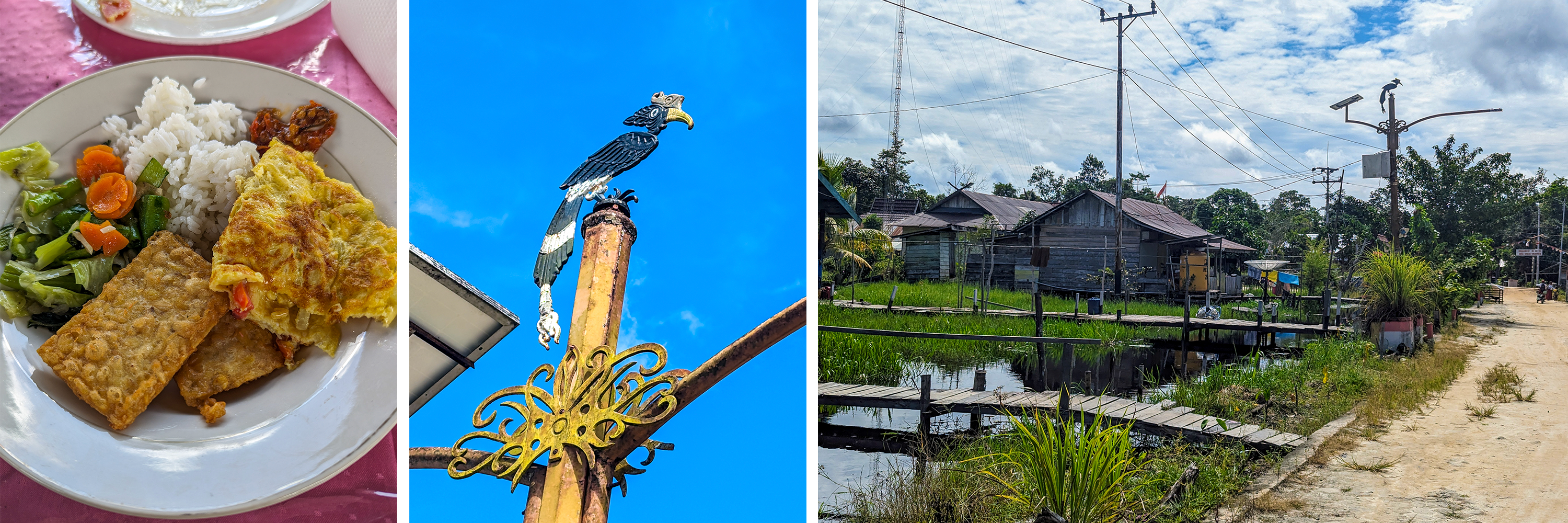
Kalimantan is the Indonesian side of Borneo where I went to see orangutans. Also, included in my 3 day liveaboard experience were some day and night hikes through the rainforest and a stop in a nearby village. Most members of the communities along the river work in one of two industries: orangutan tourism or palm oil. Although seemingly at odds with each other, people here see the need for both as a means to put food on the table. Palm oil can be grown sustainably on plantations, but many corporations continue to expand their production of palm oil, which frequently mean slash-and-burn of existing rainforests, rich ecosystems which are home to orangutans and other endangered organisms.
vegetarian meal on board with tempeh and scrambled eggs, hornbill details on lamp posts, village built right in the wetlands surrounding the river
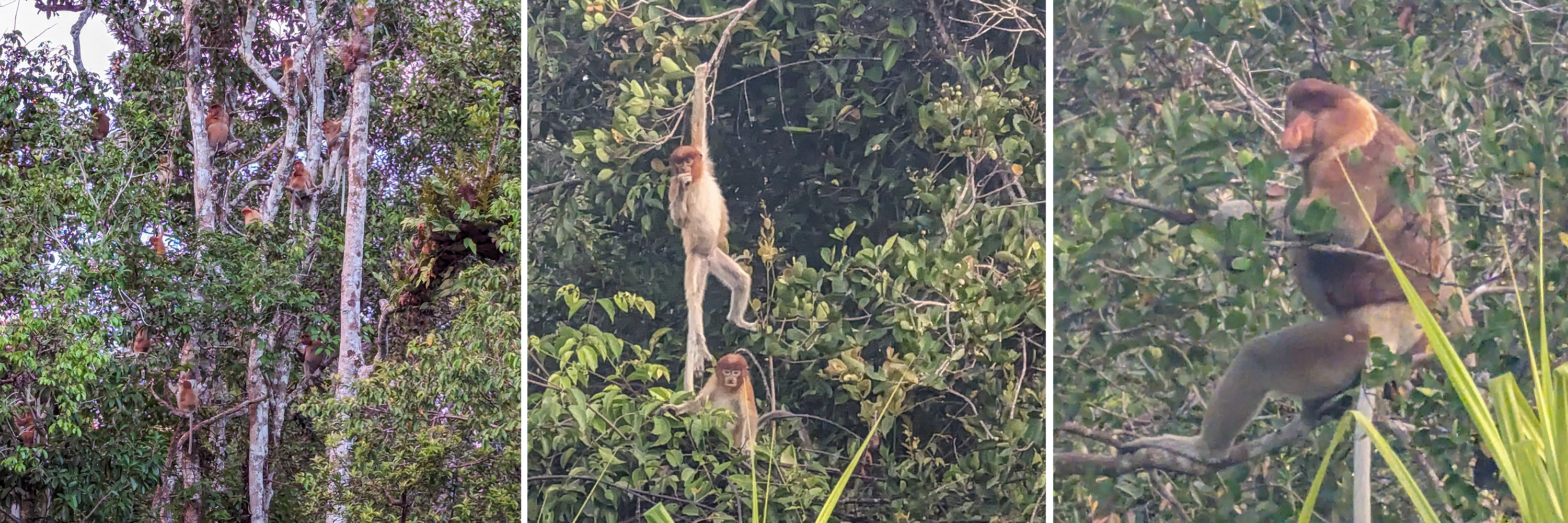
In addition to orangutans, our guide pointed out the proboscis monkeys that also live in the area. They were given this name because the males have absolutely enormous noses. Their fleshy noses are used to make loud mating calls to females. We saw a few different troops of these monkeys when we transiting between orangutan feeding stations and our boat captain would always pull over so we could watch the commotion. Normally, there would just be one adult male in a tree full of females.
tree full of females, monkey hanging from branch, adult male proboscis monkey casually hanging out
As part of our day hikes to find the orangutans, our guide would show us various fauna and flora. I really enjoyed the giant pillbugs that rolled up in little balls to protect themselves from predators. Also, the Sunda frogmouth bird has to be one of the funniest looking birds I’ve seen.
Gymnostoma seed with lovely geometrical symmetry, Sunda frogmouth, pitcher plants, Southeast Asian pill millipede
The night hike was surreal on so many levels. Walking through the rainforest at night, there were are many animals resting, but also so many awake and moving. My guide found a bunch of interesting insects, including a few assassin bugs which eat their prey by injecting them with a toxic set of enzymes that liquifies the insides, which the bugs then suck out. We also got to see giant forest ants that have big enough mandibles that they can actually pinch human skin to stay attached. The extremely well camouflaged mantises that look just like dead leaves were also lovely.
assassin bug, giant forest ant, damselfly, Asian dead leaf mantis,
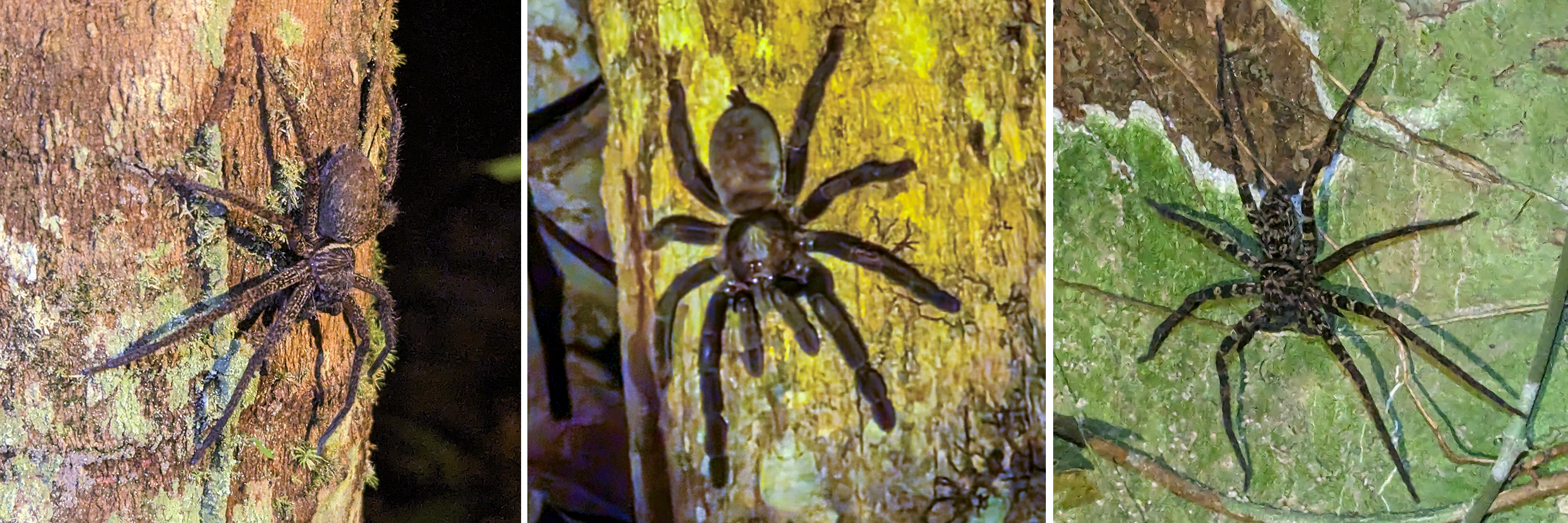
There were also quite a few different spiders. Most of them were variations of huntsman spiders, but I did get to see a giant black tarantula which was way bigger than the size of my hand, probably around 8 inches across. As they get larger, they eat even bigger prey including frogs, fish and lizards.
huntsman spider, Borneo black tarantula, another species of huntsman spider
I even got to hold a giant relative of Daddy Long Legs. One of the most shocking moments was when my guide turned his flashlight towards the tree canopy and right above us was a pit viper hanging out.
Cyclosa spider web, Gagrella harvestmen, North Philippine temple pit viper
There were also a few birds sleeping in the branches, colorful kingfishers and barbets. Earlier in the day, we also had caught sight of a crested serpent eagle, which get their name from all the snakes they eat.
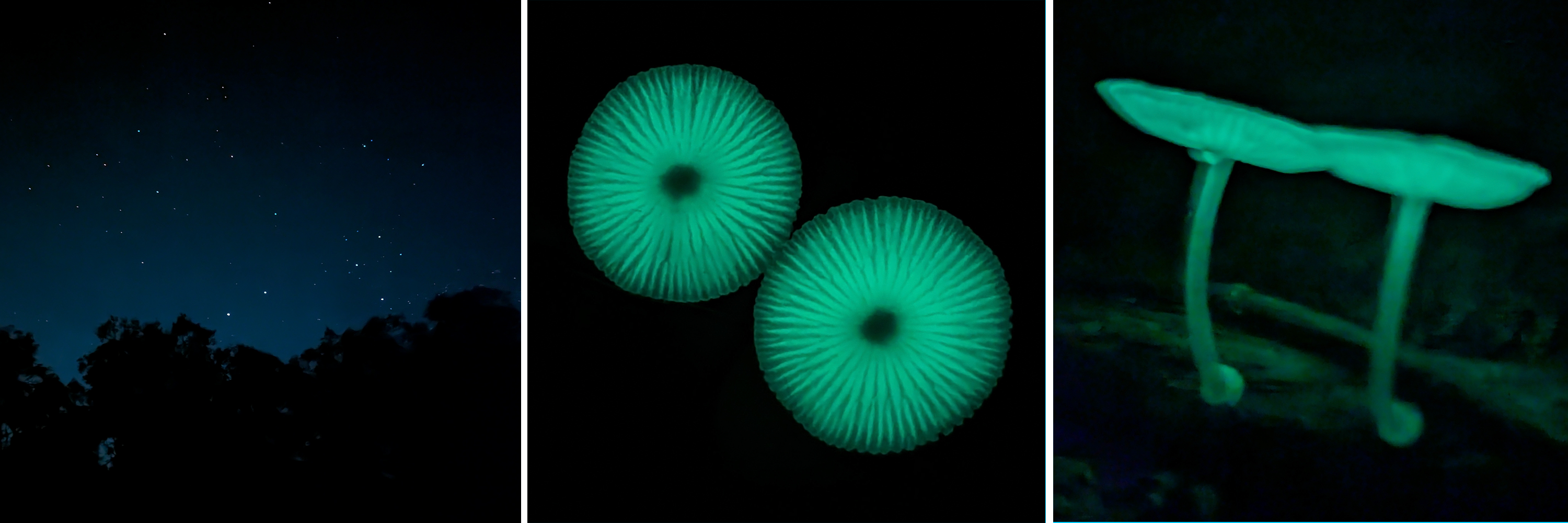
Perhaps my absolute favorite night hike find were these stunning bioluminescent mushrooms. I teach marine biology, so bioluminescence is a common feature in deep water organisms that I discuss with students every year. However, it is found much less frequently in terrestrial creatures, with the notable exception of fireflies. There are not that many species of fungi that bioluminesce, so I was super excited to see these.
Southern Cross just above the trees, glow in the dark bonnet mushrooms from top, and side
Going to see orangutans has been on my Wish List for a long time. Since I was already in the eastern hemisphere doing my yoga training, it made sense to hop over to see them. They are found on only two islands in the world, Borneo and Sumatra, and all three species are critically endangered. Populations have suffered over the past few decades because of an increase in palm oil production. As native rainforests are cut down to make room for palm tree plantations, this results in huge numbers of orangutans losing their homes.
The island of Borneo is divided in two, the north side belonging to Malaysia and the south side to Indonesia (known as Kalimantan). For this trip, I took an early, early morning flight to Pangkalan Bun and was driven to a spot on the Java Sea that connects to the river that goes through Tanjung Puting National Park. My guide ushered me on board our klotok, a houseboat that would be my home for the next couple of nights. While I was waiting for the boat to get moving, I lay down on my full-sized mattress on the top deck and promptly fell asleep. An hour or so later, I woke up to this gorgeous scene:
view from the klotok
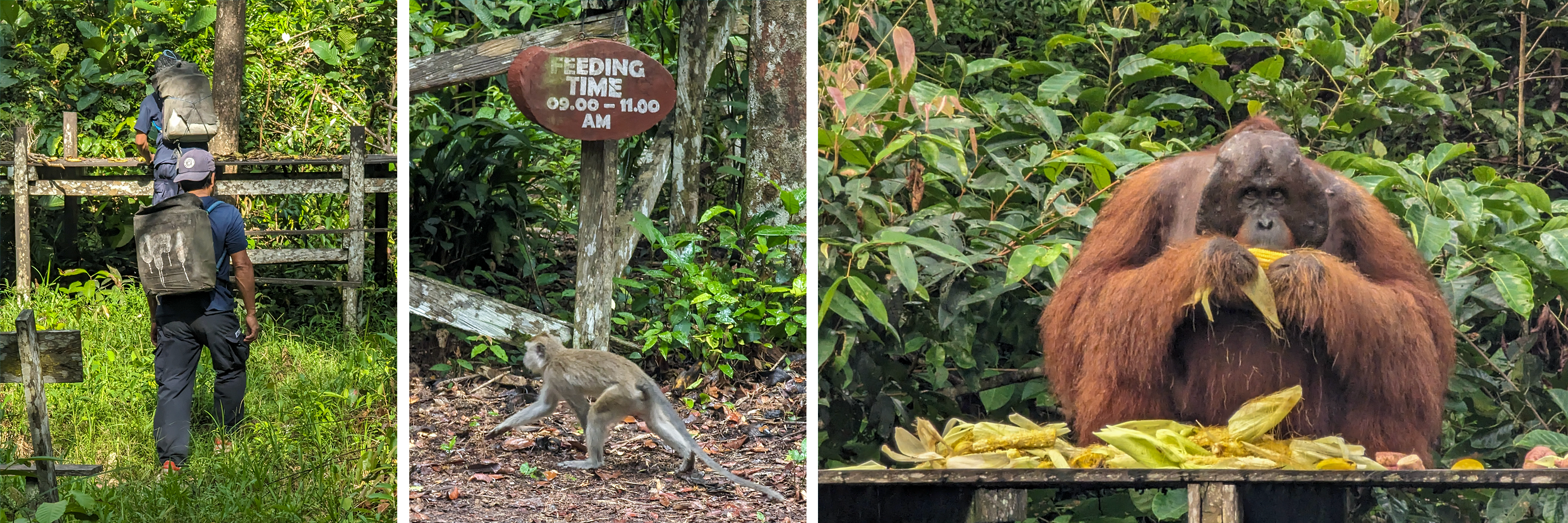
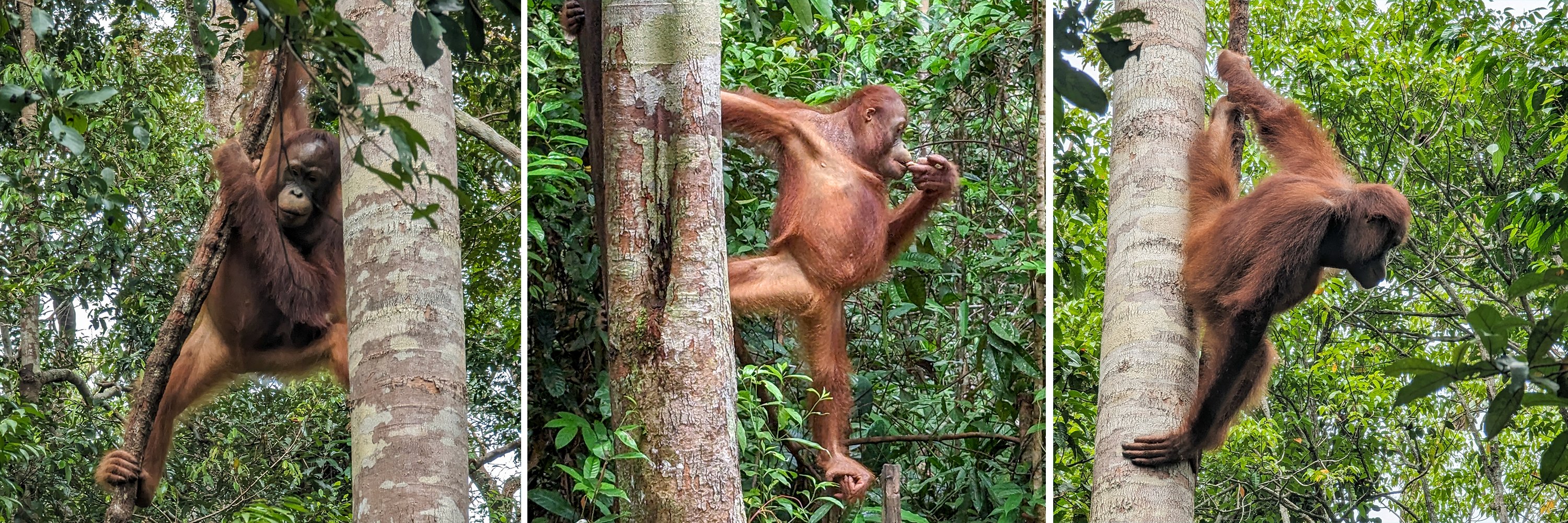
The park set up feeding stations for the orangutans and the rangers bring an assortment of bananas, corn, and sweet potatoes which they lay out on large wooden platforms. When fruit is in plentiful in the rainforest, the orangutans rarely come to the platforms for food, but when the food starts to become scarce in the wild, they show up like clockwork. The dominant males have impressive facial pads that distinguish them from the females. The toddlers and young ones are extremely playful and it is easy to see so many shared traits between orangutans and humans. During one feeding, two siblings were play fighting and their tired mother gentle scolded them to stop fighting.
rangers, a macaque trying to get in on the action, male orangutan enjoying corn
There is a clear order of food preference for the orangutans. The bananas disappear first, then the corn, and then the sweet potatoes. Female orangutans also often don’t want to stay on the platform if there is a male sitting on it. They approach tentatively, and then load up as much food as they can carry in their mouth and hands and scurry up a nearby tree to sit and consume their bounty. Their mouth is a great option because it leaves their hands and feet free for climbing.
hoarding sweet potatoes
Corn was a preferred food and often the orangutans would take as many ears with them as they could to a nearby tree, safely away from where another animals could take their food. They tended to climb with a few ears of corns in their hands, but once they started eating, they held onto the extra ones with their toes.
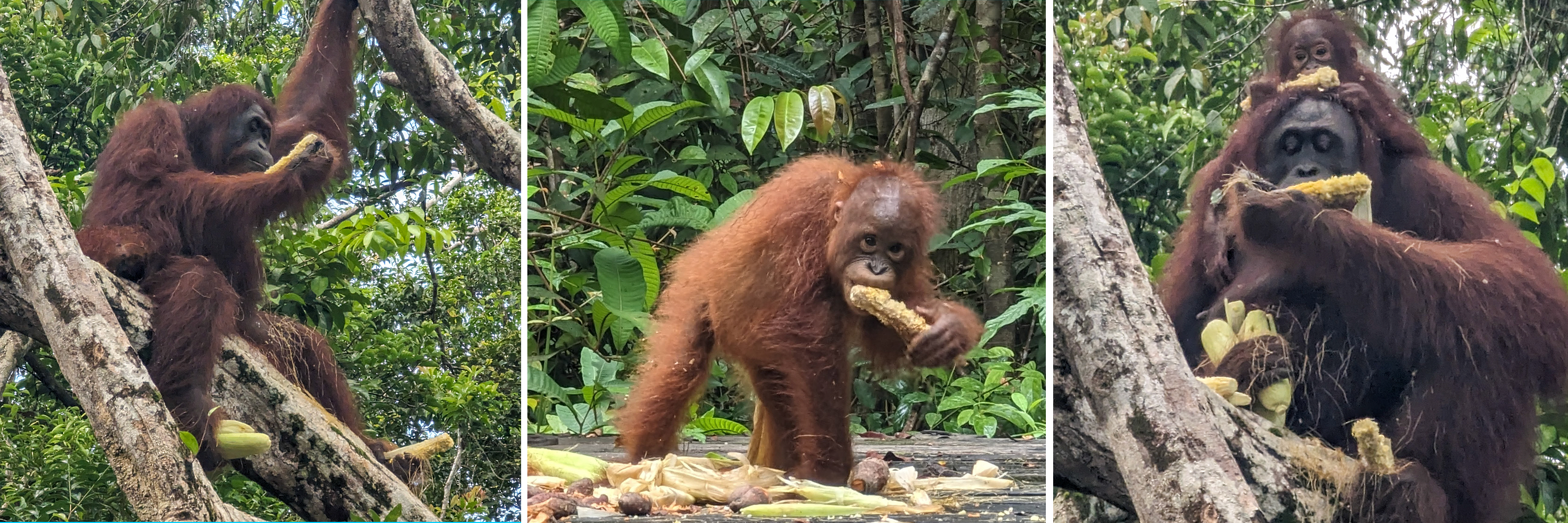
Orangutans have incredibly long arms that are generally used for climbing, but sometimes I think they just liked posing for the tourists.
climbing trees, posing, climbing trees (mom & baby)
Many of the female orangutans arrived with babies and toddlers in tow. The younger ones were still learning how to move through the trees and it was fun to watch their moms reach out and grab them when they got stuck.
mama and baby, toddler playing around, mother and baby in the same eating posture
orangutan children in the trees
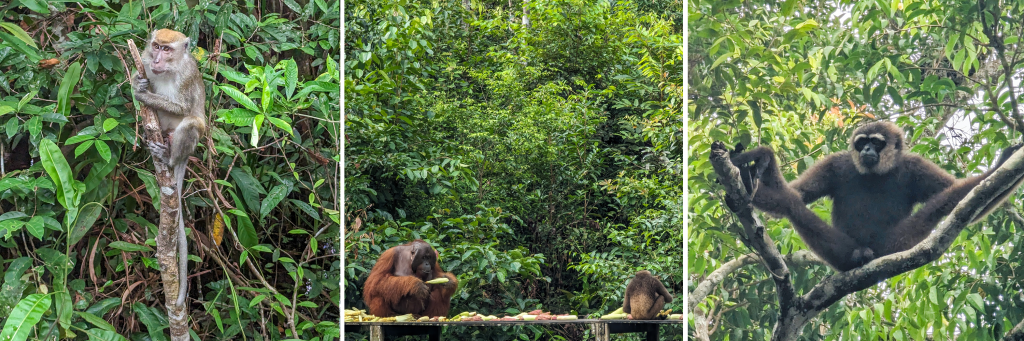
And, of course, some of the other animals wanted in on the action. The long-tailed macaques were good at rushing in and making off with a banana or two and eating them elsewhere. At one of the feeding stations, a Bornean white-bearded gibbon was actively waiting for the food to arrive. Eventually it did, and he scampered down and tentatively hung out on the platform for a minute, gathering his food before he took off.
long-tailed macaque, orangutan & gibbon, gibbon waiting in a tree
One of my favorite moments that I filmed was a baby orangutan scaring away a long-tailed macaque that was getting too close to the food.
The orangutans, the macques, and the gibbons are all endangered in the wild. Their homeland is threatened by humans and these national parks and the revenue from tourists are one of the few things keeping these animals from extinction. This next embedded video is a playlist of the best orangutan videos. Most of them are relatively short clips and the whole list will take only 6 minutes to watch.
I ate lots of delicious things when I was in West Bengal, right after I entered India. The Tibetan influence is strong from all the waves of immigration. I’m a big fan of momos, Tibetan dumplings which are made with slightly thicker dough than Chinese ones. The ones in the photo below came from the restaurant in Jaldapara National Park. I also had a giant meal of rice and two dishes – mixed vegetables and butter paneer. Butter chicken is jokingly known as the dish white Americans order from Indian restaurants because they can’t handle the spice. However, I’d never had the vegetarian version made with paneer (Indian cheese) so I figured I should try it. It was okay, but I truly enjoy a little more heat in my food. My other favorite part of many of my meals in India were getting mixed sodas. These usually have a base of lemon or lime juice, sparkling water, and both salt and sugar added. Not everyone likes salty-sweet lemonades and limeades, but in the hot weather, I am a huge fan. Side note: Mexican limonadas are made the same way.
I ate thukpa (a Tibetan noodle soup made with curry powder and vegetables) at the highly recommended Kunga’s Restaurant in Darjeeling. I waited in line for about twenty minutes and was about to give up when a woman came out and said she had room for one. I ended up sharing a table with a Bengali couple from Kolkata who were taking a long holiday weekend in the highland cooler temperatures. The whole restaurant had maybe seven or eight tables with barely any room to walk. Just as I sat down and ordered my food, the entire staff sat down around the one big table in back to eat their lunch. My new friends shared travel and festival recommendations from Kolkata while we waited a rather long time for our food to arrive. However, when it finally came, the soup was delicious and I even ordered some steamed vegetable momos to go.
vegetarian momos with dipping sauce; mixed lemon soda, rice, curried vegetables and butter paneer; vegetable thukpa
Panaji
I mentioned in an earlier post my love for Cafe Tato. They serve traditional Goan food and delicious breakfast and snacks. Chole masala is very similar to what is often called chana masala in Indian restaurants in the United States. It refers to the Punjabi way of making it, which has a very specific set of spices. Puri is delicious puffy fried bread. The best way to eat the chole is to break off a piece of puri and scoop it up with your hands. After living in Morocco for two years, I’m a big fan of not using utensils at every meal. I used the puri to eat the mushroom dish in the pictures below and I also got to try a mushroom samosa for the first time.
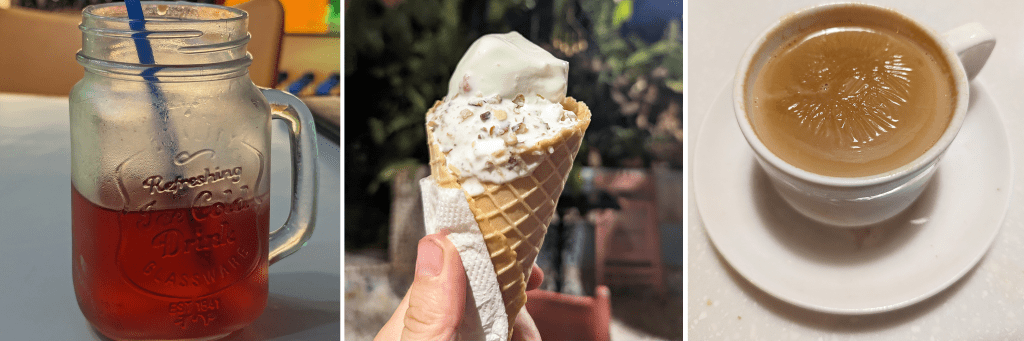
Panaji was hot and I was mostly thinking about cooling down whenever I stopped for refreshments. A tiny shop across my hotel was selling these kokum coolers which were sweet and tangy. An Amul ice cream shop was a quick stop for me to escape a rainstorm. And, of course, the only hot item on here is a masala chai. I could only really drink these in the morning, because by the afternoon it was too hot.
kokum cooler, chopped almonds ice cream, masala chai
One of my favorite things to do when I visit any new place is to go into supermarkets and buy all kinds of snacks that I’ve never had before. I bought all these in Panaji and slowly made my way through them over the next few days. The sour gummy feet were like sour candies everywhere. The bugles made from billet were tastier than I thought they’d be, but they still tasted healthy. Monkers are just cheap M&Ms and the sesame balls were harder than I thought they’d be. Sabudana is actually made from sago flour and usually has the consistency of tapioca. However, these were puffed, mixed with peanuts and tiny fried potato sticks, and had the salty-sweet flavor of kettle corn. It was definitely one of my favorites.
Arambol is much better known for its beach scene than its food. However, there was one bakery in town with a blue awning that was famous for its baked goods. Its chocolate croissants were not exactly croissants, but they were made with dark chocolate and were tasty and cheap. The mango cheesecake was passable. However, the prize for best food in Arambol unexpectedly went to a little cafe on the beach. My friend and I got a vegetarian biryani, which is a mixed rice dish cooked with vegetable and spices. This one even came with fried onions on top and was absolutely divine.
best chocolate croissant in Arambol, delicious vegetarian biryani, mango cheesecake
After my yoga training, I headed back into the heart of Goa and signed up for a walking tour of Velha Goa (Portuguese for “Old Goa”). This city started out as a Muslim sultanate, but the Portuguese came in with guns ablazing and conquered it in 1510. Most of the Catholic orders sent priests here after it was conquered and each separate order set up a church. I felt, in many ways, like I was walking through an old European city. There’s a common refrain among travelers in Europe about being tired of touring churches and this is probably the only place in India where the same thing might be heard. My walking tour featured five churches that were all within a couple miles of each other. All of the churches and convents in the area are designated a UNESCO World Heritage site.
Viceroy’s Arch, old city walls dating back to the sultanate, closeup of fancy door work
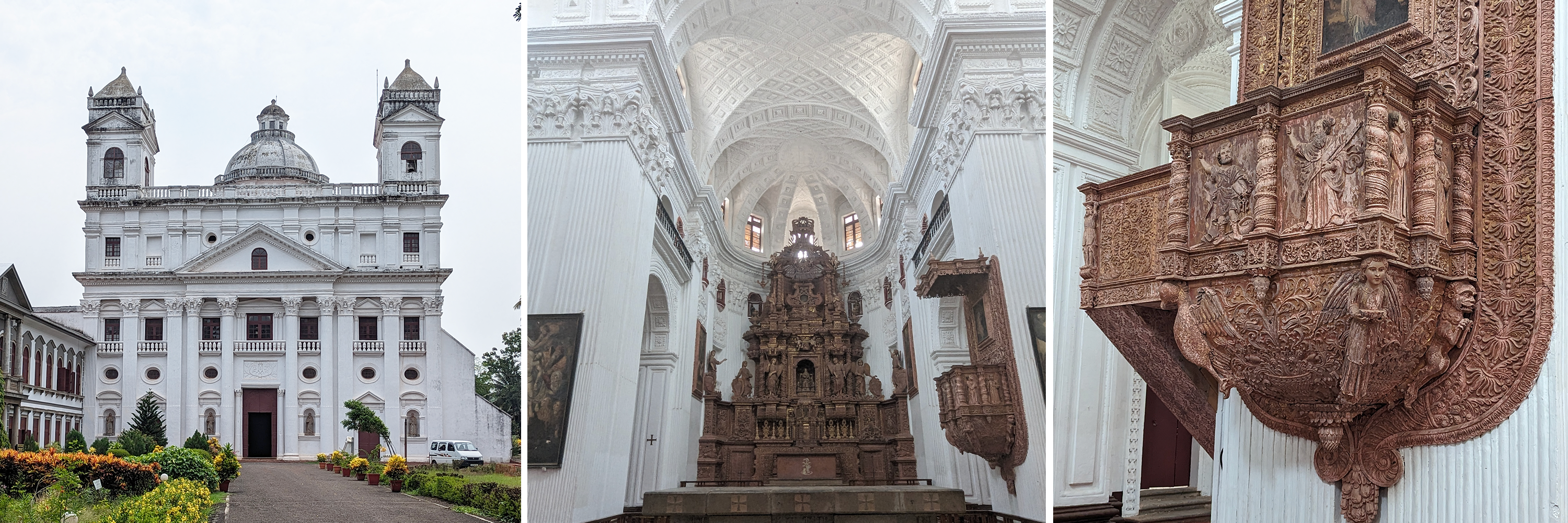
St. Cajetan Church was built by Italian Catholics. Although the Portuguese initially didn’t want the Italian priests to construct a church, one of them went to Portugal and convinced the king to let them build it in the interests of spreading Christianity. My favorite part was finding a garuda carved into the pulpit. As a way of converting locals, symbols from previous beliefs and ideologies were integrated into the architecture.
St. Cajetan Church: from the outside, big domed ceiling, upclose of the pulpit with garuda motif
The next two were both built by the Portuguese. The Sé Cathedral is known for two things: it is the largest church in India and it is unsymmetrical since one of the towers fell down and was never rebuilt. The Church of St. Francis of Assisi was built by Portuguese Franciscan priests. The doors leading into this church had fun carvings of cashew and pomegranate fruits.
Sé Cathedral, close-up of fruit motifs in door frame, Church of St. Francis of Assisi
Next up was the tiny Portuguese Chapel of St. Catherine with a lovely brick interior and a colony of bats roosting in the ceiling. Last, but certainly not least, was the famous Basilica of Bom Jesus, built by Portuguese Jesuits. It is a large, sprawling building and many believers make a pilgrimage to visit. The first Jesuit missionary to Japan, St. Francis Xavier, is entombed there.
Chapel of St. Catherine, view of the altar inside St. Catherine, Basilica of Bom Jesus
Goan Food
After the tour of Old Goa, I visited a spice plantation outside of town. I took lots of photos, but most of the plants weren’t actually fruiting when we were there so my pictures aren’t worth sharing. We did get to see kokum, cinnamon, and black pepper trees as well as lemongrass and cardamom plants. Kokum fruits are related to mangosteens and are quite tasty in juice form. The farm also offered a lovely lunch served with a refreshingly salty and sweet drink known as kokum curry and samples of cashew feni, alcohol made from the cashew fruit. To help us deal with the heat, at the end of the tour, they poured a ladle full of scented water down the back of each of our shirts. Although momentarily refreshing, it was so hot our clothes were dry less than fifteen minutes later. Indian heat is no joke.
fresh young coconut, spice plantation lunch, kokum curry, pav bhaji street food
I spent three weeks doing a 200-hour teacher training in Arambol, a small town in north Goa that was part of the hippie trail in the seventies. I was the oldest person in the training class by about 10 years and I must admit I shed many tears the first week. I wasn’t very good at the poses. My body wasn’t flexible. I felt like the stereotypical overweight American compared to all these young, tiny, bendy people. We had 2 hours of yoga in the morning and 2 hours in the afternoon and in between were classes on anatomy, alignment, and philosophy. We got a full day off on Sunday and had a half day on Saturday. It was 90F almost every day and I would regularly have to stop mid-pose to wipe the sweat off my mat and my body so I wouldn’t slip.
However, I kept showing up to every class and I got better because I was regularly practicing yoga. It’s amazing how much body and mind can adjust to difficulty. I slowly made some friends and by the end of the training, another student was like “your Downward Dog is actually pretty good now” and I just grinned from ear to ear.
I’m not trying to become a yoga teacher, but I’m happy that I didn’t give up and kept doing the asanas even when I didn’t want to. Shout out to everyone who sent me text messages and encouraged me when I was feeling down. This may seem like a small thing, but I remember the first time I was in plank pose and I managed to bring my right foot up in line with my hands. I had never been able to do that before and I remember internally shouting with joy. I always had to scoot my foot forward because I didn’t have the flexibility. Yoga training allowed me to see my body gain strength and flexibility in real time. I’m thankful that I took this time to delve into something that was so out of my comfort zone. Growth can be so painful, but ultimately so good for the soul. I’m clearly a fan of Type II fun. 🙂
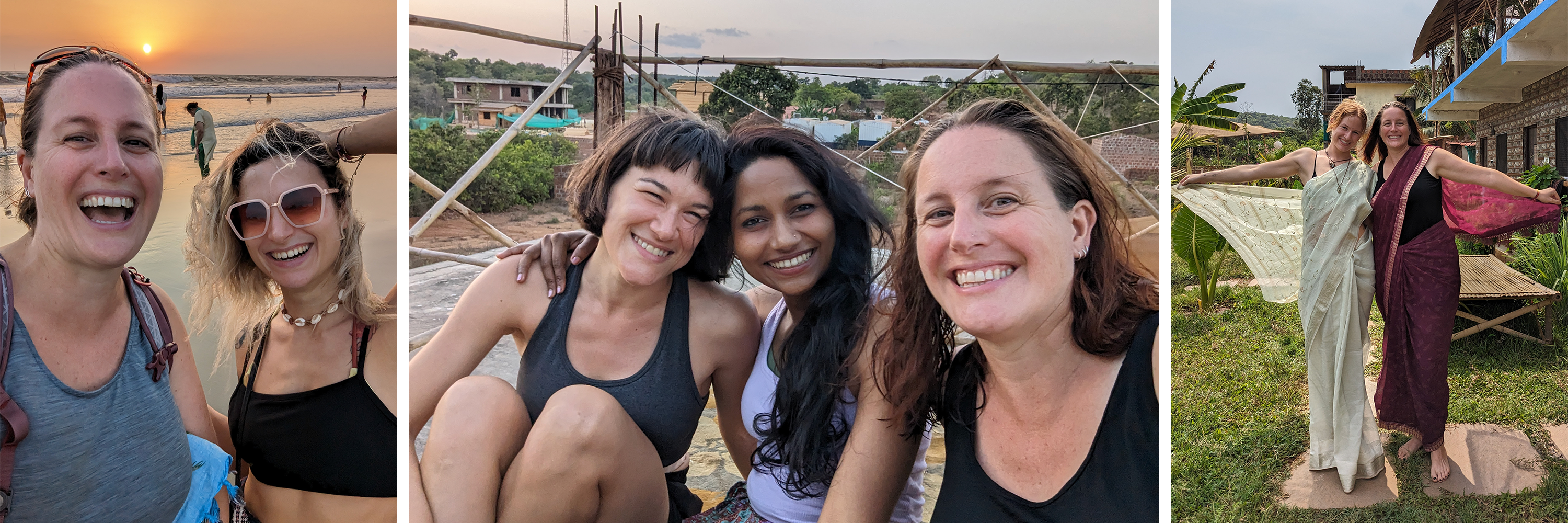
me & Gabi at the beach; Susanna, Pradnya, and me on the shala roof; roommate Mila and me
The training started and ended with ceremonies and Pradnya and I designed both of the mandalas that we gathered around. The rest of the students and staff were ripping the petals off all the flowers so we could fill in the outline. The training also offered a bunch of activities that were yoga-adjacent. In the heat, I was probably most excited for the ice bath experience in the middle of the day. Other folks struggled a bit more with the freezing water, but it felt a lot like jumping in alpine glacier lakes in the Sierras. Definitely cold, but tolerable.
beginning mandala, closing mandala, me in an ice bath in a barrel
Because of the heat, we had a lot of downtime in the middle of the day. I read quite a few novels while I was there, because even after a refreshingly cold shower, I didn’t want to do anything but hang out inside. I was perpetually washing my three yoga outfits since I would sweat through them every single practice. Our training was right at the beginning of monsoon season, so after big afternoon rain showers, the power would frequently go out for the rest of the night.
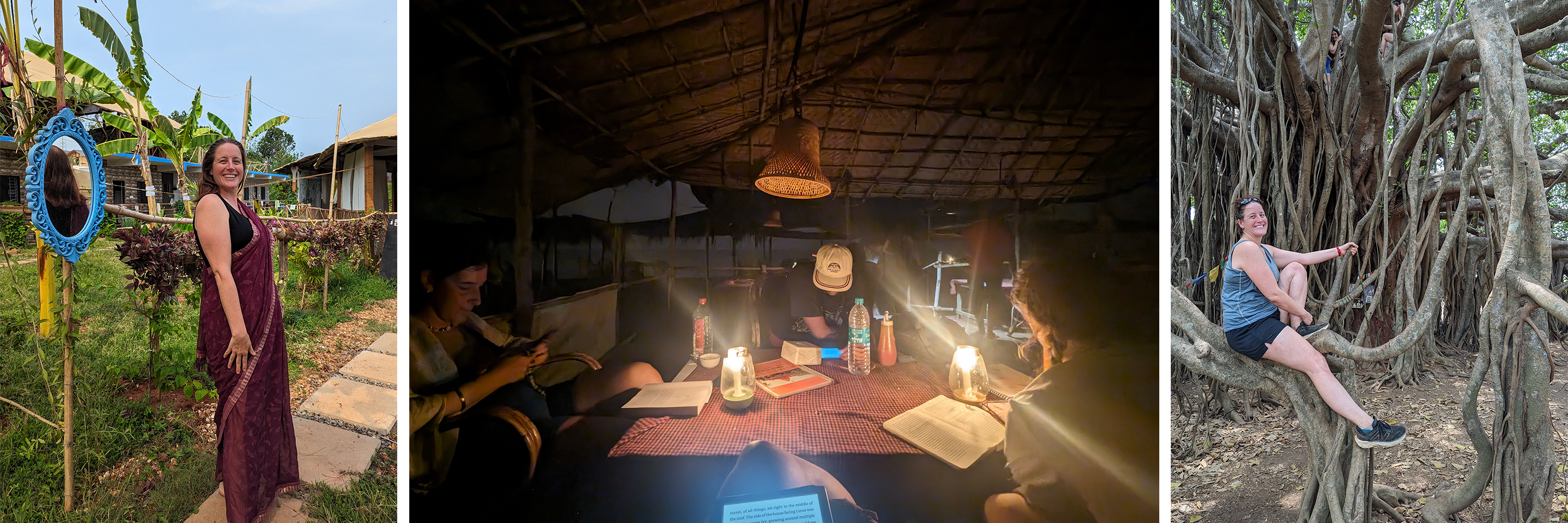
me in a sari at closing ceremony; Tina, Dheeraj, and Mila reading at a beachside restaurant when the lights went out, me in a ginormous banyan tree
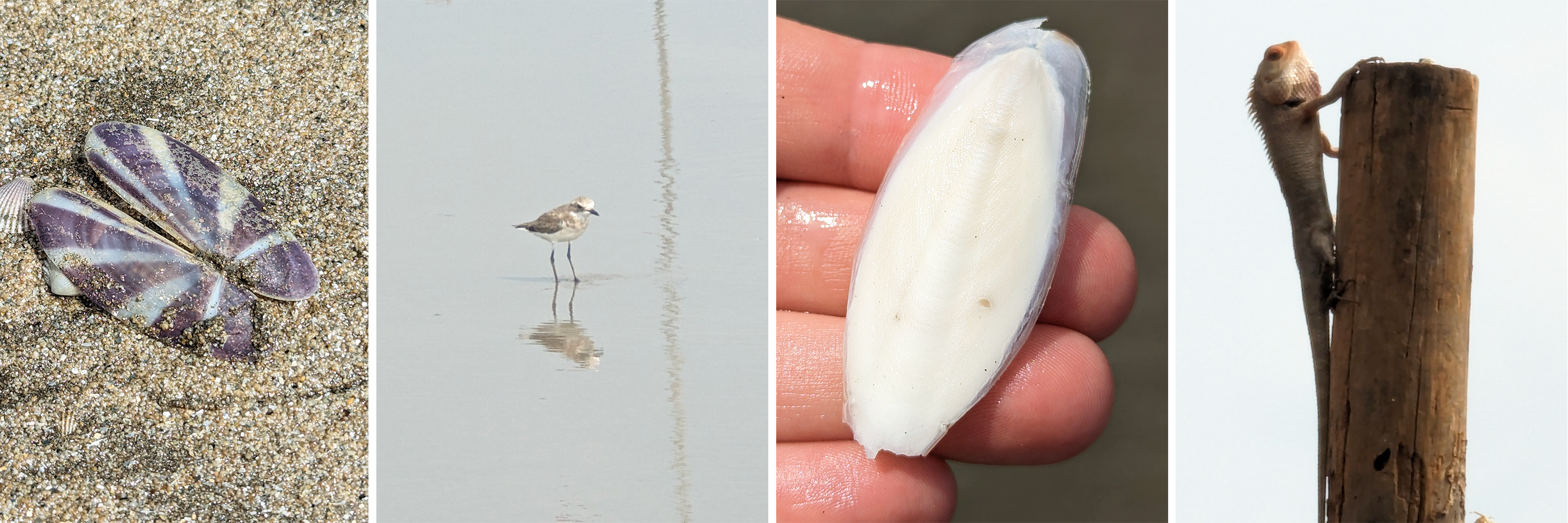
We spent a lot of weekends at the nearby beaches of the Arabian Sea. There were always a lot of stares from Indian men, but we eventually found some spots that were a bit more isolated without as many onlookers. Pradnya taught me the Hindi word tharki which roughly translates to pervert. It sounds a lot like the English word turkey and it became an inside joke about yet another “Uncle Tharki” whenever men came over to try and take photos of us. India is hard travel for women. We did find a bunch of cool shells and lots of cuttlefish bones washed up on the sand.
One of the perks of the shala was the random wildlife living around us. There were a couple of lizards that joined us for our morning breathwork. Sometimes we stopped in the middle of practice to watch the pack of langur monkeys that came scampering over the roof. Darkness and rain brought out frogs that lived around the stairwell. There were also some lovely large spiders and grasshoppers always hanging about.
friends at the shala: Indian tree frog, pantropical huntsman spider, grasshopper, Malabar gray langur
Yashwantgad Fort
The yoga place did arrange one really fascinating trip just over the state border into Maharashtra. On the way there, we got pulled over by the police and our driver didn’t have his identification on him, so they had to offer him some Gandhis (Indian rupee bills all have Gandhi on them) so we could keep going.
We spent the morning at the beach, but eventually went on a tour of Yashwantgad Fort near the town of Redi. In my ignorance, I figured it was a Portuguese colonial fort, but, no, it was built in the early 1700’s by the ruling Marathas. At that time, the Maratha Empire (aka as the Confederacy) covered most of the territory of present-day India. However, there was a lot of fighting between local groups and this fort was built to shore up their defenses along the coast. Eventually the British, starting on the east coast, started chipping away at the edges of the territory and eventually took over almost everything.
The fort itself has a storied history with the Portuguese eventually claiming it and the Marathas fighting to get it back. Regardless, the fort is still stunning today. The Indian government has done a huge amount of reconstruction work and it is in beautiful shape. The best part are the huge trees growing in and around the fort making intricate abstract patterns. It reminded me a lot of Ta Prohm, a temple in Angkor Wat, that also has trees growing out of its roof. This was definitely one of my favorite places on the Indian part of my trip.
beautiful archway, round parapet, tree roots slowly reclaiming the fort
views of the courtyard, more trees growing out of the fort, overlooking the beach where we swam
Panaji (also known as Panjim) is the capital city of the state of Goa. I arrived there on May first, which was Labour Day (labour spelled with a u because of the British). Almost everything was closed and the streets were relatively empty, so I just wandered around town.
There was a huge parade of workers walking from one side of town to a gathering in the central park. It was fascinating to see all the different groups coming together. I saw banners for brewers, concrete workers, and beach club employees. There is a small river that runs near the city and there’s a shaded boardwalk that meanders through the mangroves that grow on each side of the river.
Although India is often associated with British colonization, Goa was originally a colony of the Portuguese. Vasco de Gama and his crew were the first to arrive, and by the early 1500’s the Portuguese had established a significant stronghold in the area. This part of India remained part of Portugal until the 1950’s when they achieved their independence. They ultimately voted to become a part of the rest of India which had become independent in 1947. The signs of Portuguese influence are everywhere. For example, in the center of Panaji stands the Immaculate Conception Church, built in 1541 to serve Catholic Portuguese sailors.
Labour Day parade, Immaculate Conception Church, mosaic bridge over the Rio de Ourém
The parks of Panaji are decorated with some interesting sculptures. The one in all the tourist books is of Abbé Faria, a Goan Catholic priest who was a master of hypnotism. The central park contains a modern sculpture dedicated to Tristão de Bragança Cunha, an anti-colonial activist who called for Goan independence from Portugal. He was arrested for organizing against Portuguese rule and spent several years in prison. Once released, he continued his liberation work and published a newspaper dedicated to the cause. My favorite sculpture, though, was probably the awkwardly helmeted Indian gaur planted right next to the main road.
statue of Abbé Faria hypnotising a subject, sculpture dedicated to TB Cunha, Indian gaur
I stayed in the Fontainhas area of Panjim when I was there. It’s a UNESCO World Heritage site due to the colorful houses dating to the time of Portuguese rule. In addition to the white churches, there are also relatively recently built Hindu temples. There are more Hindus in Goa now, but there are still many practicing Christians.
One of my favorite parts of Panaji was the colorfully decorated stairs all over the Fontainhas area. It was probably over 100F and I was sweating profusely. Not much was open, so I just kept walking along abandoned streets, turning randomly at corners, and truly just stumbled upon these hidden gems.
bottom of stairway decorated with books, rainbow stairs, peacock stairs
Goan Food
The Portuguese influence is definitely reflected in the food. Xacuti was traditionally a coconut curry dish usually prepared with seafood, but is now offered in a variety of meat (and meatless) options. This is often served with poi, a small bread with a pocket, similar to a pita. On Labour Day, only a few restaurants were open, but I found the air-conditioned all-vegetarian Cafe Tato and it felt like I’d walked into paradise. I ate there probably 3 or 4 times and everything was delicious. It’s an iconic establishment that serves up awesome food all day long, but is known for its breakfast. That morning, I ate sukhi bhaji, a potato dish with a side of deep-fried puffed puri and a perfectly sweetened cup of masala chai. On another trip, I had batata wada, basically fried potato fritters. I have some more Indian food to share, but I’m going to leave the rest for another post.
xacuti with poi, suki bhaji with puri and masala chai, batata wada
Cashew Festival
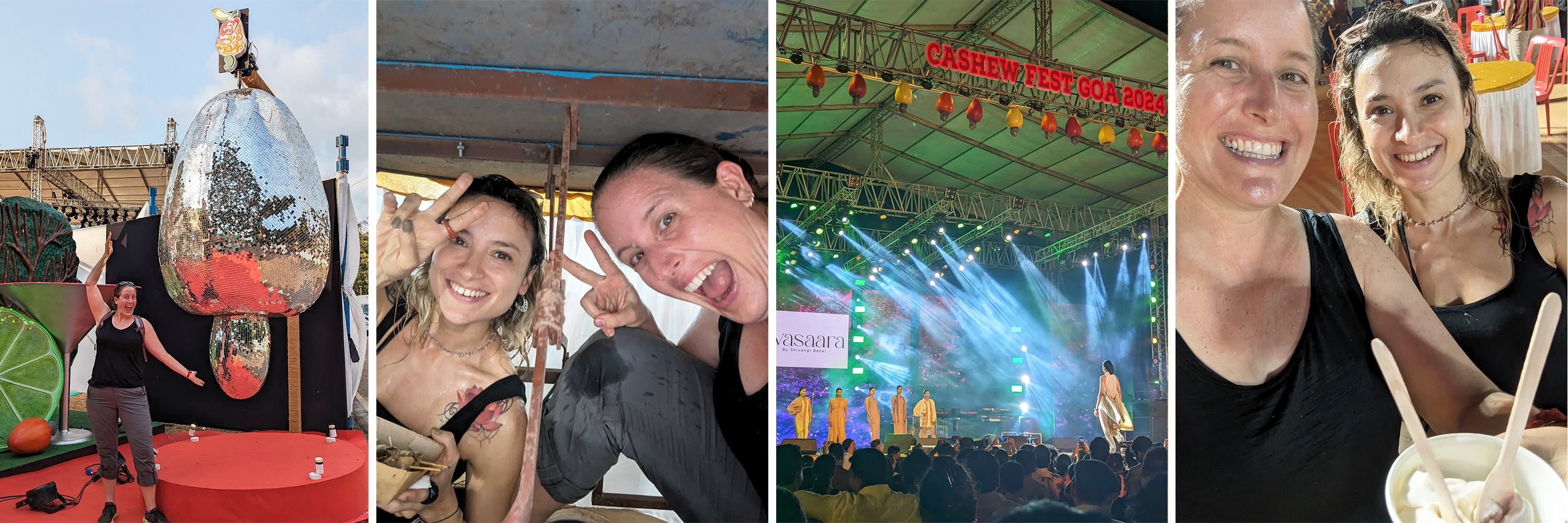
I ended up in Panaji a few times during my month in Goa, but I want to highlight one special day. At the time, I was doing a yoga teacher training about an hour away, but another student Gabi and I taxied in for the Goa Cashew Festival. Cashews grown in Goa are sold all over the city and many local and foreign tourists return home with bags of these nuts. The festival was held in a big open space with a glittering disco ball cashew welcoming us to the festivals. In case you don’t know, the nut of the cashew actually hangs out from the bottom of the fruit. The fruit itself is very astringent, and to be honest, I’m not a big fan.
All around the festival square were local restaurants selling cashew-based dishes and a few agricultural initiatives showing off different cashew varieties. There was a huge stage set up for a cashew-inspired fashion show and tons of little booths selling cashews with lots of different flavors. (My favorite was the Sriracha.) We got hit with an unexpected downpour and ended up hiding under a table to eat our cashew dinner. The rain finally stopped long enough for us to grab some cashew ice cream before we had to head back to the shala.
me and the disco ball cashew, Gabi and I hiding under a table, fashion show, enjoying our cashew ice cream
From Jaldapara, it’s about a 4 hour drive to Darjeeling. I didn’t have a lot of time, so I hired a taxi and off we drove through the turning, winding backcountry roads of West Bengal. This part of India is near the border and there are many signs of the historical movement between India and neighboring countries. There are Buddhist temples, prayer flags, and restaurants advertising momos in most small towns we passed through. In the case of the Gurkhas, the border crossed them. Gurkhas (or Gorkhas) are Nepali-speaking Indians who I had heard about before in a military context. They first fought against the British East Indian Company in the Anglo-Nepalese War. The British lost many battles before they finally won enough to force a peace treaty which gave them access to land outside of India. Later, the Gurkhas fought in the British Indian Army during World War II. Even today, they are still heavily recruited for many armies around the world. Because they speak a different language and have different customs than other Indians, they have experienced ethnic discrimination and violence. In response, they started a movement to establish a Gorkhaland state (carved out of West Bengal) in an effort to attain more political and social power.
In addition to the Gurkhas, there are Tibetan refugees who fled their home, starting after the 1959 uprising which caused the Dalai Lama to move to India. That immigration pattern has continued through subsequent Tibet-China disputes. There are also Bhutanese who left their country in political protest before the democratic reforms were instituted in the last twenty years.
During British colonization times, Darjeeling was set up as a summer retreat for British officials. It’s known as a “hill station” because it was a station in the hills, much cooler than the lowlands. That is still true today and I met a Bengali couple who had come to Darjeeling to escape the super hot temperatures (45 C/113 F) in Kolkata. The British started growing tea in the countryside, and there are still tea plantations sprawling out from the town in just about every direction. Because I only had a couple days, I didn’t actually make it to out to any of them, but I did buy a bunch of tea to see if I could taste the difference between leaves from the first flush (spring harvest) and those from the second flush (summer harvest) once I get home.
en route to Darjeeling: motorcycle moving mattresses, funny faced Assam Macaque, tea at the very British establishment Glenary’s
Toy Train
The Darjeeling Toy Train gets its name from the fact that it operates on tiny engines and narrow gauge rails (2 ft). I managed to, once again, wade through the bureaucracy of opening an online account for an Indian government agency and reserved a spot on one of the sightseeing trips that goes to the nearby town of Ghum and then returns. There was a choice of authentic steam engines (running on coal) or diesel engines and I went for the original coal that included an extra fee. In retrospect, I might have chosen diesel, because the coal-powered train produced a lot of smelly smoke that entered into the passenger cars while the train chugged up the hills.
stoking the coals, lots of steam, train worker’s hands, tracks alongside buildings
The trains don’t move very fast along and there’s a stop at the Batasia Loop which is how they used to get the trains to change directions within a small amount of space while keeping the train on the tracks. The loops basically function the same way freeway on-ramps work today. On a different section of the track, the train has zig-zag switchbacks to climb altitude quickly. Imagine a zig-zag track going up the side of a mountain. The train goes from one section to the next by first climbing forward, pulling into a level area, switching the track, and then reversing backwards up the next section. There’s a little train in Northern California that does this and it’s quite an experience.
One of the best parts of the ride is seeing all the nearby buildings. The tracks are right in the middle of these small towns and the walls of these houses shake every time a train comes through. Because the train is moving so slowly, it’s easy to people watch and enjoy the scenery. Upon arrival at Ghum station, the train stopped for the workers to fill up on coal and for the tourists to get a bite to eat and visit a small museum. Inside was an article about Mark Twain (a fellow native Missourian) riding the railway in 1896. Although there are many quotes associated to the man that are not actually true, apparently he wrote that the day riding the Darjeeling Toy Train was “the most enjoyable day I have spent on Earth.” This is probably because he rode down from the Ghum station to Darjeeling in a hand-car at whatever speed gravity propelled them and that surely must’ve felt like an extended roller coaster ride moving rather quickly around the loops and turns.
Ghum station, dog following rules in the train station (the sign says nothing about lying down), more buildings close to tracks
After the museum, I opted for some warm masala chai in a clay cup since it was quite a bit chillier at the higher elevation. Darjeeling is surrounded on all sides by the Himalayas, and its known to have spectacular view of the third-highest mountain in the world, Mt. Kangchenjunga. Unfortunately for me, it was foggy and cloudy every single day I was there, so my views were not very breathtaking.
When traveling, I’m a big fan of trying all the candies and treats that I can’t get in the United States. Although I am not a huge fan of Snickers, the kesar pista (saffron pistachio) version was actually pretty tasty. Cadbury Gems are basically M&M’s and the Cadbury Fuse is basically peanuts, creme and caramel.
chai from Ghum station, view of Kangchenjunga, Indian treats
Himalayan Mountain Institute
One of the ongoing jokes from my trip to Bhutan was my desire to see a red panda. My guide kept telling me we might see one on our Merak-Sakteng trek or along the drive back to Paro, but eventually we were at lower elevations and it was clear that it wasn’t going to happen. Once he found out I was going to Darjeeling, he assured me I would see one there and he was right. The Darjeeling Zoo has a few of these adorable creatures on display. These are not closely related genetically to the giant panda at all, and are much closer to raccoons and skunks. Scientists have placed them into their own family branch that belongs to only them and their now extinct ancestors.
Inside the zoo is also the Himalayan Mountaineering Institute whose first Field Director was Sherpa Tenzing Norgay. Along with Edmund Hillary, they were the first people to reach the top of Mount Everest in 1953. The Institute was set up shortly thereafter to encourage others to participate in the sport. The museum includes clothing and equipment that was used in the early days of mountaineering.
red panda, quote from Tenzing Norgay, statue of the famous Sherpa