Kalimantan is the Indonesian side of Borneo where I went to see orangutans. Also, included in my 3 day liveaboard experience were some day and night hikes through the rainforest and a stop in a nearby village. Most members of the communities along the river work in one of two industries: orangutan tourism or palm oil. Although seemingly at odds with each other, people here see the need for both as a means to put food on the table. Palm oil can be grown sustainably on plantations, but many corporations continue to expand their production of palm oil, which frequently mean slash-and-burn of existing rainforests, rich ecosystems which are home to orangutans and other endangered organisms.
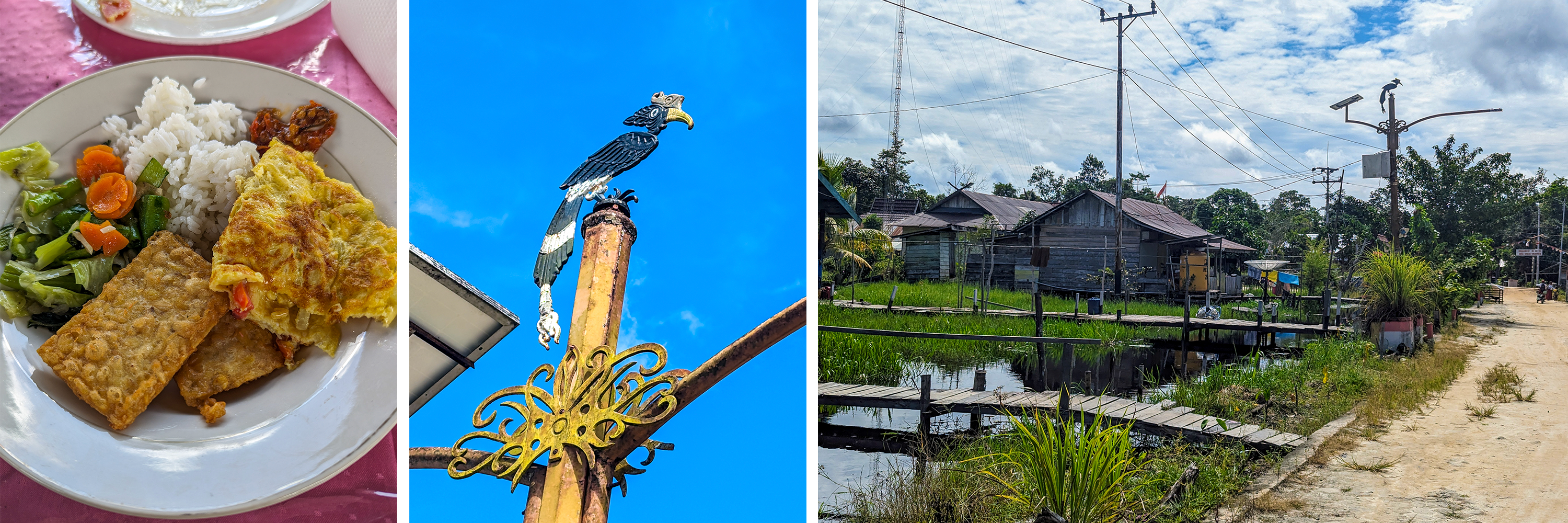
vegetarian meal on board with tempeh and scrambled eggs, hornbill details on lamp posts, village built right in the wetlands surrounding the river
In addition to orangutans, our guide pointed out the proboscis monkeys that also live in the area. They were given this name because the males have absolutely enormous noses. Their fleshy noses are used to make loud mating calls to females. We saw a few different troops of these monkeys when we transiting between orangutan feeding stations and our boat captain would always pull over so we could watch the commotion. Normally, there would just be one adult male in a tree full of females.
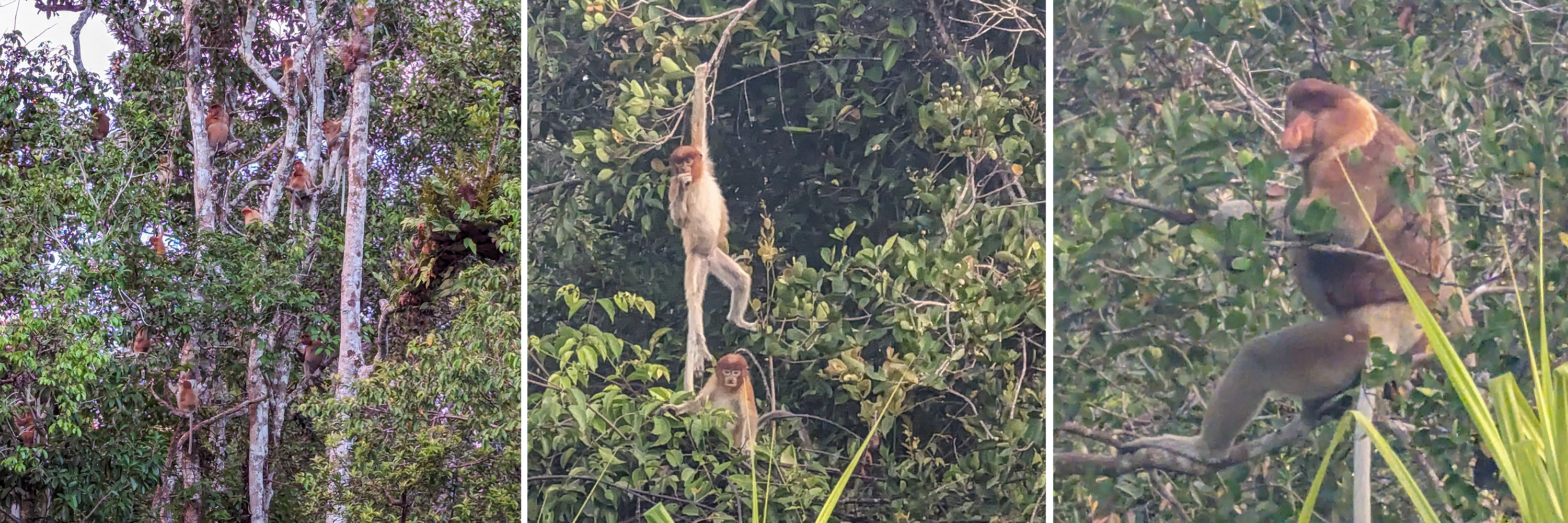
tree full of females, monkey hanging from branch, adult male proboscis monkey casually hanging out
As part of our day hikes to find the orangutans, our guide would show us various fauna and flora. I really enjoyed the giant pillbugs that rolled up in little balls to protect themselves from predators. Also, the Sunda frogmouth bird has to be one of the funniest looking birds I’ve seen.

Gymnostoma seed with lovely geometrical symmetry, Sunda frogmouth, pitcher plants, Southeast Asian pill millipede
The night hike was surreal on so many levels. Walking through the rainforest at night, there were are many animals resting, but also so many awake and moving. My guide found a bunch of interesting insects, including a few assassin bugs which eat their prey by injecting them with a toxic set of enzymes that liquifies the insides, which the bugs then suck out. We also got to see giant forest ants that have big enough mandibles that they can actually pinch human skin to stay attached. The extremely well camouflaged mantises that look just like dead leaves were also lovely.

assassin bug, giant forest ant, damselfly, Asian dead leaf mantis,
There were also quite a few different spiders. Most of them were variations of huntsman spiders, but I did get to see a giant black tarantula which was way bigger than the size of my hand, probably around 8 inches across. As they get larger, they eat even bigger prey including frogs, fish and lizards.
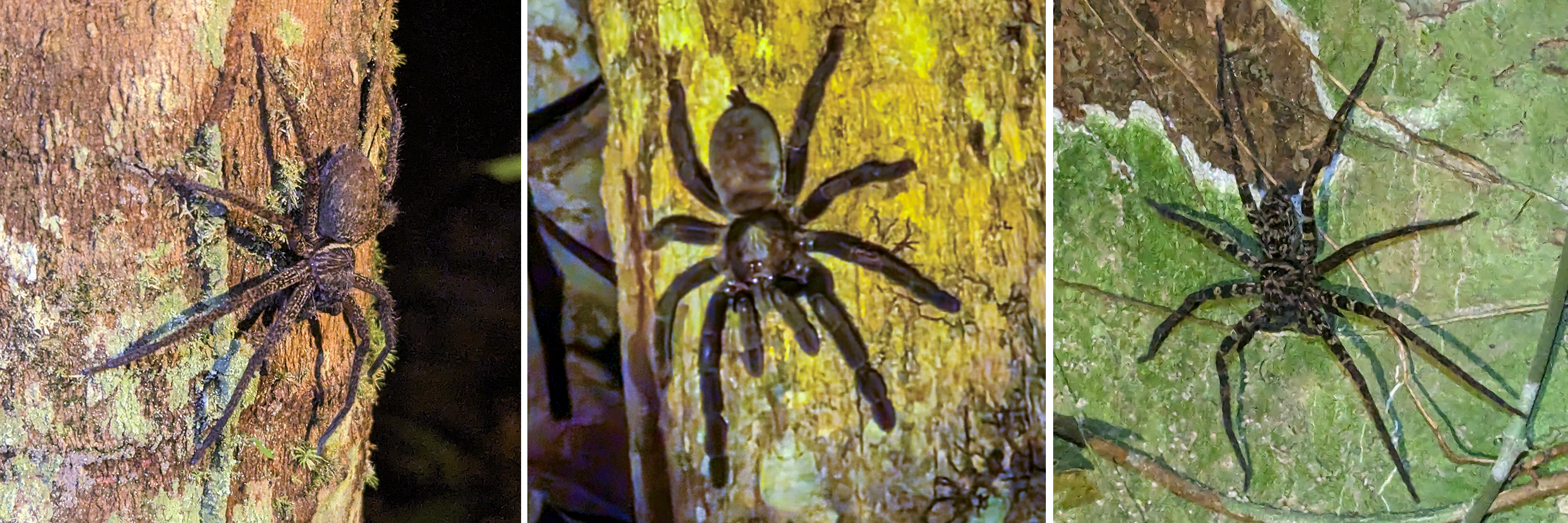
huntsman spider, Borneo black tarantula, another species of huntsman spider
I even got to hold a giant relative of Daddy Long Legs. One of the most shocking moments was when my guide turned his flashlight towards the tree canopy and right above us was a pit viper hanging out.

Cyclosa spider web, Gagrella harvestmen, North Philippine temple pit viper
There were also a few birds sleeping in the branches, colorful kingfishers and barbets. Earlier in the day, we also had caught sight of a crested serpent eagle, which get their name from all the snakes they eat.

rufous-backed dwarf kingfisher, crested serpent-eagle, red-crowned barbet
Perhaps my absolute favorite night hike find were these stunning bioluminescent mushrooms. I teach marine biology, so bioluminescence is a common feature in deep water organisms that I discuss with students every year. However, it is found much less frequently in terrestrial creatures, with the notable exception of fireflies. There are not that many species of fungi that bioluminesce, so I was super excited to see these.
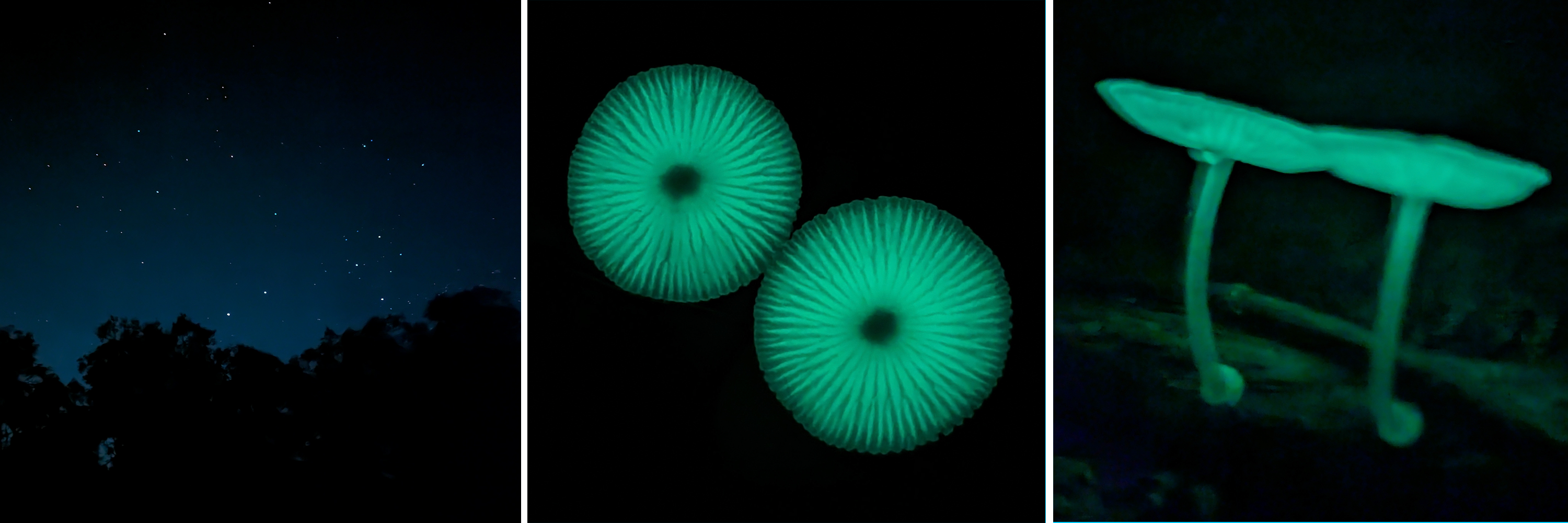
Southern Cross just above the trees, glow in the dark bonnet mushrooms from top, and side
 Meandering Marbles