Mérida Carnaval
Here’s my last update from my time in the Yucatan. At the end of my stay, my travel plans got pretty convoluted. I decided I wanted to experience Carnaval in Mexico, which led to some backtracking and long bus rides. As a kid, I grew up going to Mardi Gras with my family in Mississippi and Louisiana, but I’ve never seen the festivities outside the United States. There are two big celebrations in the Yucatan, one in Mérida and one in Cozumel. The Mérida festivities are held in an entirely separate part of town in fairgrounds they call the Ciudad Carnaval. I went with Lily, another student from the Spanish school I was attending. We met up in the center of town and hopped on the free women-only shuttle that took us directly there. It’s basically set up like a giant fair with rides for kids, typical street food like churros and elotes, and different stages with performers. The big highlights of Carnaval are the parades and the concerts, but we had some time to kill before they started so we explored the mostly-empty rides.

giant bouncy obstacle course (they let us go through even though we were grown), me and Lily in front of the crazy worm roller coaster, view from the top of the ferris wheel
Finally, it was parade time! The parade went around the outside of this entire “city” and there were bleachers set up for everyone to sit and watch. We, again, scored some seats in the women-only sections which were filled with women and kids. The parade was everything I hoped it would be, with ridiculous costumes, massive floats, and people having a great time.
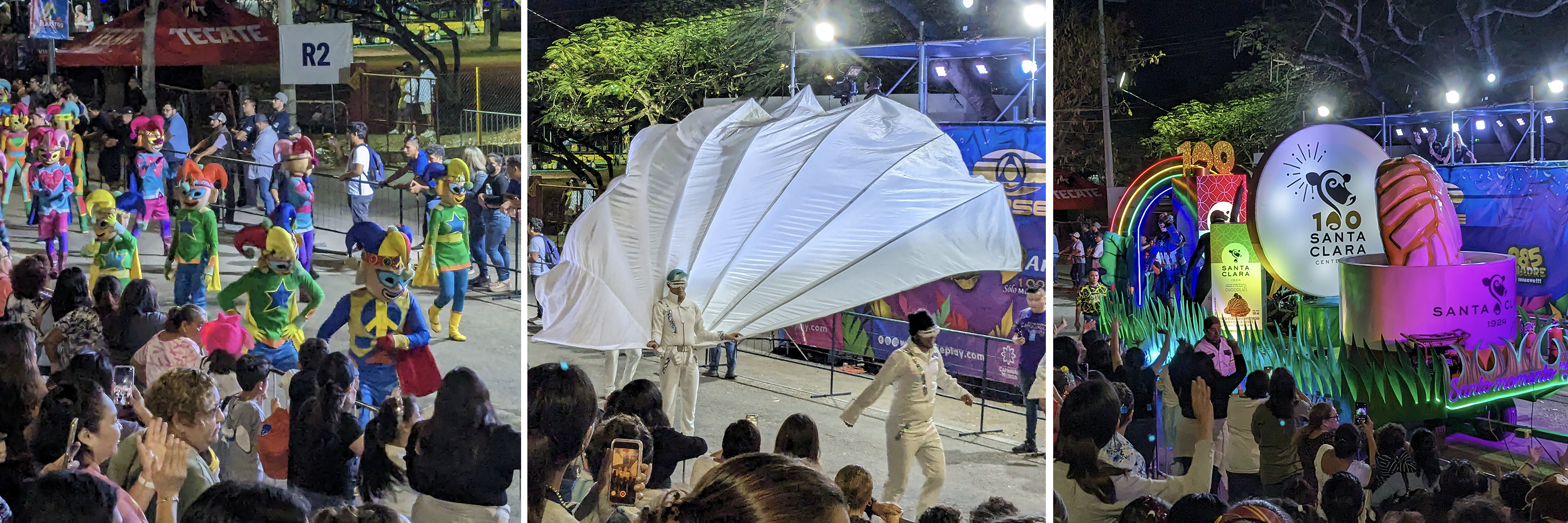
dancers, special performers, giant floats
The dancers were full of energy and dressed up in brightly colored costumes. Some groups were completely in sync and others were just feeling the vibe.

various dance groups and their costumes
The floats were mostly sponsored by a few different large corporations.
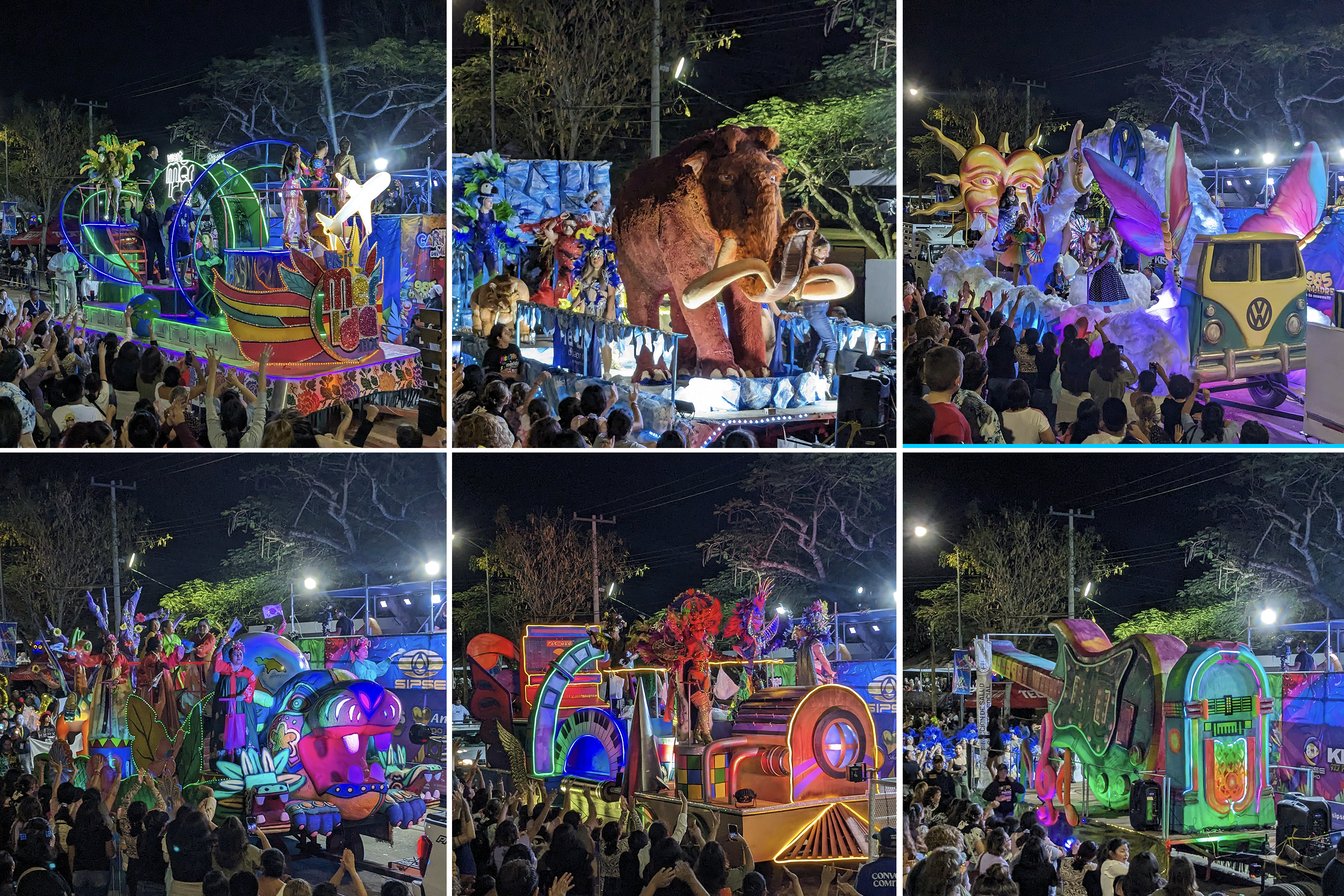
different floats in the parade
One major difference is that not nearly as much swag is thrown to spectators. At Mardi Gras in New Orleans, I came home with bags of beads and toys. Here I managed to catch a few cookies, a couple sets of beads, and a souvenir cup.

frozen strawberries and cream treat, my swag from the parade, headless man costume
The other huge difference is that Carnaval in Mérida holds huge concerts. We didn’t stay for the entire concert, but Matute plays old hits from the 80’s that everyone in the crowd (except us) seemed to know. It was getting pretty late, so we hopped on our free shuttle bus back to the city. Mérida is one of the safest cities in all of North America, which meant we walked back to our hotels without any issues even though it was well past midnight.
Kayaking in Sisal
On one of my last weekends in Mérida, another Spanish student Lucy and I made our way out to Sisal for a kayaking experience. Our guide seated us in the front of his moto-taxi and added a trailer with 2 kayaks in the back and off we went on a long bumpy ride to La Carbonera. The water is very low in the winter months, but we still managed to see a few flamingos hanging out. We kayaked through lots and lots of mangroves and eventually came to an ojo de agua, a natural spring. The water in the ojo is freshwater, bubbling up from an underground source. Back on the main lagoon, the water is brackish because it mixes with saltwater from the ocean. When the rainy season comes, the water gets higher and a lot more flamingos come to feed. On the way back to Sisal, we stopped and went for a swim in the ocean at a beautiful pristine beach.

flamingos, me and Lucy in our kayak next to mangroves, view from swimming in the ojo de agua


 Meandering Marbles