After getting my scuba certification while I was still in graduate school, I never went diving again. I did my certification dives in cold Monterey, California and when they had me clear my mask, it freaked me out to have my nose in such freezing water unable to breathe. I kept popping up to the surface because my weights were off and, at the time, I decided it was an expensive sport that I couldn’t really afford anyways.
However, when I was planning this trip, I realized I probably was just hiding behind my fears and I should try and tackle them. I booked a five-night stay on Derawan Island with scuba dives planned for three times a day with a private refresher lesson on the first day. I definitely was nervous and uncomfortable and right before we were supposed to go down, I had a very clear moment of “oh, hell no, I’m not doing this.” However, I was able to take a bunch of deep breaths and calm down and my very patient scuba dive instructor Maja helped me get through my initial moment of panic. Funnily enough, as soon as I was underwater, I was fine. I’ve been snorkeling for years and have all the underwater practices of clearing my mask and breathing through my mouth.
Fear is a lurking ghost that hides inside us, haunting our actions, until one day, we push through it and it’s just gone. As soon as I realized I could do it, and how beautiful it was down below, the fear vanished and instead, I was able to just enjoy all the beautiful scenery and marine life. I still struggled to adjust the air in my BCD and it was hard for me to stay still. But those are skills that come with practice and I was already improving in my few days of diving.

view from my above-water bungalow
The next couple of blog posts are just lots and lots of pictures of cool marine life. Remember you can click on an any image if you want to see it in more detail. This post is mostly sea slugs, which is why I ended up in Indonesia in the first place. The Indo-Pacific Ocean has some of the most colorful and diverse varieties of nudibranchs in the world, and I’m positively obsessed with them. Some of these photos are mine, some of them are from Maja.
First up are some lovely tunicates. These are all invertebrates, but they are in the Phylum Chordata because they all have the beginnings of a rudimentary spinal cord called a notochord. They are the invertebrates that are most closely related to humans and these in particular were very colorful.

Golden Sea Squirt, Green Barrel Sea Squirt, Rhopalaea fusca
Next up are some lovely echinoderms: one sea cucumber and five sea stars. The variation in shape, size, color, and texture in sea stars is incredible.
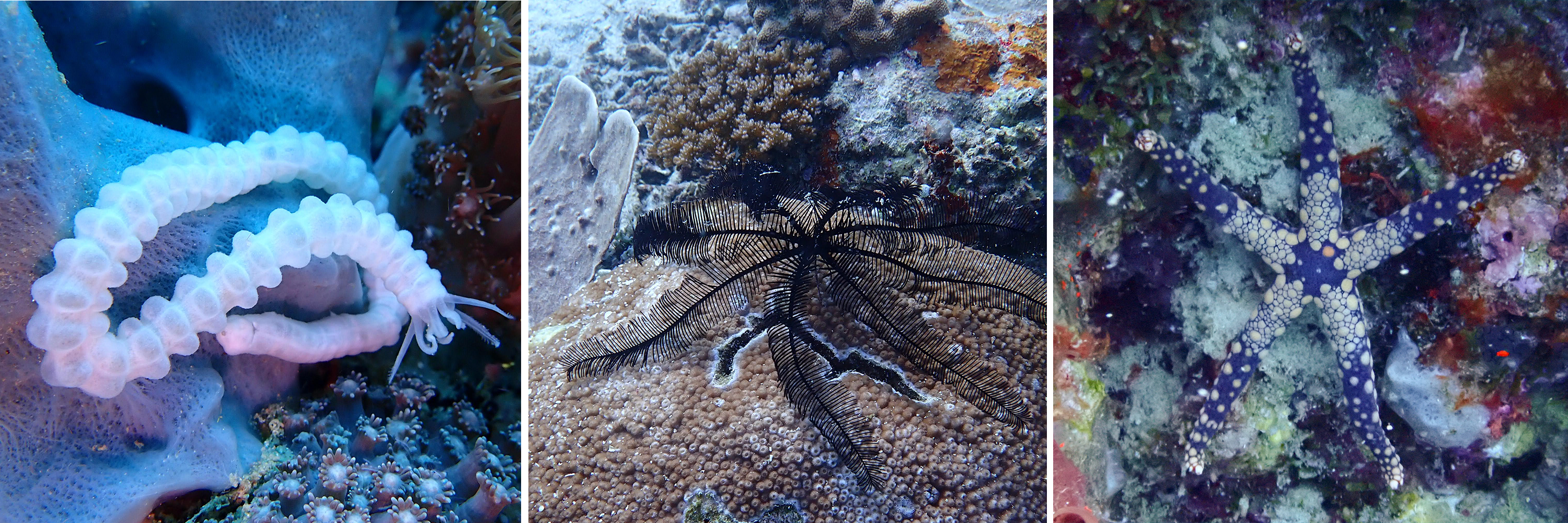
Lampert’s Sea Cucumber, Spinose Feather Star, Pebbled Sea Star

Granulated Sea Star, Blue Linckia, Genus Nardoa Sea Star
This is what a sea cucumber looks like when it’s feeding. It uses its mouth parts to bring sand and the detritus it eats into its mouth. Eventually most of the sand comes out the other end and scientists think that at least half the world’s sand has traveled through the digestive tracts of sea cucumbers.
I’m a big fan of giant clams. They are huge, always a surprise, super colorful and patterned on the inside flesh.

Boring Giant Clam, Boring Giant Clam, Fluted Giant Clam
Next are a couple of sea slugs that aren’t nudibranchs and a sea hare, which is pretty closely related to the sea slug family.
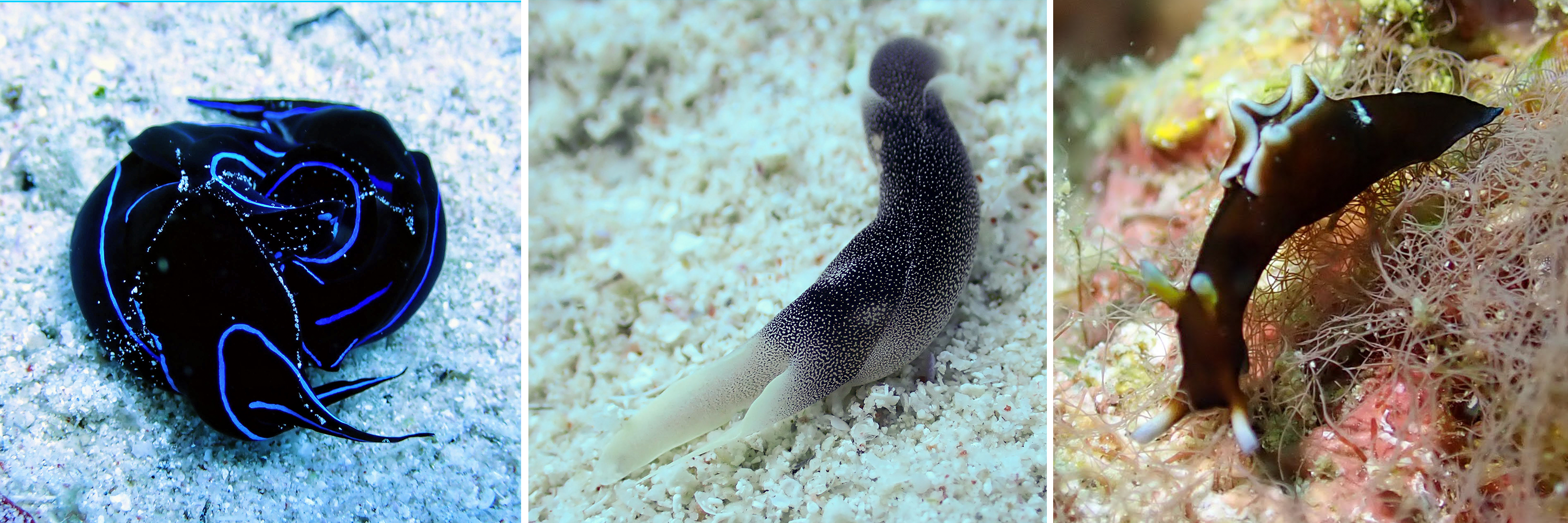
Blue Velvet Headshield Slug, Lovely Headshield Slug, Aplysia nigrocincta (Sea Hare)
And now, for the stars of the show: the nudibranchs! These are different from other sea slugs because of the two rhinophores they have on their forehead. They use them for sensing the world around them.

Unadorned Gymnodoris, Thorunna furtiva, Hypselodoris skyleri

Elegant Phyllidia, Blue Dragon, Painted Phyllidia

Genus Phyllidiella, Indian Caloria, Anne’s Phyllidiopsis
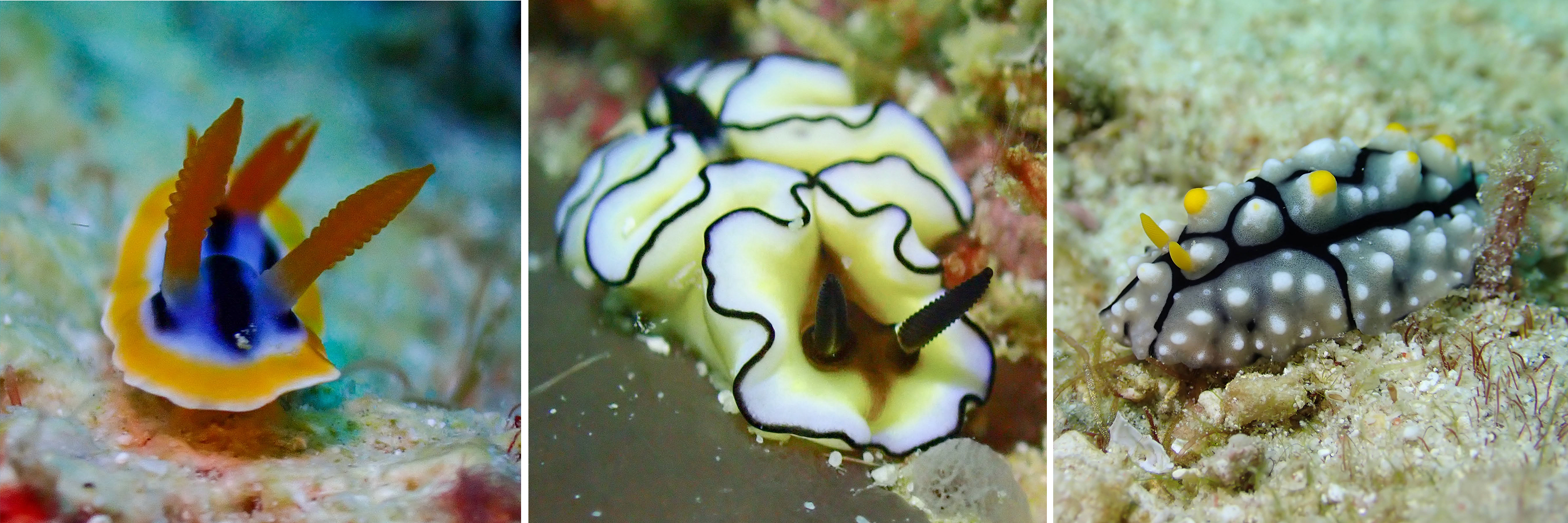
Streaked Chromodoris, Black-margined Nudibranch, Elegant Phyllidia
And, lastly, a few photos of my scuba guide dude and I underwater.

Maja getting rid of a banana some one had littered in the ocean, me and Maja, me
 Meandering Marbles