Chichén Itzá & Ek Balam

Chichén Itzá

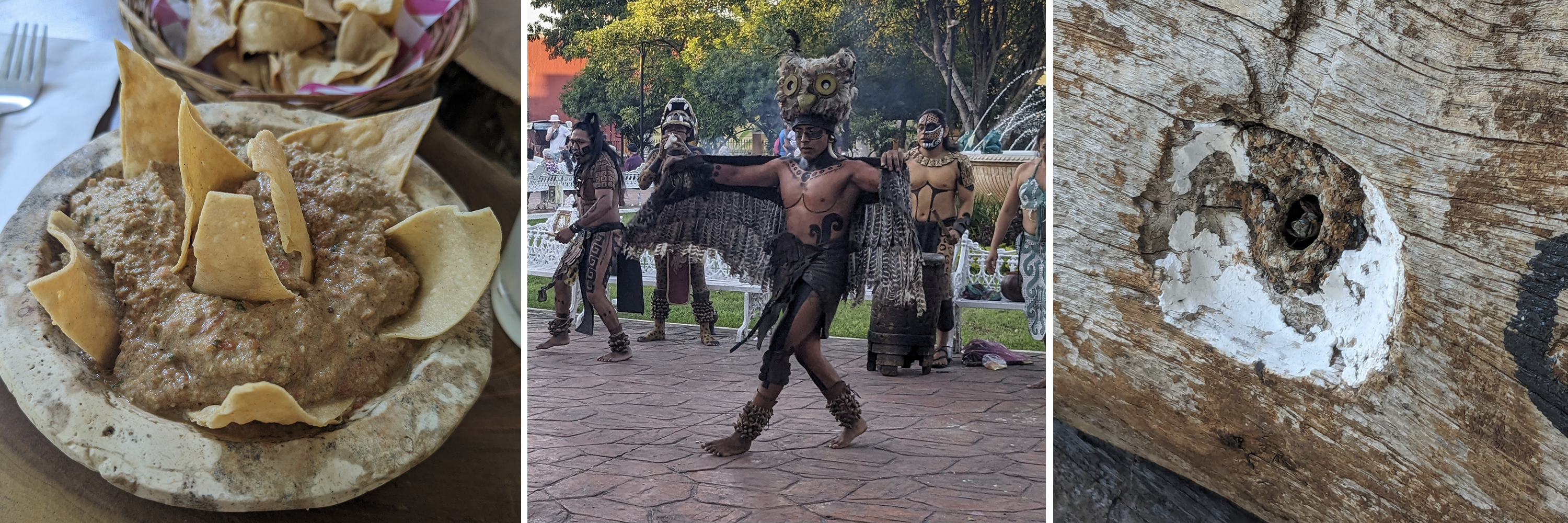
Chichén Itzá is probably the most famous of all the Mayan ruins in Mexico. It has been extensively rebuilt since its heyday in roughly 700-900 CE. Early in the morning, when I visited, the site is still relatively quiet. There are a few bus loads of tour groups, but the site is large and people disperse rapidly once they’re though the gates. However, by mid-day, this site is busy, busy, busy. Vendors are selling souvenirs on every path and tourists are huddled in circles around guides listening to stories.

Even with all the commotion, Chichén Itzá is stunning. The work they have done to restore the ruins gives a clear impression of the power that this city-state used to possess. From the menacing platform of skulls to the giant pok-ta-pok playing field to the pyramid centerpiece, the elites of this city used strength and authority to control their subjects.

Pok-ta-pok features prominently at almost every Mayan ruin I visited. On signs, it’s often just called el juego de pelota, the ball game, in modern Spanish. The goal is to score points by getting a rubber ball (between 5-10 lbs) through a hoop positioned higher up on the sides of the playing court. There were two teams and players were not allowed to touch the ball with their hands or feet. They wore extensive gear to protect themselves and there are frequent mentions of bruised and injured players.

feathered serpent (kukulkan) head decorating the pok-ta-pok field, El Castillo also known as the Temple of Kukulkan, pok-ta-pok goal high up on the side of the wall

In Mérida, there’s a contemporary pok-ta-pok match every weekend across from the catherdral. I didn’t get there early enough to get good videos, but you can watch various YouTube videos of the sport. It looks a lot like hacky sack with a lot of sliding. The reason this sport is so important to Mayan culture is because it is a part of the Popol Vuh, the Mayan text that includes the story of creation. There are three sets of twins in the story, and the second set, Hun-Hunahpú and Vucub-Hanahpú, are invited to Xibalba to play in a pok-ta-pok match. They are defeated by the lords of the underworld and sentenced to death. Hun-Hunahpú’s skull is placed in a tree that produces gourds.

A woman named Xquic notices one of the gourds is in the shape of a skull, and when she goes to touch it, the skull spits on her hand and she become pregnant with Hun-Hunahpú’s twin sons. She leaves Xibalba to visit her mother-in-law who does not believe her since her sons are dead. However, she passes a test involving maize and then everyone believes her that she indeed is pregnant with this dead guy’s kids. Eventually the twin sons are born, they grow up, and return to the underworld to avenge the death of their father and uncle. They then become the sun and the moon and humans are then created from maize.

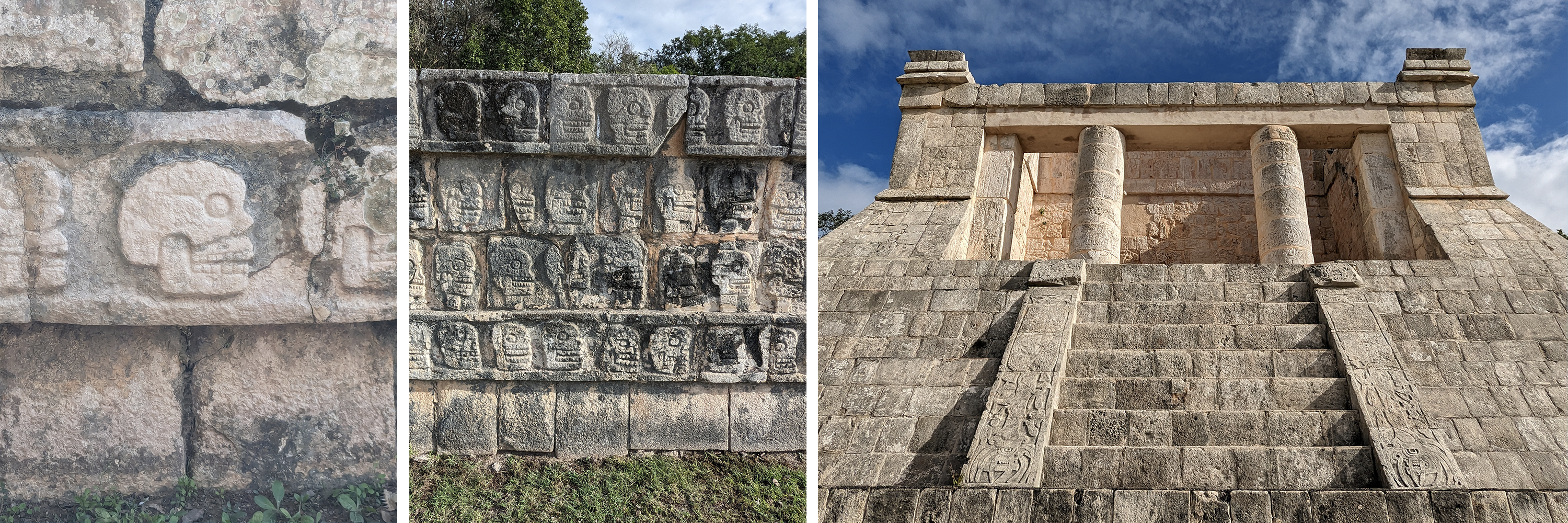
The Tzompantli was a large platform used for displaying skulls, most likely of sacrificed victims and prisoners of war. This one is located next to the pok-ta-pok field and some think that the losers of the game would be beheaded and their skulls would have been placed there. According to those interpretations, if you died during a game of pok-ta-pok, you skipped going to the underworld of Xibalba and headed straight to heaven. Because of this, others think that the winners were decapitated as a reward.

close-up of skull carving, side view of Tzompantli, Temple of the Bearded Man (named because of the carving of a bearded man)

This archeological site is huge and there are buildings still being uncovered. The Group of the Thousand Columns is a bunch of columns lined up in a grid like manner. On some of these columns, it’s easy to see carvings of warriors that would have been painted in striking colors. The whole area would’ve been covered with a roof and would’ve formed a type of passageway out of the heat of the sun. There are also at least two cenotes. The Sacred Cenote was used to dump bodies after human sacrifices and the other one was probably used as a water source for the city.

tiered building corner, Sacred Cenote, Group of the Thousand Columns

My other favorite buildings were at the end of the tour. The House of the Nuns was probably a house for Mayan royalty and its carvings are still easily visible today. El Caracol was a Mayan observatory used for tracking astronomical events. All observatories seem to be called el caracol, the Spanish word for snail, because of how the top of the building resembles a snail shell. (The tiny observatory I saw on Cozumel was also called El Caracol.)

close-up of carvings, House of the Nuns, El Caracol

Ek Balam

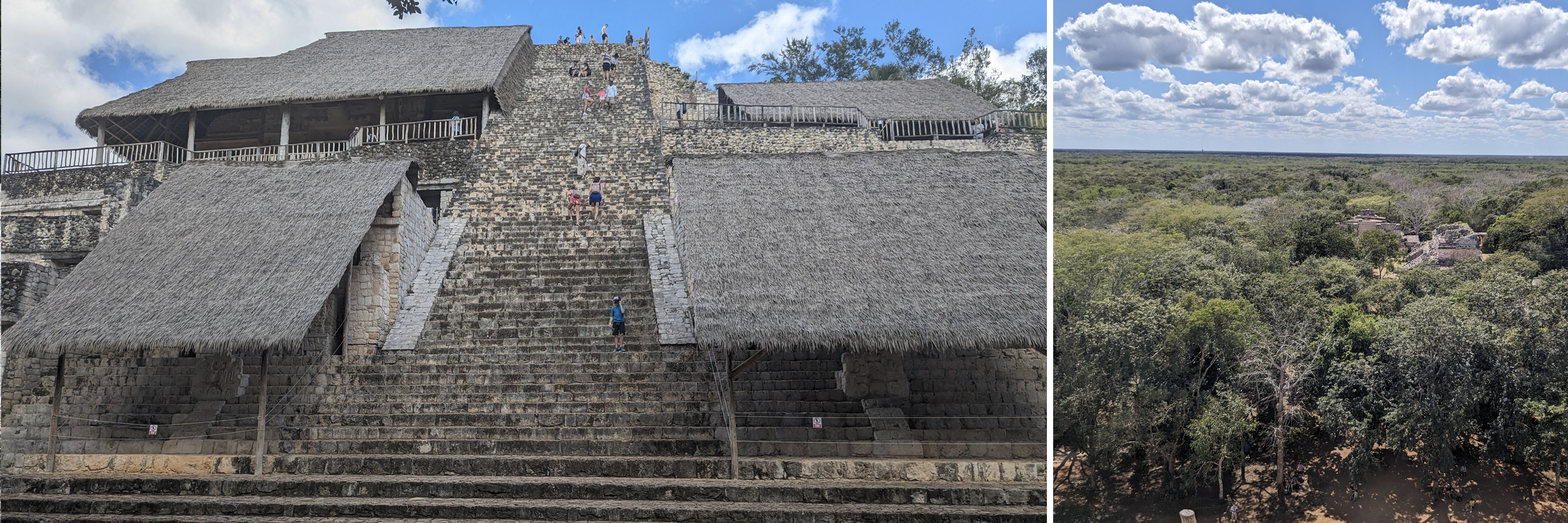
Apparently on a clear day, it’s possible to see Chichén Itzá from the top of the Acropolis in Ek Balam since they’re less than 40 miles away from each other. The biggest structure is the Acropolis, which is a mixture of a very tall and steep pyramid combined with a rectangular building with lots and lots of rooms. The Acropolis contains the tomb of Ukit Kan Lek Tokʼ, who was once the ruler of the town. His tomb has an awesome stucco facade with another earth monster mouth guarding the entrance.

Acropolis (the tomb is under the thatched roof on the top left), view from the very top

glyphs at bottom of Acropolis, tomb opening with monster mouth, close-up of carvings

The site itself is pretty small, with an extensive set of walls encircling the city. There are four sets of walls around the city and the last one seemed have been hastily built, probably as a last ditch effort to protect the city against an invading attack.

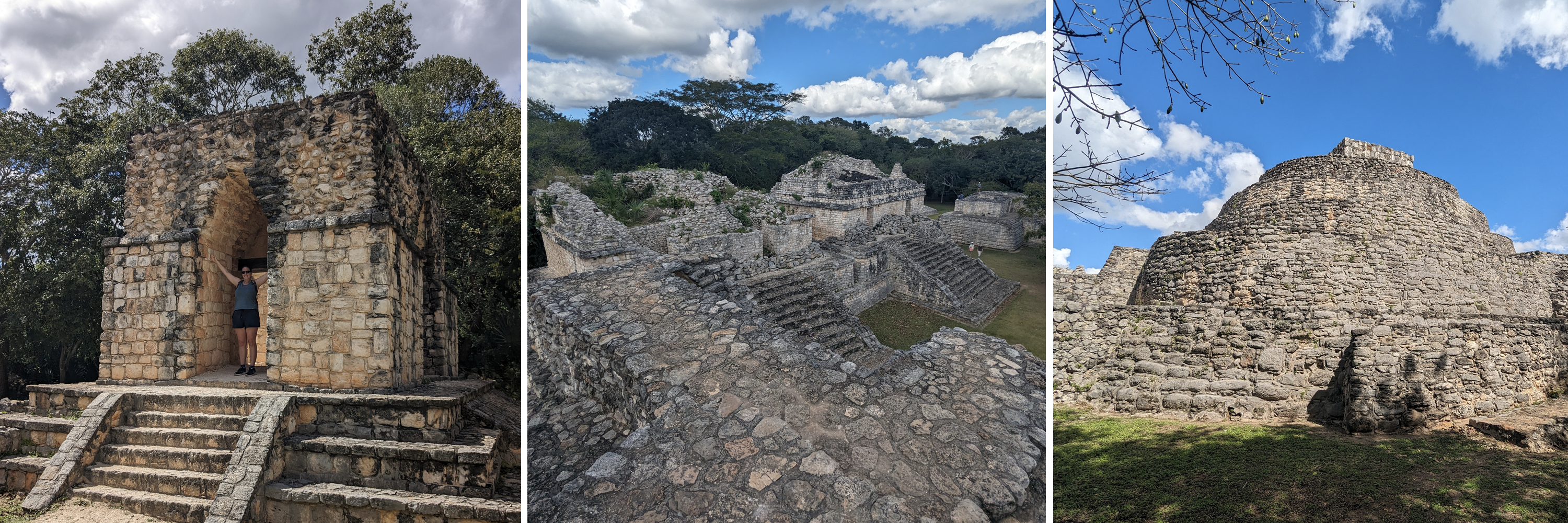
me posing with the entry gate, two buildings called the twins, view of the thick outside wall

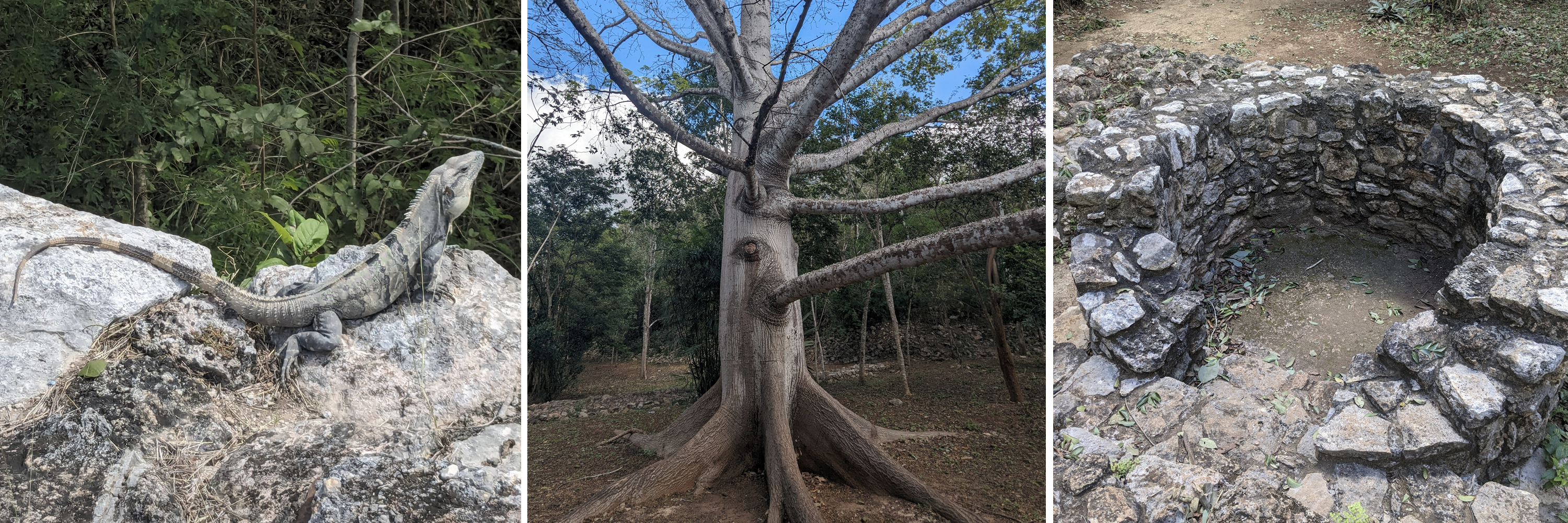
black spiny-tailed iguana, ceiba tree (central to Mayan spiritual beliefs in that it connects the underworld, the middle world, and the heavens), a steam bath

Cenote Xcanche

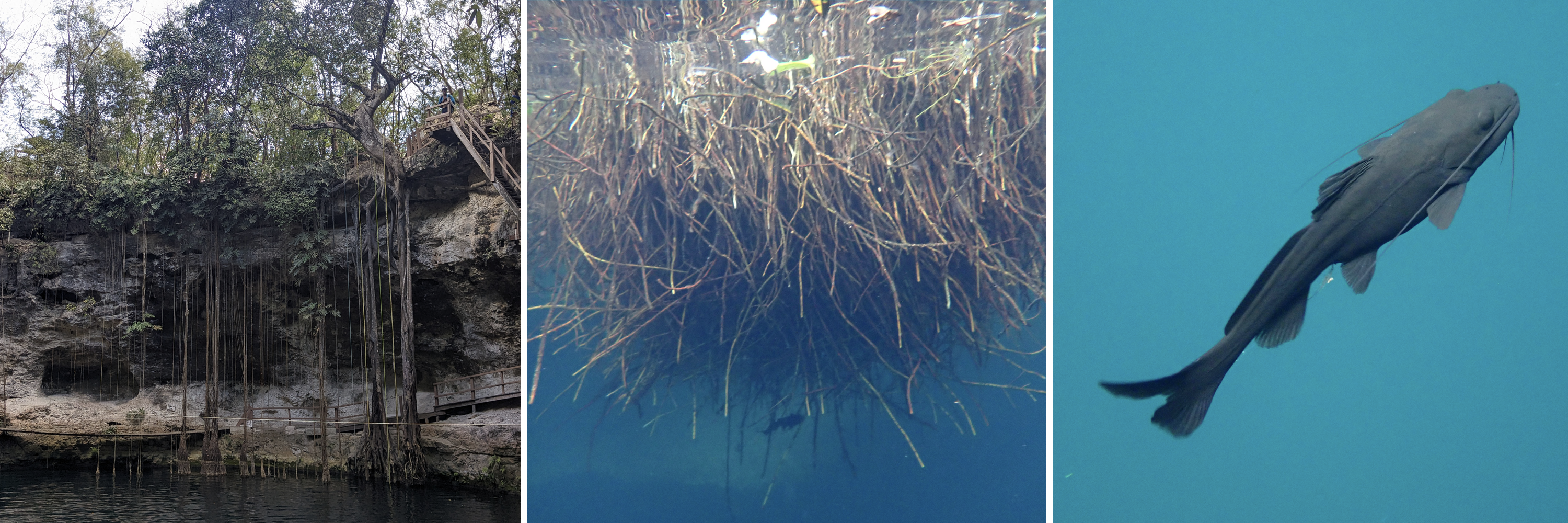
A short, bumpy bike ride away from the Ek Balam site, is this lovely cenote (bikes included as part of entry costs). This is an open-air cenote with awesome vegetation and a few catfish swimming around.

view of cenote walls plant roots underwater, pale catfish

Mérida

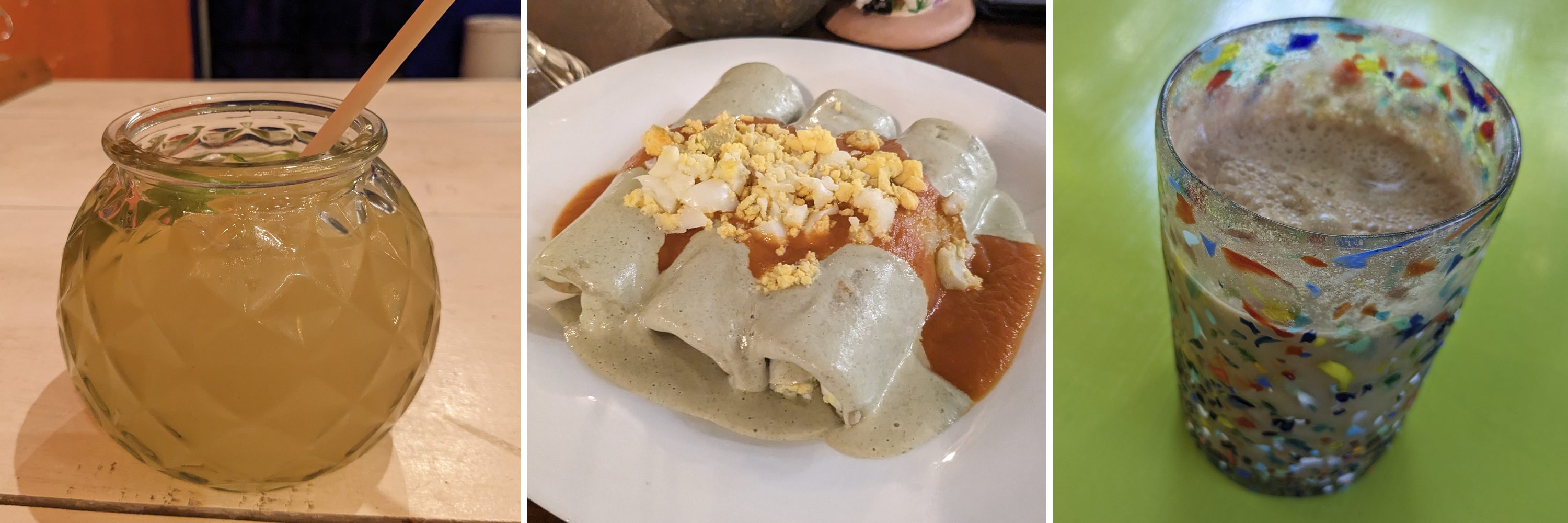
I stayed in Mérida for three weeks, taking Spanish classes and wandering around the city. The colonial influence is strong here and old money still has a deep hold on the community. In Mexican slang, the word fresa (literally strawberry), refers to spoiled, young people with a lot of privilege and parts of this city definitely have fresa vibes. At one time, the Yucatan was the one of the richest states and Mérida was one of the richest cities in Mexico thanks to the henequen industry, which, of course, I’d never heard of until I got here. Henequen is made from a type of agave (different species than the one used to make tequila), that was twisted into ropes, cords and fabric. People made a lot of money from the plant and their ruthless exploitation of workers. There’s actually a sizeable Korean population in Mérida because of this industry. Originally, a bunch of Koreans signed on to work 5-year contracts on henequen plantations, but earned almost nothing, were frequently beaten, and often didn’t even make enough money to return home. So they stayed and their descendants still live here.

Architecture

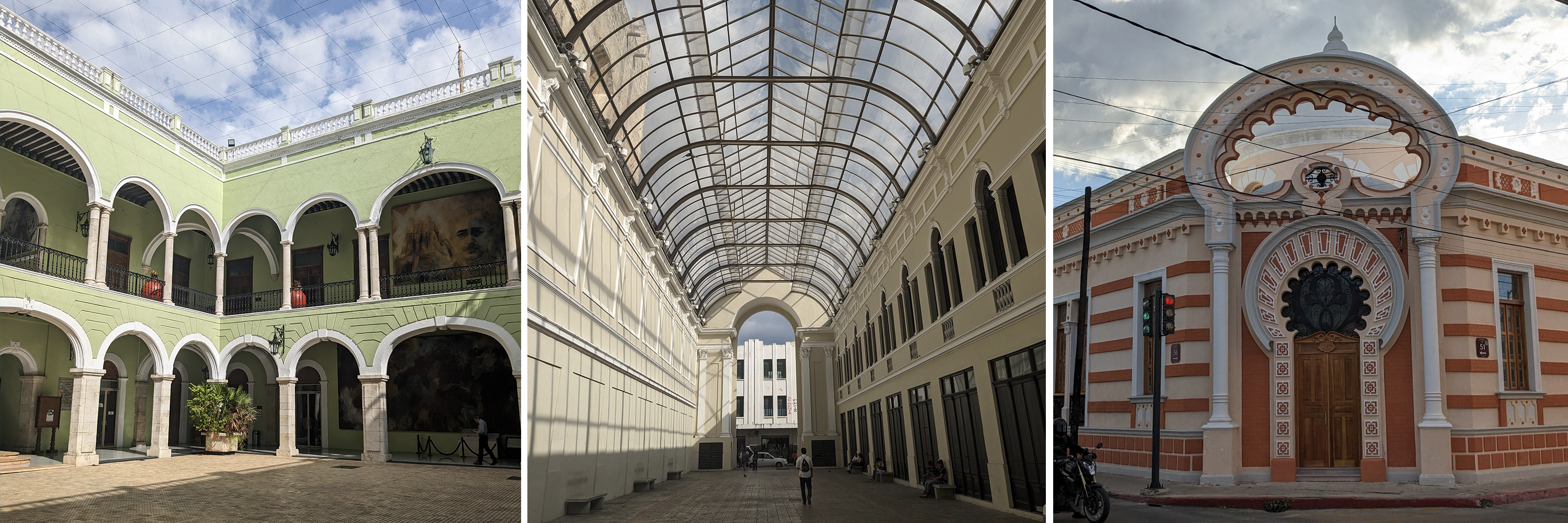
Because of the old money in this city, there’s a lot of European style architecture in the rich enclaves of town. Just outside the city center, the architecture switches to square cement houses built right next to each other, forming one contiguous wall on each block, interrupted by fancy windows and doors.

City Center: Palacio de Gobierno, Pasaje Revolución, fancy corner house (by the way, all street corners have this diagonal cutout)

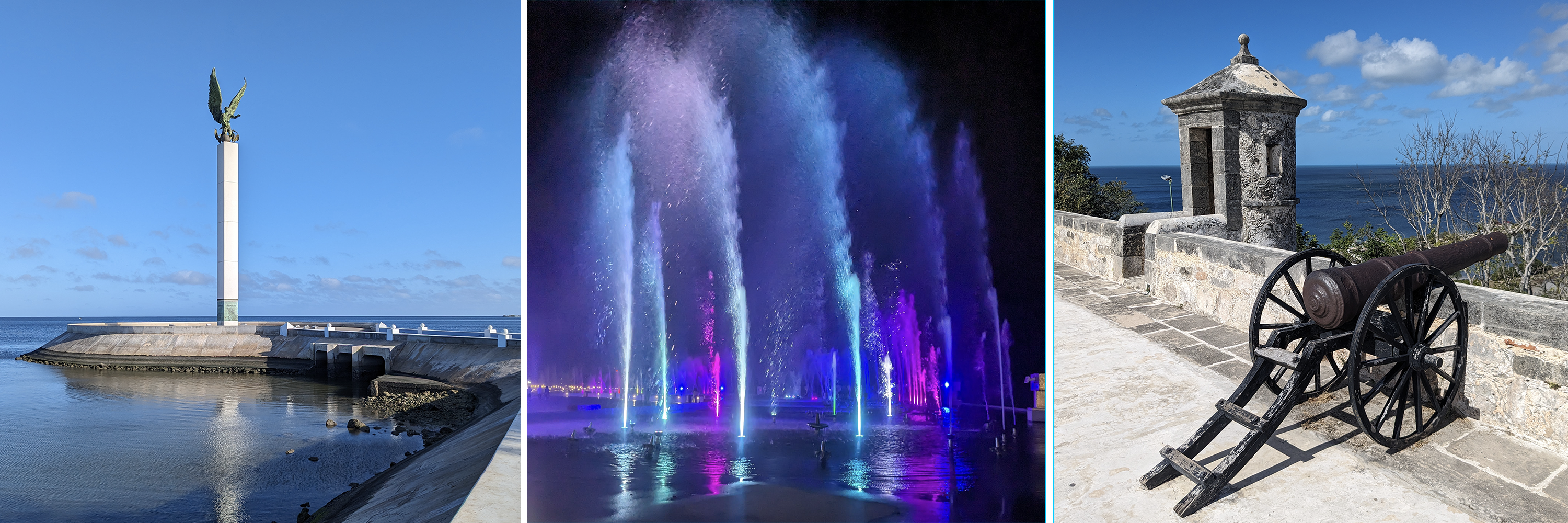
Paseo Montejo: El Minaret, Monumento a La Patria, El Palacio Cantón (home to the Regional Anthropology Museum)

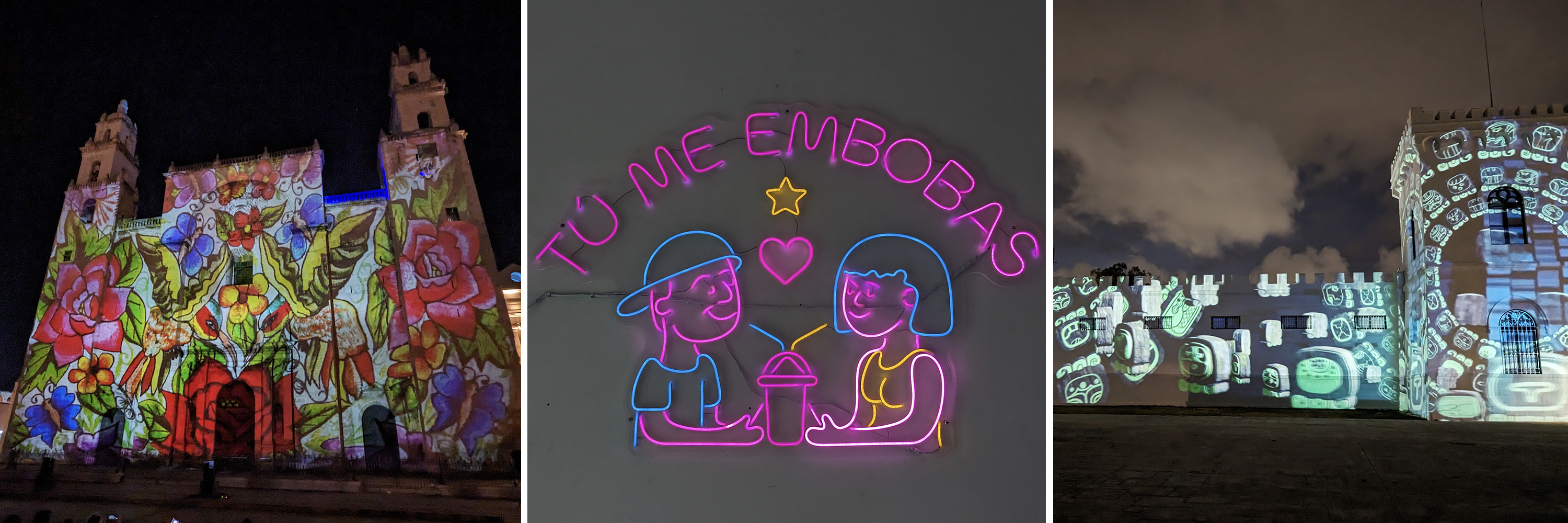
Mérida in Lights: Catedral de San Ildefonso, neon boba sign, old penitentiary lit up with Mayan calendar glyphs

Art

Mérida is definitely a city of museums and lots and lots of art. Every day after school was finished, I would try to get to another museum or gallery.

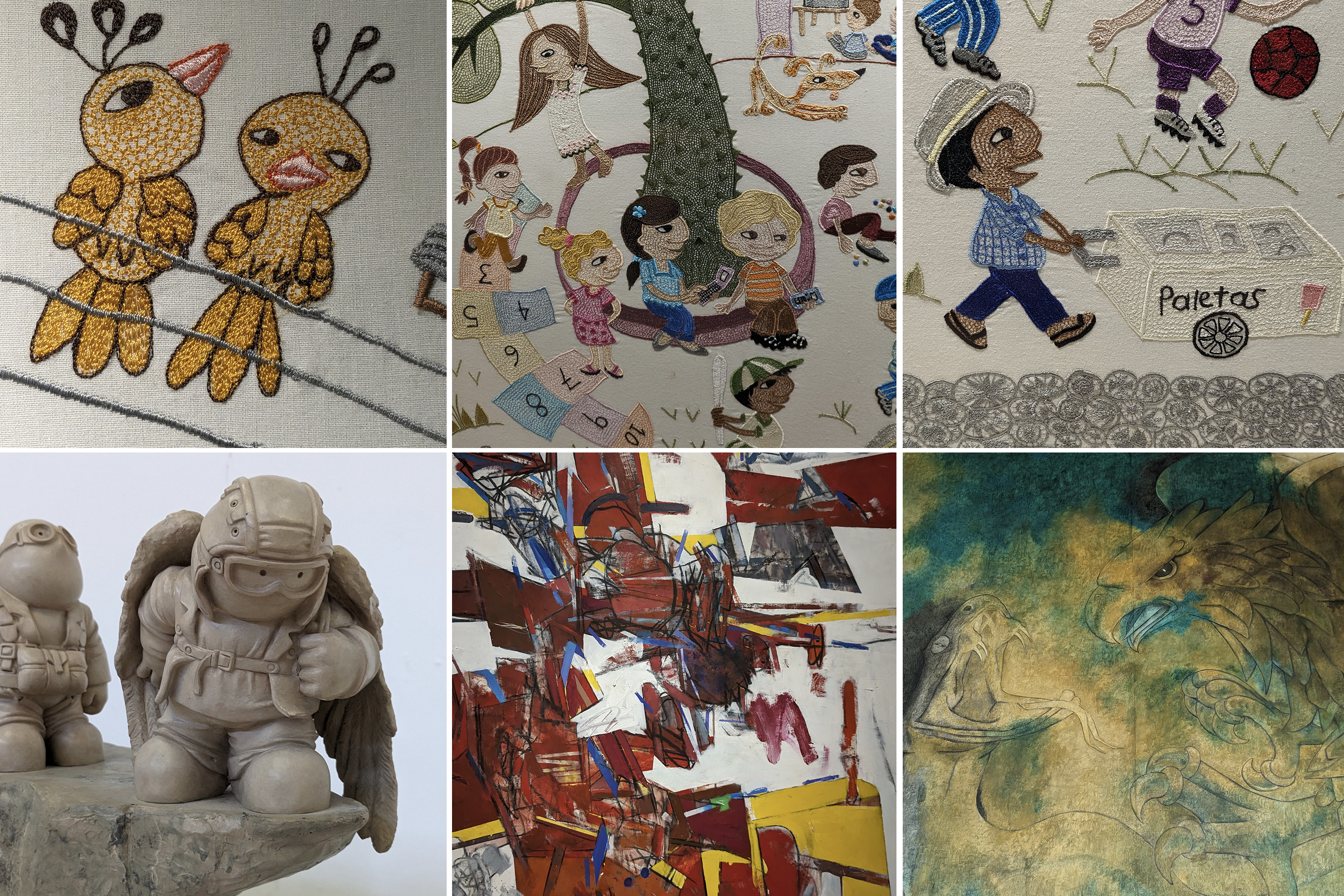
top (l to r): embroidery depicting typical Yucatecan scenes from the Gran Museo del Mundo Maya
bottom (l to r): sculpture in MACAY (Contemporary Art Museum), painting from MACAY, painting in the Palacio Gobierno by Fernando Castro Pacheco

Food

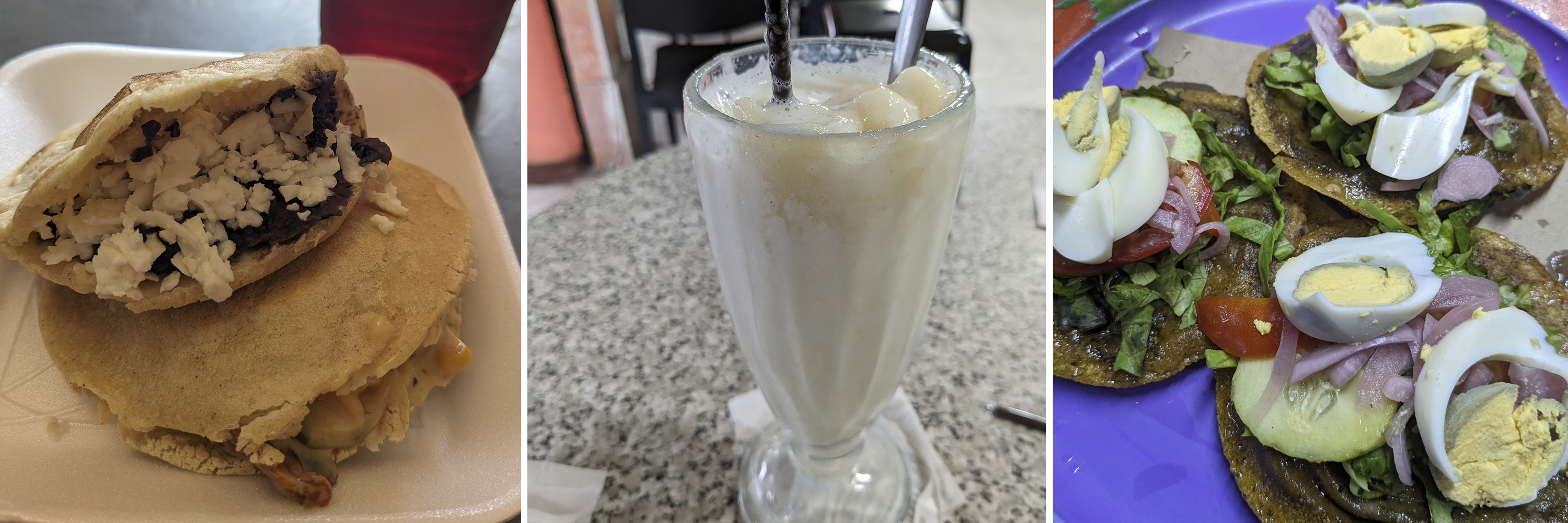
Of course, tacos are available on every other street corner, but the Yucatan has some special regional dishes. Salbutes are basically tacos, but have a puffier base than a regular tortilla. Panuchos are similar to salbutes, but are filled with beans and then fried a bit. There’s some differences in the toppings, but I’m vegetarian, so those subtleties were lost on me. Chaya, the tree spinach I briefly mentioned in an earlier post, gets tossed into a lot of dishes.

Onto the desserts: marquesitas are crepes filled with your choice of sweet toppings (nutella, cajeta (caramelized goat milk), or cream cheese), a bit of fruit (bananas and strawberries are common), and then topped with lots and lots of cheese before being rolled up into an easily portable street treat. Champola is also a speciality of Mérida in particular. It’s simple a sorbet covered in milk, but not blended together. The best flavors are guava, coconut, and mamey (a fruit with a bright orange flesh that I’ve only had while traveling, but apparently does grow in Florida and Hawai’i).

Mayan styled salbutes (with chaya and pepita seeds), vegan tacos de birria (not Yucatecan, but these were amazing), marquesita with nutella and banana

gorditas (stuffed with cheese and beans and mushrooms), coconut champola, panuchos with eggs

More Mayan Ruins

Balamkú

My guidebook mentioned that Balamkú was near Calakmul and was definitely worth a stop because of an enormous frieze that is actually open to the public. Now, I love art, but there’s a lot of art vocabulary that still baffles me and for some reason, I thought it would be a giant painted mural, maybe with a little bit of texture. I definitely wasn’t prepared for the size or scale of this piece of work. A nice guardian let me into the locked room and proceeded to share with me all of the animals carved into the giant stucco wall. There are four tall sections which are composed of a king on top, an amphibian in the middle, and the “monstruo de la tierra” (Earth monster) at the bottom. In between these four kings are kneeling jaguars. The whole scene represents entering the underworld for whatever rituals needed to be conducted there. Click on the images if you want bigger photos.

tall king section of frieze, jaguar (look for the claws), frieze and me (for scale)

pyramid view, decorative archway, and trees growing through steps on the main plaza

Within a short drive of Balamkú, the Zotz Cave puts on a nightly show with over 3 million bats leaving the cave to go in search of their dinner. There’s only room for about 20 people to watch from a path overlooking the cave. Right around sunset, the bats start to emerge. Eventually, it looks like a giant bat volcano and there are so many that the bats sometimes collide with the humans that are standing around. One bat attached to my shirt and another one landed in my hair. They both safely detached and went on their way. There are between 7-10 different species of bats that live in the cave and most of them join this nightly insect feast.

Chicanná

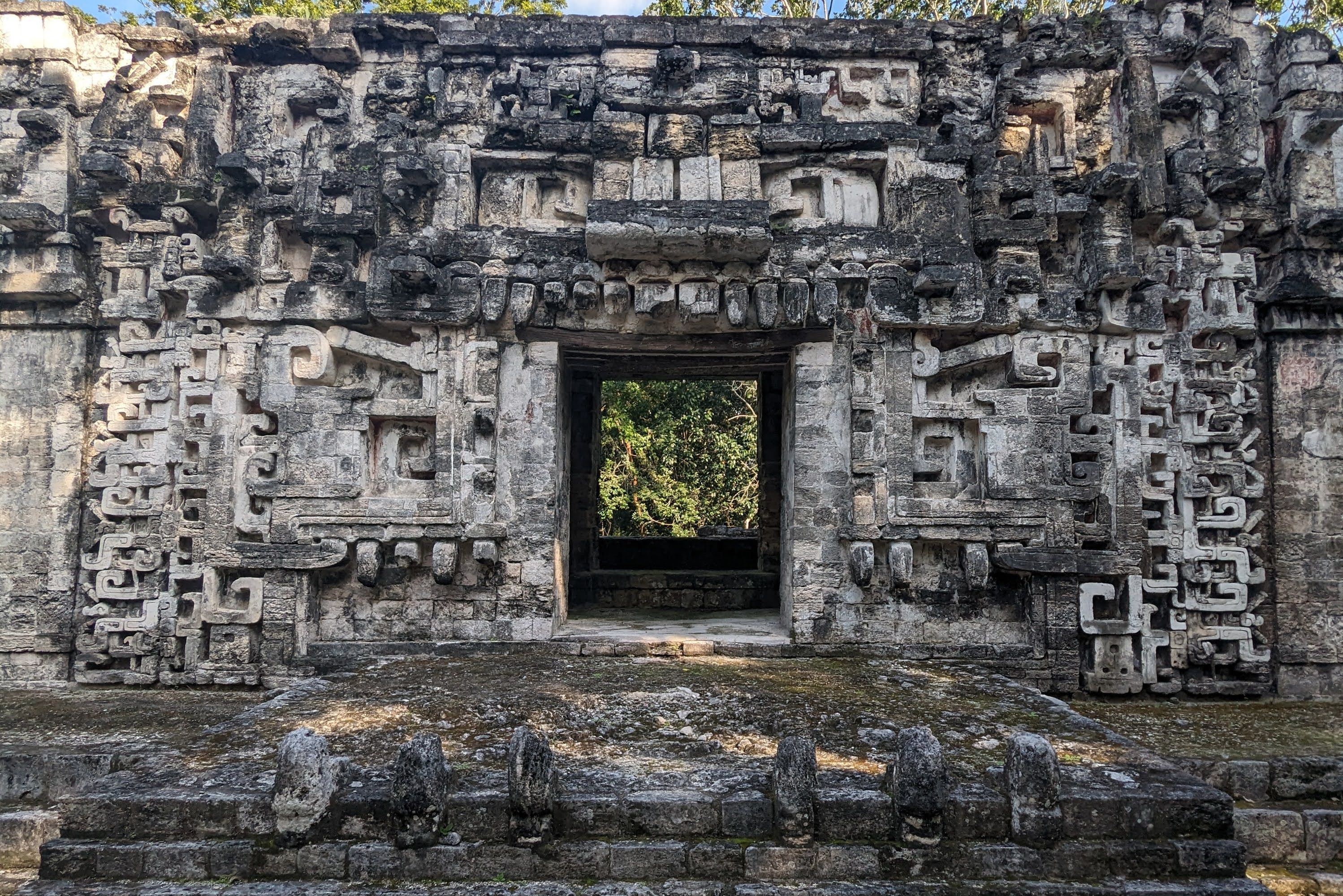
This site doesn’t have giant pyramids, but instead is a small town filled with intricate carvings and decorations. Chicanná got its name from one building in particular – the House of the Serpent Mouth. Chi means “mouth,” can means “serpent,” and na means “house” (thank you, Wikipedia). This building is still incredibly well-preserved, but when it was built around 750CE, it would have covered in a layer of stucco and been painted in vivid colors including red and green. This elaborate carving probably represents the monster of the underworld. No one knows exactly how this building was used, but one idea is that rituals were conducted here and this door representing a symbolic portal between the middle world (where humans reside) and the underworld.

House of the Serpent Mouth

Because of the huge number of decorations, archeologists think this was a town for elites where some rituals would’ve been conducted. It’s situated very close to Becán and probably functioned as a rich suburban enclave.

close-up of carvings

Becán

Becán is a big city with a giant pyramid. Due to some complicated rental car logistics, I only had about an hour to run around and climb up these awesome ruins. I definitely wished I’d budgeted some more time for this sprawling site. This city was surrounded by a giant moat, which probably functioned to both protect the city, as well as to serve as a supply of water for the town itself. It served as regional capital for the surrounding countryside where goods were brought and distributed to other locations.

biggest pyramid in Becán (Structure IX), view from the top of the pyramid down onto another ruins (Structure VIII)

One of the most interesting parts of Becán was how much housing has been uncovered and is open to tourists to enter. The rooms are relatively small, but most of them have some kind of built-in bench or bed. The Mayan arch is a a set of parallel walls that at some point is angled inwards and is then covered with a single layer of wide bricks at the very top. This approach to construction appears frequently in Río Bec architecture, the style associated with Becán, Chicanná, and Xpujil.

really thick tunnel wall with a Mayan arch, view from the top of one of the ruins, typically Mayan bedroom with Mayan arch above

Xpujil

This is a relatively small site, located close to Xpujil (pronounced eesh-poo-heel) town which is why it gets a lot of visitors. Río Bec architecture frequently includes rounded corners, temples with two towers (although this one has three), and monster mouth doorways. My photos of the large temple with three towers didn’t come out to well with the shadows from the afternoon sun.

carvings, close up of one of the temples three towers with clear layers, tree growing on top of the ruins

If you made it this far, here’s a bonus video of spider monkeys playing around in Balamkú.

Calakmul

Ancient Mayan City

Despite being one of the largest and most powerful Mayan city states, Calakmul has never gotten the same attention as Chichen Itza to the north and Tikal to the south. It does have UNESCO World Heritage status, but I’d never even heard about it until I started looking through my guidebook. Right now, the public transportation options are limited and there aren’t many group tours, so it’s challenging to get to. I chose to rent a car in Bacalar and drive many hours on pothole-filled roads. However, everything is changing: the Tren Maya is currently being built (all the heavy trucks contribute to the pothole problem) and will probably be done in the next year. This area will soon be inundated with tourists. The tiny 20-car parking lot is being expanded; the roads are being widened and repaired. Tourism and its impact on the area is about to explode.

Because I knew almost nothing about Mayan history and culture, I hired a guide for this tour and we met at 4:30 in the morning so that we could arrive in the park right when it opened. There were only a couple other people wandering around at that time and it is truly surreal to try and imagine the hustle and bustle of a once-thriving capital city when almost no one is around. The view from the top of the king’s pyramid (Structure II) is incredible: a clear view of miles and miles of trees. But 1500 years ago, there would have been settlements and roads in every direction. Even though the large structures of Calakmul have been excavated, the foundations of the old city remain buried beneath the trees.

from the top of Structure II, the home of the former kings of Calakmul and one of the tallest Mayan pyramids

The king’s palace actually has two levels and it is impossible to see the place where I’m sitting from the ground. The king’s quarters on top would’ve been relatively hidden from the common folks down below. He also would’ve had an elongated head because all of the elite Mayans had their heads tightly bound as children. Everyone in the elite class actually looked completely different from the rest of the people. Mayans also engaged in face scarification and wore a lot of heavy jewelry, especially in their ears.

view of the king’s palace from the bottom, a close up of one of the stelas that depicts a ruler standing on top of a slave who is kneeling

Stelae were often constructed to commemorate people and events. Many of the stelae at Calakmul are in bad shape. There are a few different ways to write in Mayan language: one way uses pictures to depict a specific meaning, another uses pictures to match the syllables of the word, and a third combines both of these together. Despite the complexities, experts can generally decipher most Mayan script today.

top part of stela showing the ruler standing above the slave, view of 5 stelae from the top of Structure I (pyramid that was probably used as a temple)

The pictures below show another large pyramid (Structure VI) where astronomical sightings were made. This building and others were built so that the sun would line up in specific places on the solstices and on the equinox. Some of the engravings on the sides of the stelae are still very clear even after all this time. Although the front and back of these stelae were removed by looters, the sides discuss the people involved as well as the dates of events.

view from bottom of the pyramid, view from top of the other two large pyramids, engravings on side of a stela

So far, at least four tombs have been found inside the king’s pyramid and even more tombs were found in other structures. Even houses of common folk have skeletons buried inside of them. The bodies of the elite class were buried with elaborate outfits and offerings to the gods.

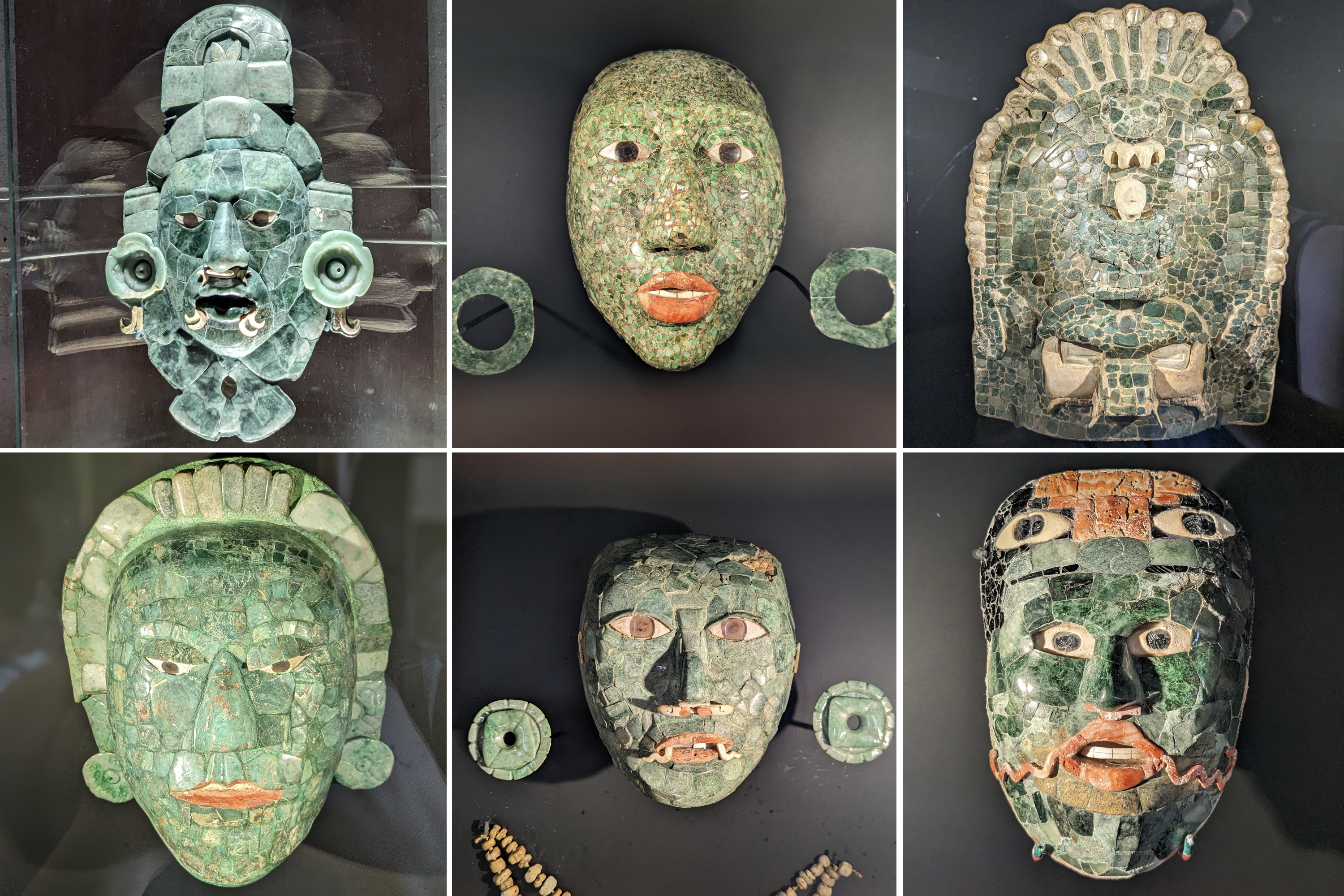
Many graves not only have masks made of jade, but also necklaces, ear plugs, and other fancy adornments. There is no jade in Mexico, so all of this jade was most likely imported from what is now Guatemala, which shows the extent of trade in the region. All of these jade funerary masks below were found in Calakmul, but were removed and put into museums in the city of Campeche. (Side note: this is actually one of the reasons it took me so long to write about this, because I had to go to Campeche to see these masks.) The mask in the top right is the most elaborate and probably belonged to Yuknoom Yichʼaak Kʼahkʼ, the ruler of the Mayan snake kingdom starting around 650 CE.

top row (l to r): mask of Yuknoom Yichʼaak Kʼahkʼ, jade mask & ear plugs with cinnabar used on the mouth, another intricate mask depicting a few different animals
bottom row (l to r): a mask representing Yuknoom Ch’een II (the father of Yuknoom Yichʼaak Kʼahkʼ), another jade mask & ear plugs, jade mask probably for a priest with a second set of eyes representing his supernatural vision and the red lines on his cheek showing ritual scars

Calakmul Biosphere Reserve

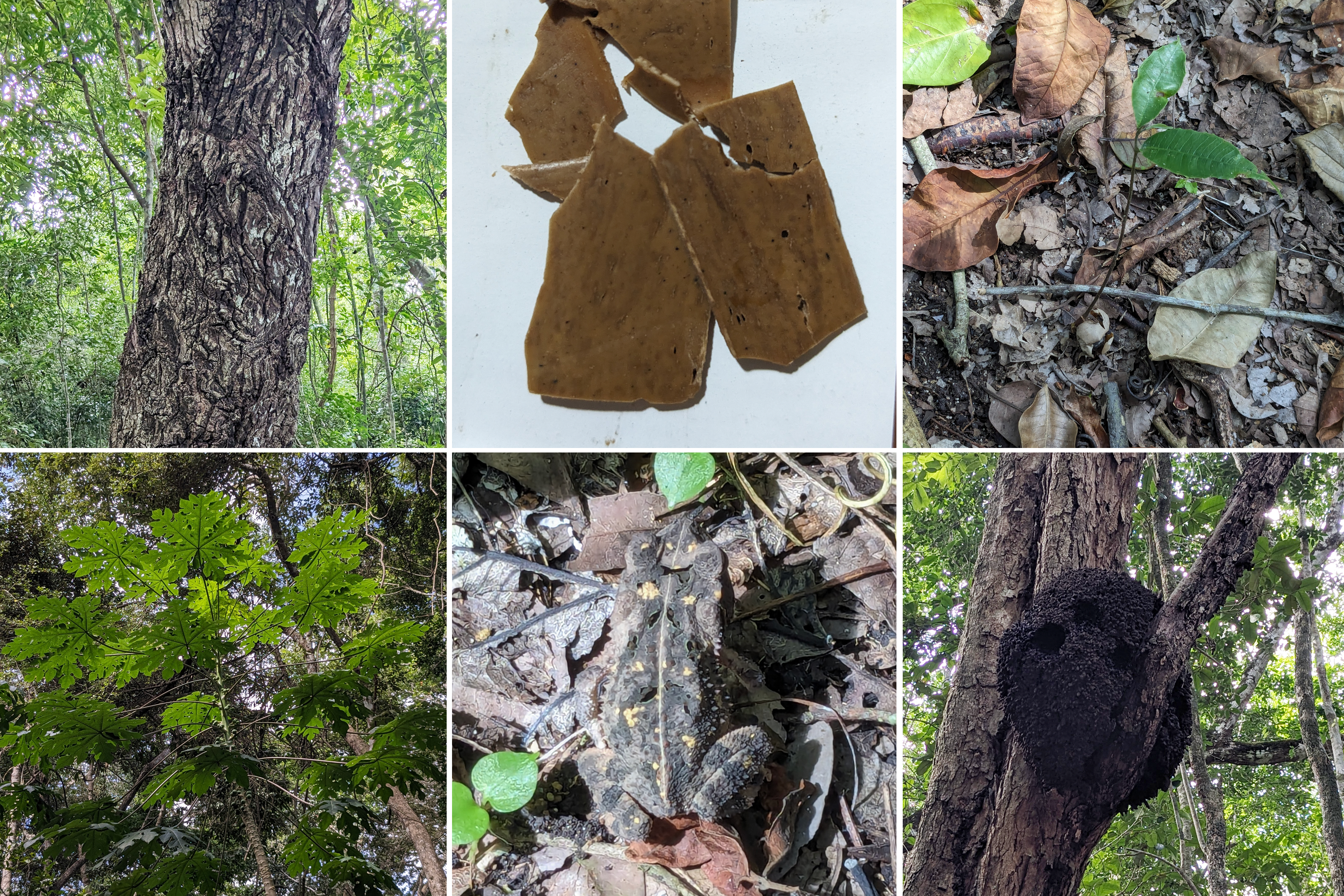
After our tour of the ancient city, my guide took me on a short walk through the nearby protected natural area. Even wearing insect repellant, a swarm of mosquitos kept threatening to attack my face. There’s so much to see in the rainforest, but my guide started by showing me the chewing gum (chicle) tree. By cutting diagonal lines in the trunk, they were able to get the natural resin to flow and that was harvested and exported to make chewing gum. I also was introduced to the Mayan breadnut (ramón) tree which is used to make bread or a type of porridge. We came across a swamp and I could see a crocodile hanging out on a log. Perhaps the most exciting thing I saw was on our slow drive (avoiding potholes) back to the entrance, when a tayra crossed the road. I didn’t get a photo of it (but Wikipedia has some) and my guide said it was only the third time he’d ever seen one. Folks here call them the viejo de monte (old man of the mountain) because of their white heads.

top (l to r): chicle tree with scars, natural chewing gum, Maya breadfruit tree starting to grow from seed
bottom (l to r): papaya tree, Central American Gulf Coast toad, termite nest with holes most likely made by parrots that are living inside of it

Riviera Maya – Part 2

Playa del Carmen

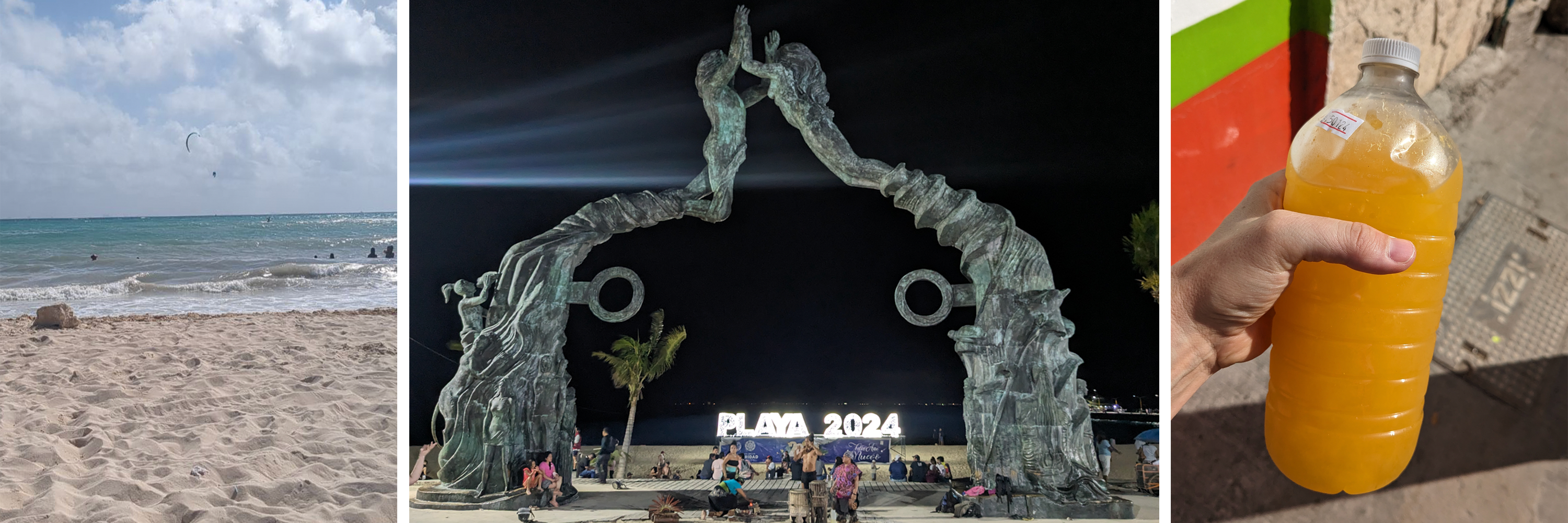
Playa, as it is affectionately called locally, is a strange little oceanside town. It’s got an entire avenue (Quinta Avenida) dedicated to hawking souvenirs, tours, tequila, and sunscreen. “Mexican Disney” is how I described it to a friend. I get the appeal. There are nice beaches, lots of fresh and tasty food, and an entire English-speaking industry devoted to serving tourist needs. I understand why expats and digital nomads would decide to settle there. However, as an independent traveler type who is more excited about sea life than wave life and is looking for a bit more authenticity, I can’t really recommend the city.

view of sandy beach,

Beach 72 in Playa Del Carmen, famous Portal Maya sculpture, and a liter of passion fruit (maracuya) juice

Tulum

Word on the street is that Tulum was a lovely little town about 10-20 years ago and now has turned into the tourist destination du jour. I didn’t even go to the beach part of the town, but I did make it the Mayan ruins that gave the city its name. Probably called Zama (meaning sunrise/dawn) by the original builders, during the colonial era it got the name Tulum (meaning wall). As the city of Chitzen Itza declined in importance, Tulum came to prominence. The city has incredibly thick walls (16-26 ft deep) that surround three sides of the city and the last side faces the ocean. Tulum was well-protected because it most likely functioned as the port city for Coba with large ocean-going canoes making regular visits. Flint, ceramics, gold, salt, textiles, jade and obsidian were most likely being imported, while feathers and copper were being exported. Obsidian came from central Mexico, jade from Guatemala, copper from Honduras, and cacao beans from the Tabasco. There is also evidence of the city’s worship of the Descending God (or Diving God), seen in the photo of the temple below. This god is always pictured head-down, feet-up and may be the same as Ah Muzen Cab, the Mayan god of bees and honey.

top row (l to r): Black spiny-tailed iguana, House of Chultun, Temple of the Wind
bottom row (l to r): Temple of the Descending God, Temple of Frescoes (close up of corner carving), Dancing Platform

The entire Yucatan peninsula is dotted with cenotes, natural holes made from limestone collapsing. Cenote Yaxmulito was the first one I got to swim in, and I had it all to myself for the first 15 minutes I was there. This one was almost entirely enclosed with just a few holes allowing a bit of light in. I have to say, it is utterly surreal to swim amongst stalagmites in the dark.

Views of Cenote Yaxmulito

On the day I arrived at my hostel, there were large banners celebrating the anniversary of a local musical school. I didn’t think much about it, but that evening, there was a lovely neighborhood gathering to watch not only young performers, but also a few professionals do their thing. It’s such a gift to just wander into local events and meld into a crowd. Other kids came around and handed out streamers for us to wave in support. I took a video because the music is a bit different than I expected to hear.

Bacalar

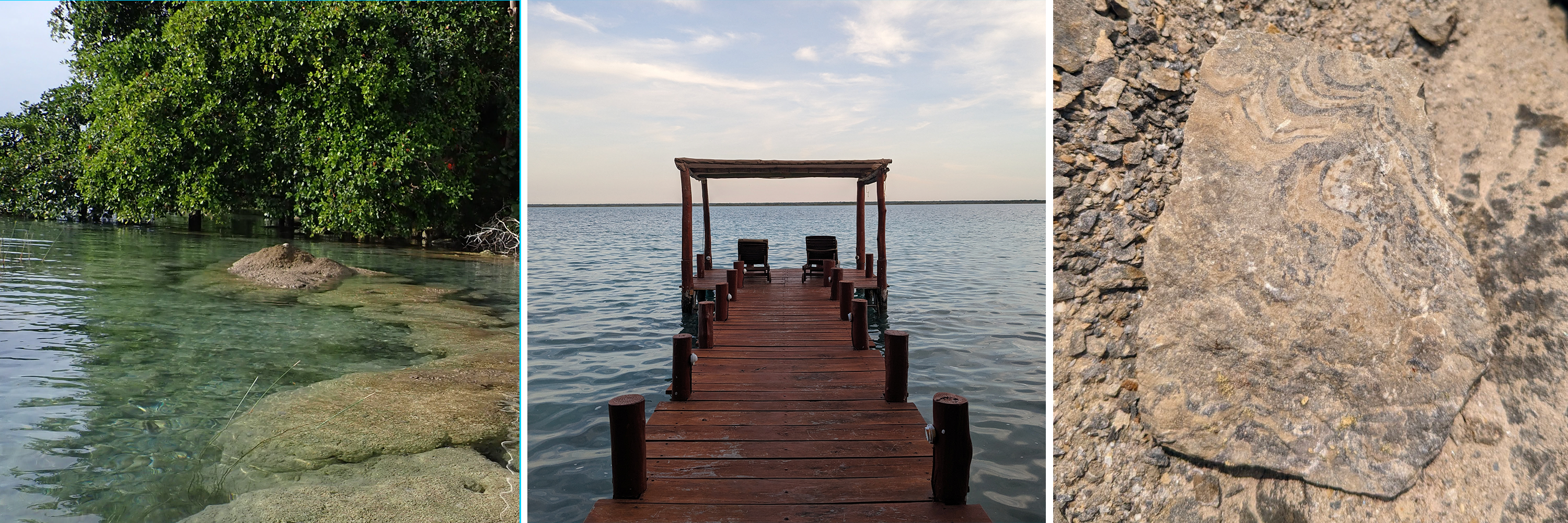
The Laguna de Bacalar is one of only a few places in the world where stromatolites are still being formed. Stromatolites are natural structures built over time by cyanobacteria and are some of the oldest fossils we have. When I was biking across New York last fall, the fossil stromatolite I took home from the Herkimer mine was probably about 900 million years old. Of course, I got in a kayak and paddled myself around until I found some. Mostly, I just came to hang out and swim in this incredibly peaceful freshwater lake. It’s quite a ways off the beaten path, but was a nice layover en route to my next destination.

living stromatolites, view from the hotel, fossil stromatolite from Herkimer, New York

More photos of delicious food I’m eating:

mangos with chamoy, delicious vegetarian sopes across the street from the Tulum ruins, agua de piña y chaya (pineapple and chaya, which is also known as tree spinach)
Riviera Maya – Part 1

It’s been awhile since I’ve written much here, but I’m back on the road. I tend to appreciate these reflections later on, so I’m going to try to write some more this year. I’m spending a month on the Yucatan Peninsula and I’m definitely stuck in the tourist circuit right now. There’s benefits to this, of course: good wifi, plenty of food options, safe pedestrian walkways, beautiful sights, etc. But there are also the downsides: never-ending asks on the street to drink tequila, go scuba diving, take a ferry; the endless hustle-bustle of noisy tourists; and a bit of price gouging. It’s all part of traveling, but I haven’t lived the backpacker life for a while, so I can feel my body and mind adjusting to life on the road again. This part of the trip was really about getting in the water and seeing cool marine life, so it’s mostly just photos of awesome underwater animals.

Puerto Morelos

All the guidebooks describe this as a sleepy, fishing town and that’s probably why I enjoyed it so much. The section of town near the ocean is tiny and can be walked from end to end in about an hour. It’s also right on the Mesoamerican Barrier Reef (the second largest barrier reef in the world) and I could snorkel right from the shore.

notable landmarks in Puerto Morales include Faro Inclinado (the leaning lighthouse), the fancy colored sign, and this lovely disheveled pier

Here are some highlights from a day of shore snorkeling and one boat trip to Parque Nacional Arrecife de Puerto Morelos (Puerto Morelos Reef National Park).

stoplight parrotfish, scattered pore rope sponge, rock beauty

Atlantic peacock flounder, brain coral, smooth trunkfish (this has to be one of my favorite fishes)

giant anemone, spaghetti worm, purple sea fans

Cozumel

One taxi ride and one ferry ride later, I was on the lovely island of Cozumel. I came for the snorkeling, but there’s also a really lovely bike loop that I wanted to ride. The loop is only 40 miles, but I added a 10 mile out-and-back trip to Punta Sur, the very bottom of the island.

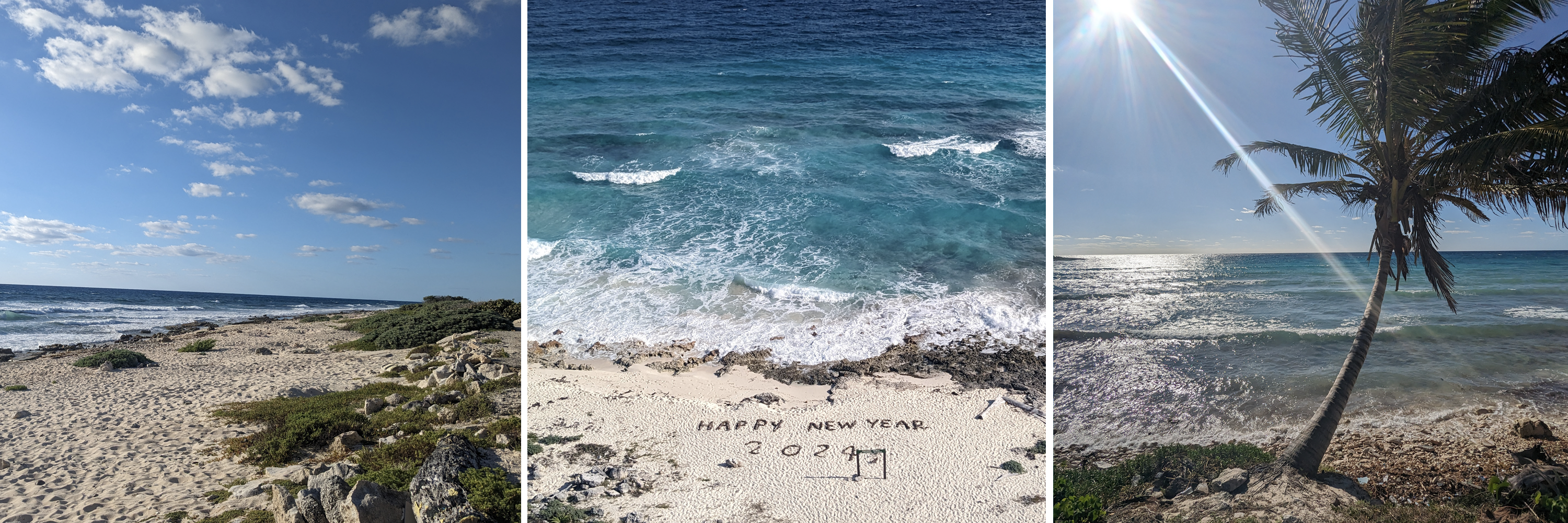
the beach on the wild side (the east side) of the island, view from the top of the Punta Sur lighthouse, lovely palm tree

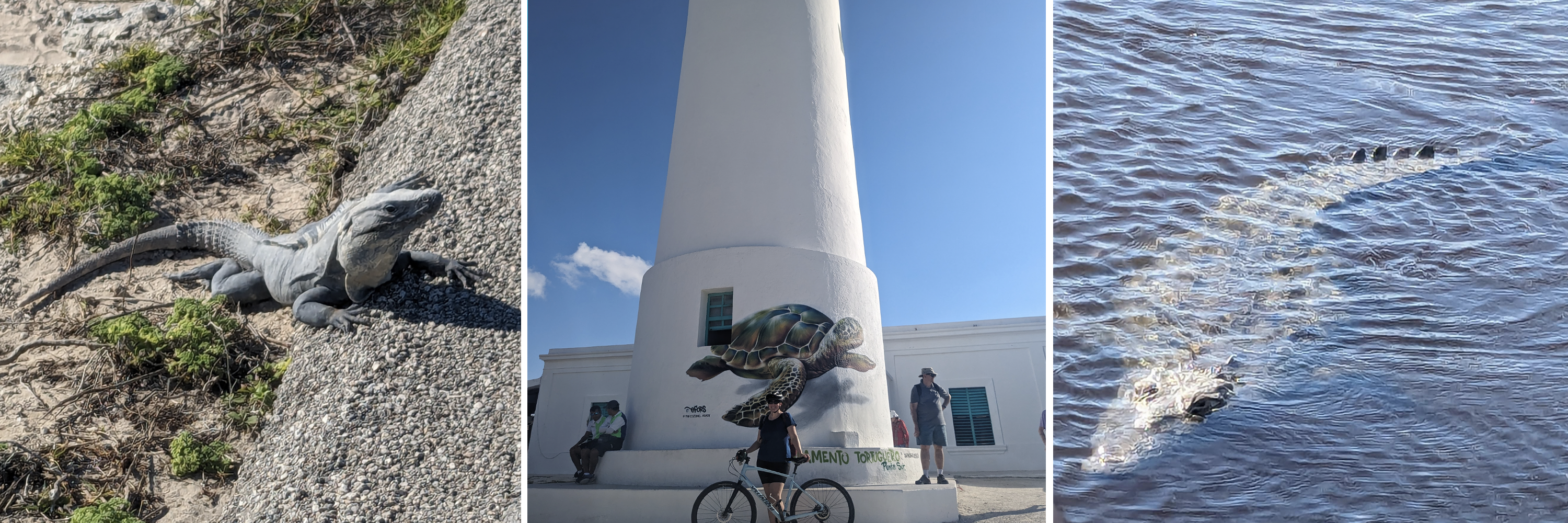
The rental bicycle wasn’t quite the right size, but the cyclopista is almost completely flat and is well-maintained. Punta Sur is a nature reserve and although one side is on the ocean, the other side is a brackish mangrove lagoon, which is home to several American alligators. I wasn’t sure if I should go, but I met some American bicyclists in the Rasta Bar and they convinced me my tires would be okay on the pothole-filled dirt road, so off I went.

black spiny-tailed iguana on the cyclopista, me next to Faro Celarain (lighthouse in Punta Sur), an American alligator in the nearby lagoon

There used to be a very nice reef on the ocean side of Punta Sur, but it has clearly seen better days. It took me awhile to realize that a buoy way offshore was the marker for the start of the old reef. Once I figured that out, I found a lot more underwater life.

snorkeling in Punta Sur: red cushion sea star (not red, definitely orange), queen conch (zoom in and you can see its eyes), Guilding’s sea star

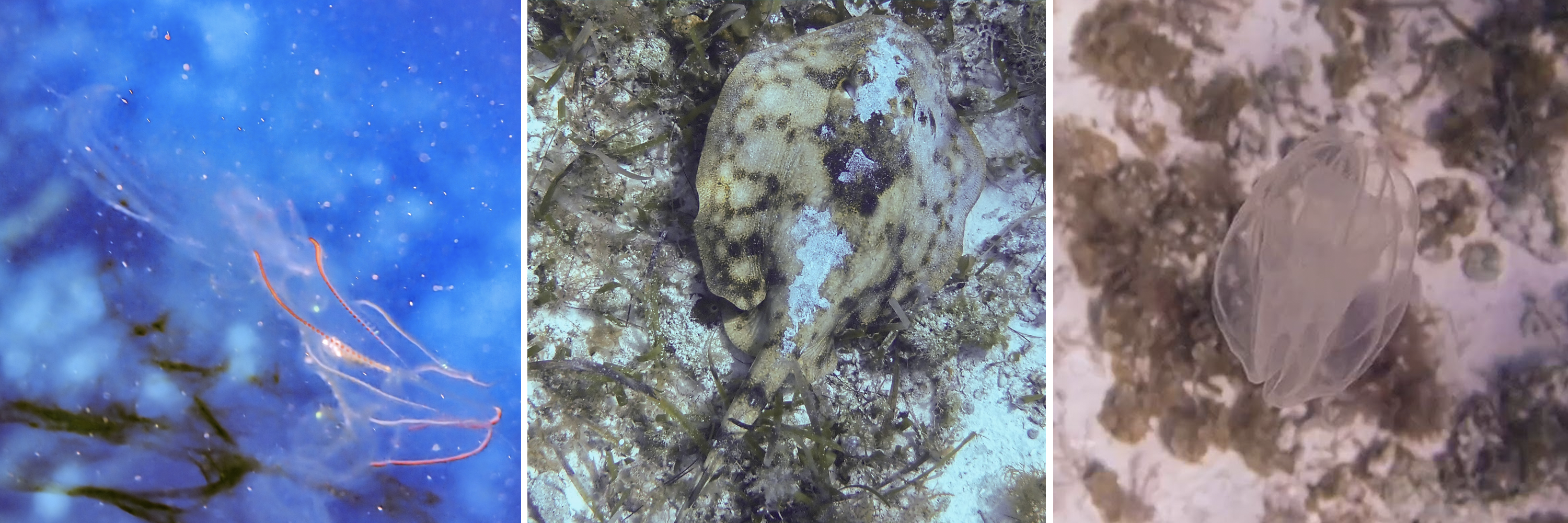
I also took a boat tour out to El Cielo and the reefs we went to before it were just teeming with ctenophores. These comb jellies are incredibly difficult to photograph and all of the ones I saw were iridescent (not bioluminescent), but I only got clear colors in one photo.

ctenophore, yellow stingray, another ctenophore

netted barrel sponge (these are huge!), another red cushion sea star (definitely not red), and a brown encrusting octopus sponge (what a great name)

While snorkeling around at the Money Bar, I found this brassy drummer defending what seemed to be its territory (a float in the water). It was aggressively fighting off any fish that came near and was showing the black and white dotted pattern. It eventually swam away and slowly lost its coloration, turning back into a shiny fish. I’ve never seen anything like it and now I want to know everything about how fish skin changes colors. I’ve taught about cephalopods and chromatophores for years but I had no idea that fish could do the same thing.

brassy drummer (in various stages of coloration)

And here’s the food update section since folks ask what I’m eating. Honestly this whole section of Mexico is very vegan / vegetarian friendly. There’s even raw food places in almost every town. I’m really enjoying the fresh fruit juices for 30 pesos (less than $2/liter).

chilaquiles and fresh juice in Cozumel, view from the Rasta Bar on Cozumel, delicious vegan tacos from Veggie Veggie Street Food in Puerto Morelos

Empire State Trail

Buffalo to Brooklyn: Erie Canal Trail + Hudson Valley Trail

September 2023 – 762 miles

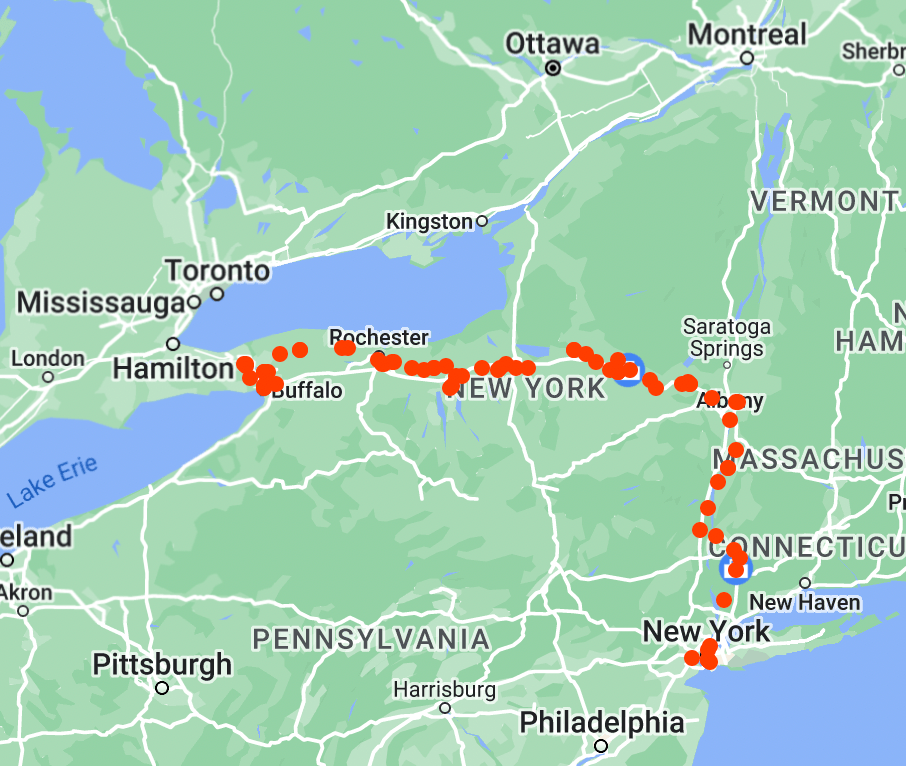
map of New York state with red dots showing stops along the way

Day 1: Buffalo Airport to Buffalo City

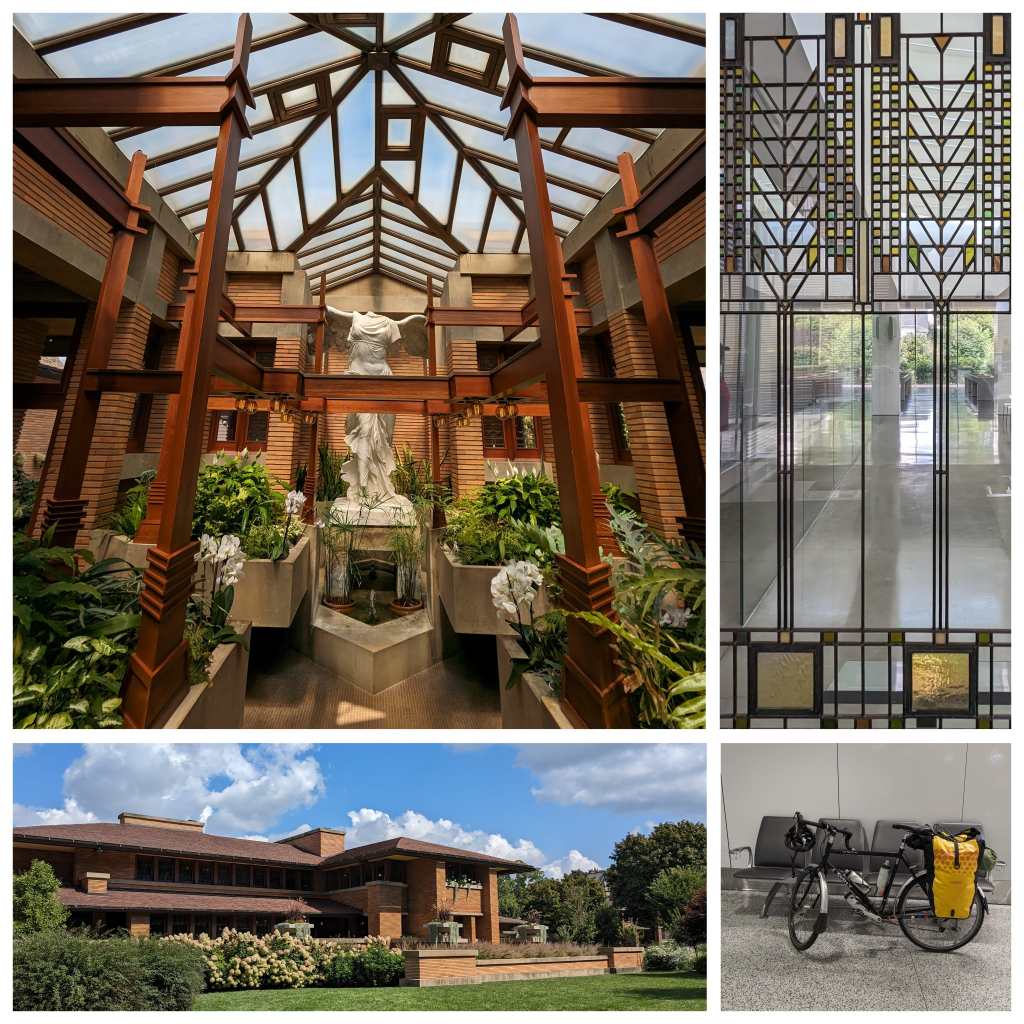
After flying a red eye across the country, I managed to assemble my bicycle in the airport. Yucky traffic and roads got me to the awesome Frank Lloyd Wright Martin House before I needed a long afternoon nap. 15 miles 🚲 

Day 2: Buffalo to Niagara Falls

Crossed over the Peace Bridge and cycled along a nice bike path next to the Niagara River until I got to the falls, which really are better from the Canadian side. 25 miles 🚲 

Day 3: Niagara Falls to Middleport

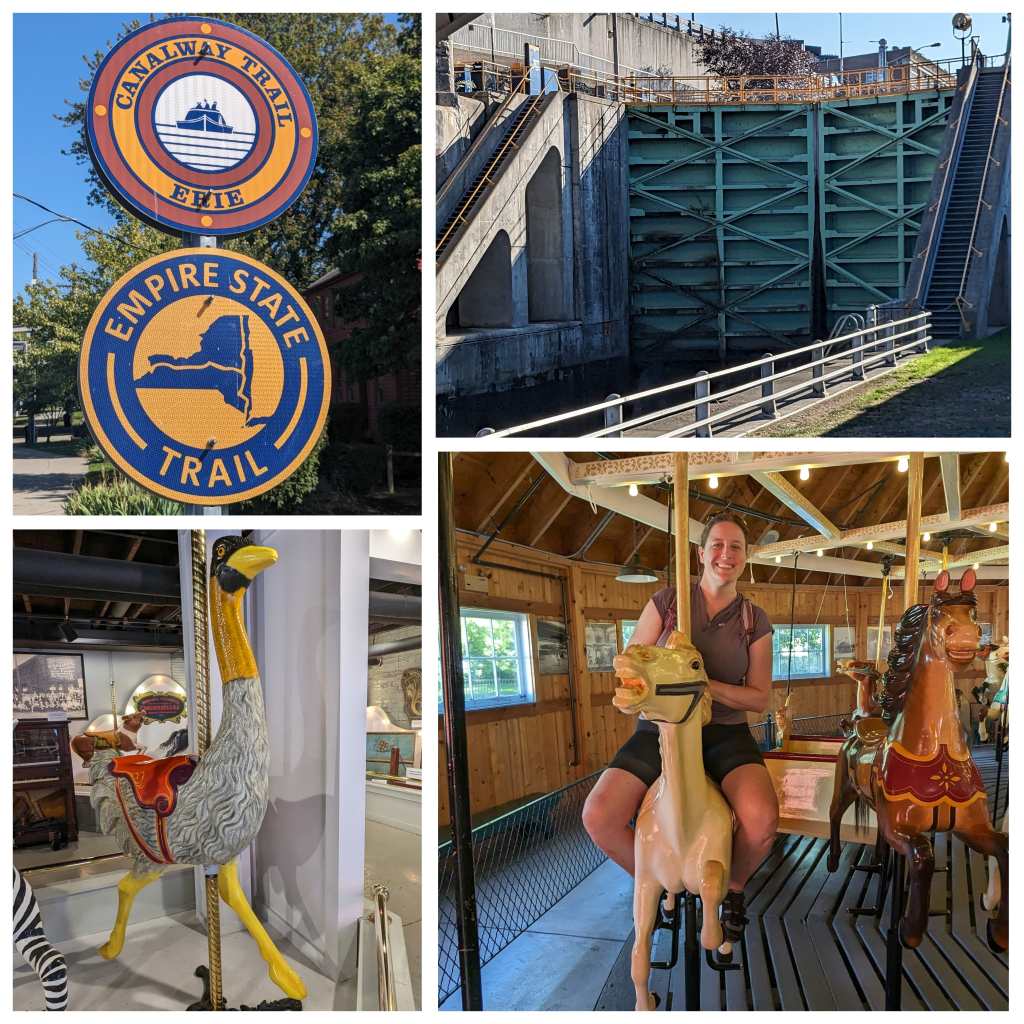
Cycled over the Rainbow Bridge and toured the American side of the falls before biking to the Herschell Carrousel Factory Museum. (There’s a high probability your local favorite carousel was carved in the town of Tonawanda.) Finally made it onto the Erie Canal Trail and learned all about how they operated the locks. 42 miles 🚲

Day 4: Middleport to Rochester

The first part of today there was lots and lots of corn, reminding me very much of the Midwest. Today’s interesting trail feature was the only road that goes underneath the Erie Canal. Boba Count = 1 and that sunset is the view from my campsite right next to a lock. 55 miles 🚲

Day 5: Rochester to Lyons

This morning the nice Puerto Rican lock keeper gave me some chocolate sandwich wafers after sharing his life story. Figured I’ve been on my bike too long so I spent the morning in a kayak on the Erie Canal! Currently camping behind a fire department next to a biker bar. 3 miles 🛶 35 miles 🚲

Day 6: Lyons to Montezuma

Took a tour this morning and learned all about the peppermint oil business at the turn of the century. Then headed off the main trail on a pilgrimage to the birthplace of women’s suffrage in Seneca Falls. So proud to be able to vote and be a part of the legacy of these women and men who fought to empower more people through the ballot box. 43 miles 🚲

Day 7: Montezuma to Fayetteville

Chilly, rainy day of biking but I made it through one week!!! Today was made a little better by all the gorgeous fall colors on the trail. I took a long winding detour around Onondaga Lake to visit a Salt Museum near Syracuse. Salt used to be a huge industry that paid for nearly half the Erie Canal through tolls. The brine they used to make the salt came from glacial melt dissolving halite that they then pumped up to the surface. 55 miles 🚲

Day 8: Fayetteville to Herkimer

Lots of time right next to the canal today which made for relatively flat and fast riding, which was good because it was a looooooong day. First Erie Canal on top and the current version of the Erie Canal on the bottom plus some flowers because sometimes my butt needed a break. 😊 77 miles 🚲

Day 9: Herkimer

Rest day. Hung out next to a creek and mined for some Herkimer “diamonds” (quartz crystals) and a stromatolite fossil across the street. My legs are very thankful. Back to the grind tomorrow. 0 miles 🚲

Day 10: Herkimer to Amsterdam

It was a bit hard to get myself back moving again this morning, but I did it. Stopped and saw the Arkell Museum (favorite painting was the Winslow Homer pumpkin piece) and had relatively smooth off-road riding much of the day. Tonight I’m staying in a freaking castle just because I can. 🏰 59 miles 🚲

Day 11: Amsterdam to Waterford

Beautiful weather with a nice lunch stop in Schenectady. It’s my last day on the Erie Canal. I’m camping tonight next to Lock 2. Tomorrow I turn south towards New York City through the Hudson Valley. 39 miles 🚲

Day 12: Waterford to Hudson

Headed out early with a short detour to see the State Capitol Building in Albany. The bike route today follows an old electric train route between Albany and Hudson. But soon after I left Albany, the rain just started to come down and it was relentless. After a few hours of being completely soaked (even with all my cool waterproof gear) I caved and got a hotel to dry out all my stuff. 51 miles 🚲

Day 13: Hudson to Poughkeepsie

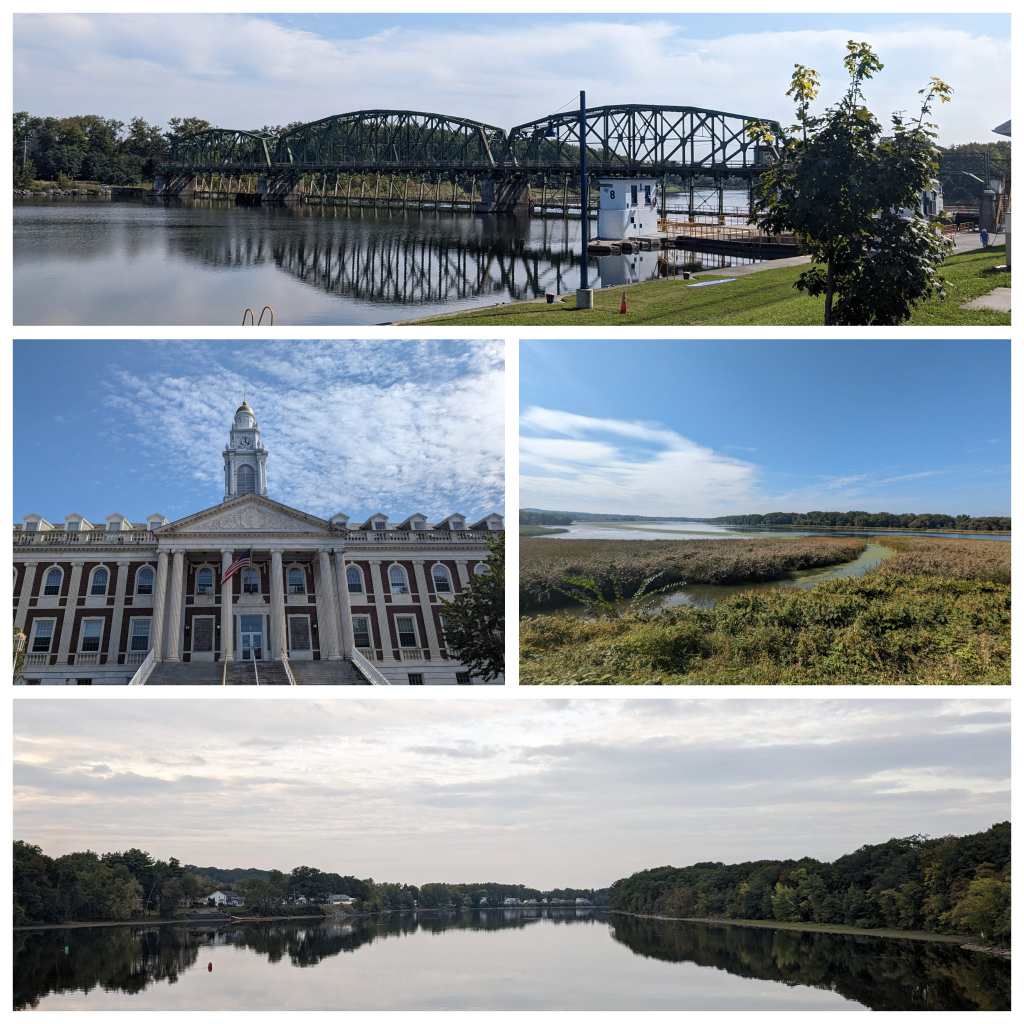
Chilly, rainy, windy morning on roads with fast moving traffic had me doubting my life choices. My right shoe has been slowly coming apart and today I couldn’t click out properly because of it and ended up falling over on a hill. I got just one good bruise out of it. Then the rain stopped and I had a glorious afternoon of rail trail riding through forests changing colors and losing their leaves. Also two big bridge crossings over the Hudson today. (And I got some ShoeGoo so I’m working on a shoe fix for the last couple days.) 65 miles 🚲

Day 14: Poughkeepsie to Briarcliff Manor

The Duchess Rail Trail is, in fact, as beautiful as everyone said it would be. See that gorgeous scene up top, wouldn’t you stop to take a photo? Well I did and when I stopped the bottom half my shoe got stuck in the pedal and the top half came off. That’s right. All my ShoeGoo action from last night didn’t help much. (Apparently you gotta wait at least 24 hours) I’ve had these shoes for over a decade so I think I’m going to let them go in peace. They’ve lived a good life. In the meantime, I’m rocking sneakers and I’ve got one day to go. Boba Count = 2. 62 miles 🚲

Day 15: Briarcliff Manor to BROOKLYN!!!

I made it! And I saw some friends including Emily, Anand & Jena. So grateful to all the people I met along the way and so thankful that my body and mind are healing. I said goodbye to some shoes and hello to a bunch of beautiful bruises and saddle sores. But I didn’t give up and I made it to NYC, biked over the Brooklyn Bridge, and couldn’t be happier. 49 miles 🚲 Total Miles = 762!

Seattle to San Francisco Bike Ride

Throwback to Summer 2018

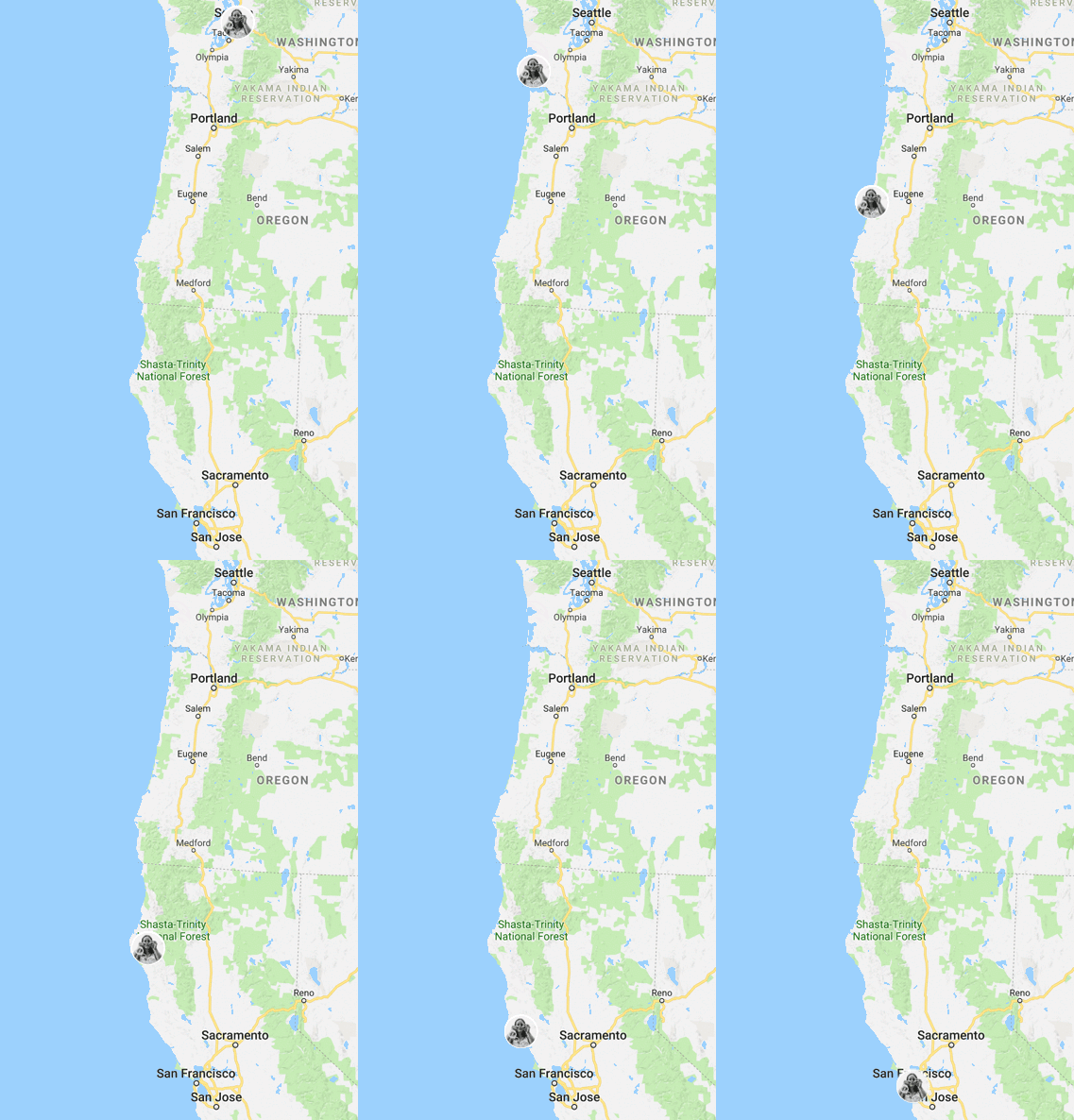
This bike ride happened in the summer of 2018 right before I started this blog. At the time, I posted daily on Facebook and I finally got around to collecting all those photos and commentary in one spot. During my 18 days of riding, I met only one other solo woman rider who was doing a much shorter trip and one group of women doing the ride. These rides are both extremely intense and also stunningly beautiful. I learned so much about how to align my body and my mind in really challenging conditions and still find space to laugh and love and appreciate. To track my progress and cheer me up along the way, my friend Glen made an animation of my daily progress:

Day 1: Seattle to Potlatch State Park

Ferry ride! Annoying flat until I finally removed the cause. Shoutout to Leo in Gorst who hooked me up with some shade and company while I fixed it. 37 miles. 🚴 #seattletosf

Day 2: Potlatch State Park to Twin Harbors State Park

Unfinished nuclear power plant, delicious smoothie, pick-your-own blackberries, a deer in my bike lane, and some really dirty roads. Made up my own route today but let’s say 78 miles.(Way too much for my second day, but I’m still moving.) 🚴#seattletosf

Day 3: Twin Harbors State Park to Bay Center

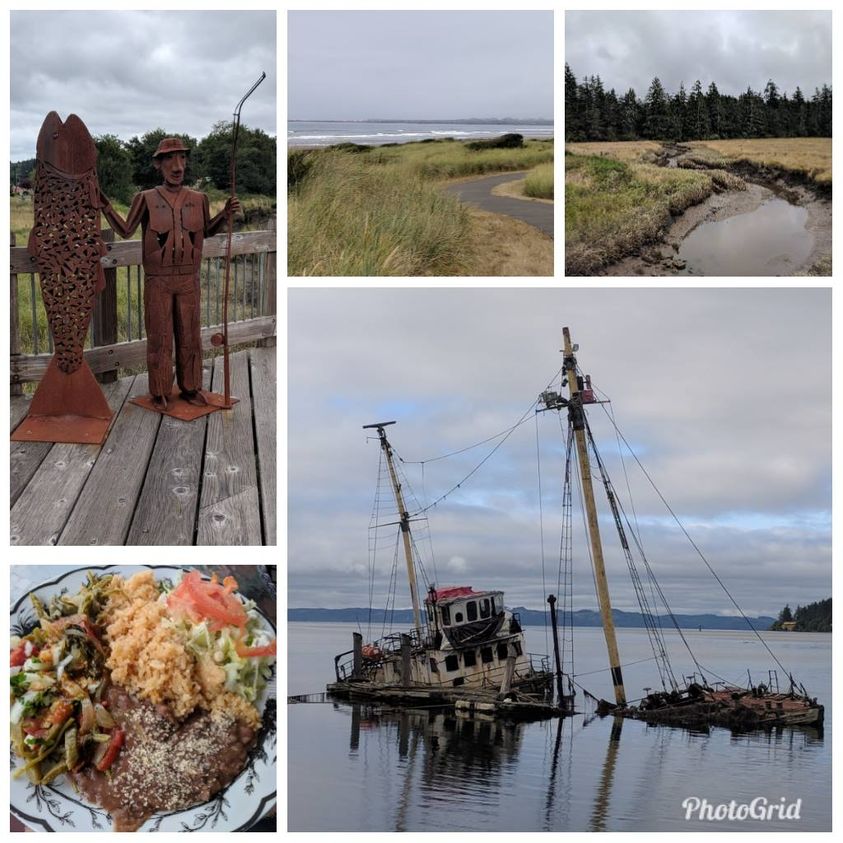
Started the day biking into Westport for breakfast. Lots of views of bays, rivers and estuaries. Some cool iron sculptures in Raymond. Don’t get in a fight with blackberries, they will win, I have the scratches to prove it. 60 miles 🚴 #seattletosf

Day 4: Bay Center, WA to Seaside, OR

The scary, mean Astoria bridge into Oregon is really as bad as everyone said it was. After four miles and a huge climb, my bike jacket was soaked with the sweat of exhaustion and fear. So happy to make it into Oregon, where there seem to be slightly better shoulders, but a lot more traffic. Seaside has an awesome aquarium and beautiful ocean views. 52 miles 🚴 #seattletosf

Day 5: Seaside to Cape Lookout

Scary tunnel. Lots of hills. Nice views of Haystack Rocks. (Remember these from the Goonies?) Delicious ice cream dinner courtesy of Tillamook Creamery. I’m going to sleep well tonight. 61 miles. 🚴 #seattletosf

Day 6: Cape Lookout to Beverly State Beach

2800 ft of elevation gain but some beautiful ocean views. The worst gallo pinto I’ve ever eaten. Oregon State Parks still has the best hot, free showers. 62 miles 🚴 #seattletosf

Day 7: Beverly State Park to Honeyman State Park

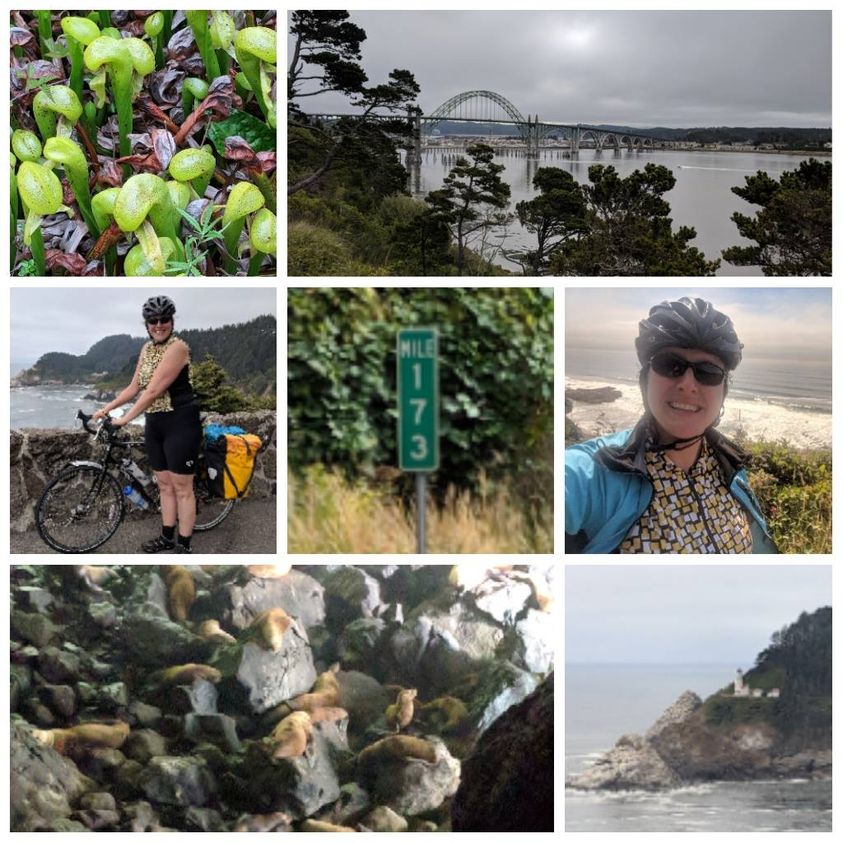
Walked over one bridge, rode through a bunch more. Saw sea lions and pitcher plants and apparently famous lighthouses. Also that mile marker shows that I’m officially over half way through Oregon! 61 miles 🚴 #seattletosf

Day 8: Honeyman State Park to Sunset Bay State Park

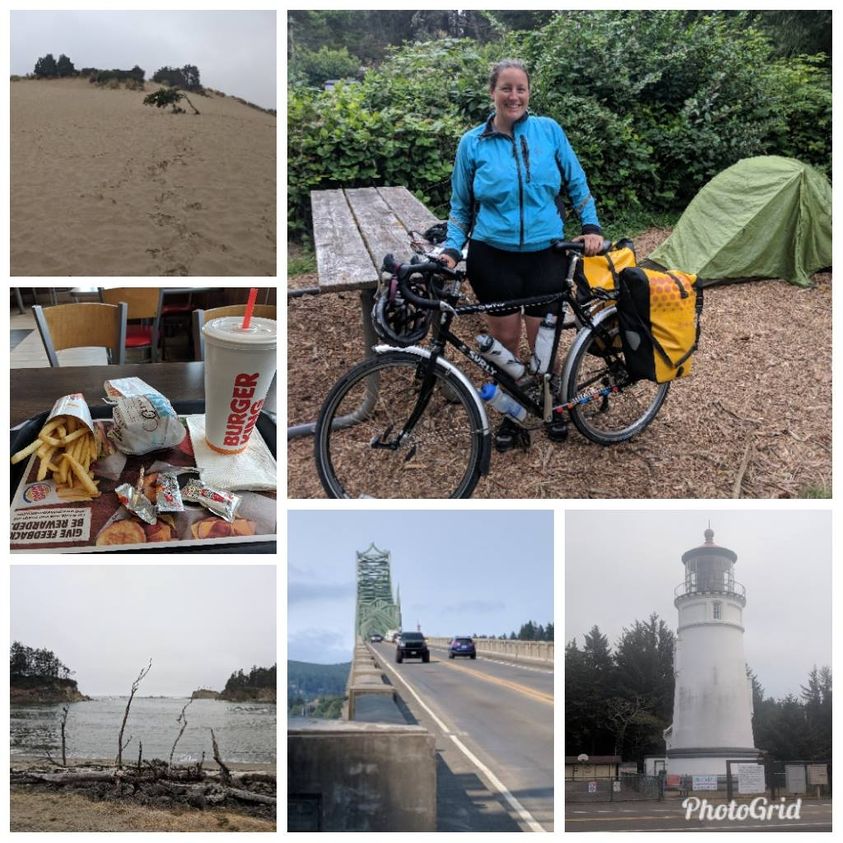
Woke up in the Oregon Dunes and set out on a day of taking care of business. Fortunately, not too hilly. I did decide to walk the crazy Coos Bay Bridge and had a totally acceptable veggie burger at BK for dinner. 56 miles 🚴 #seattletosf

Day 9: Sunset Bay State Park to Humbug Mountain State Park

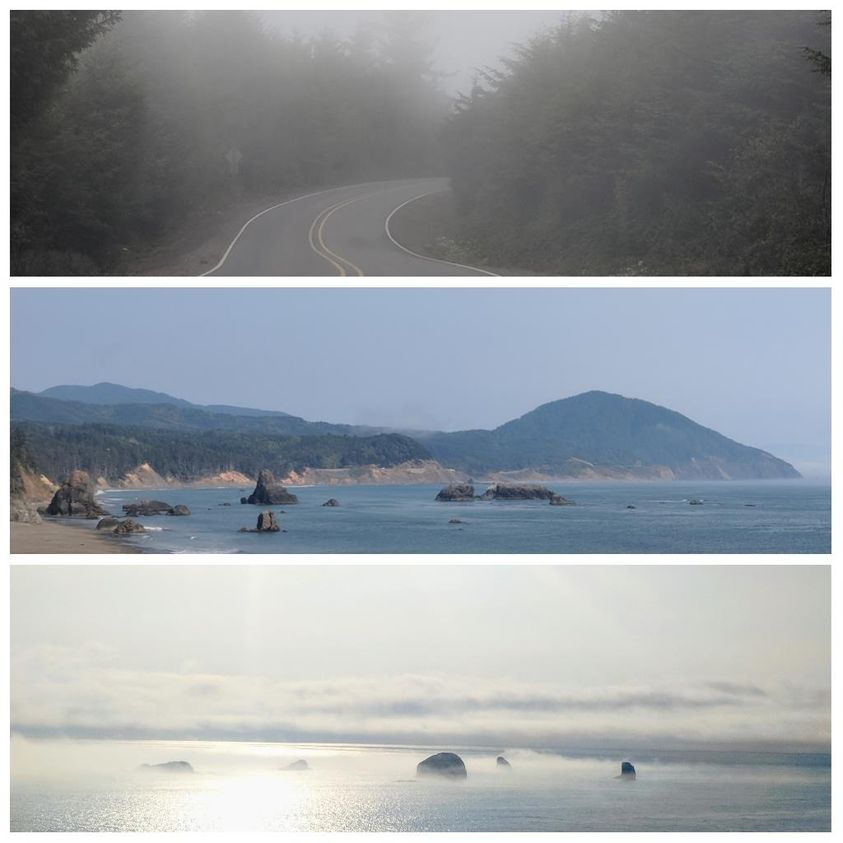
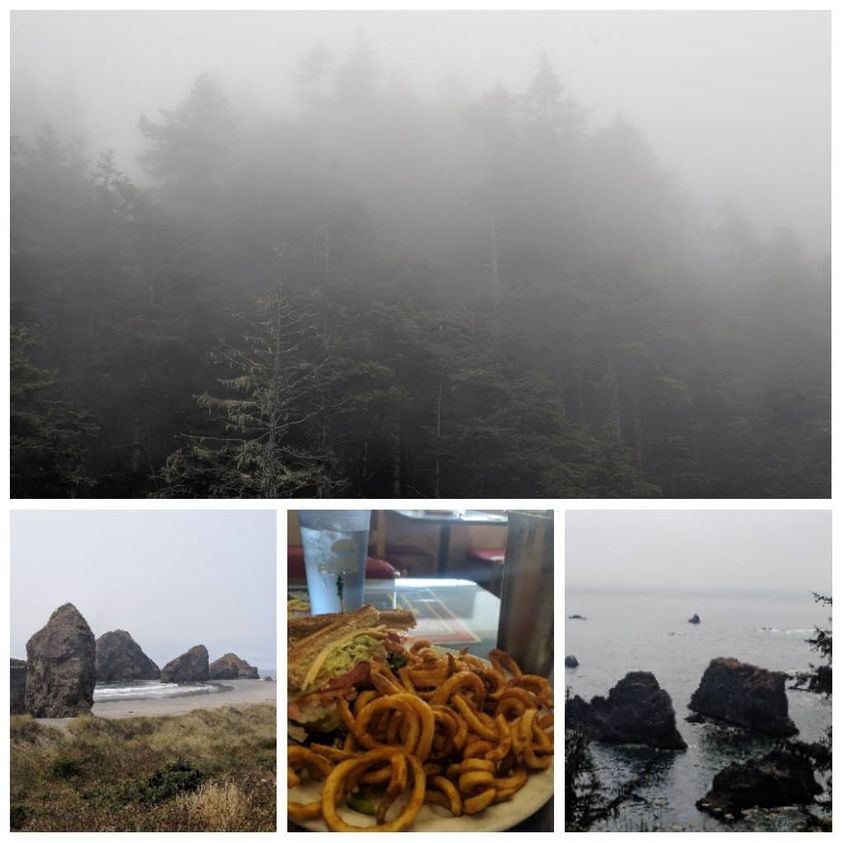
Climbed the Seven Devils in the fog. Ate a giant pizza for lunch because my dad told me yesterday I needed to eat more. 🍕 The last few miles were absolutely stunning views of the ocean. 57 miles 🚴 #seattletosf

Day 10: Humbug Mountain State Park to Brookings

Another foggy morning commute. Short day with a giant hill in the middle. Got a hotel tonight so I could do laundry, eat delicious Thai food, and generally feel refreshed again. California is only 6 miles away! 50 miles 🚴 #seattletosf

Day 11: Brookings to Elk Prairie Campground

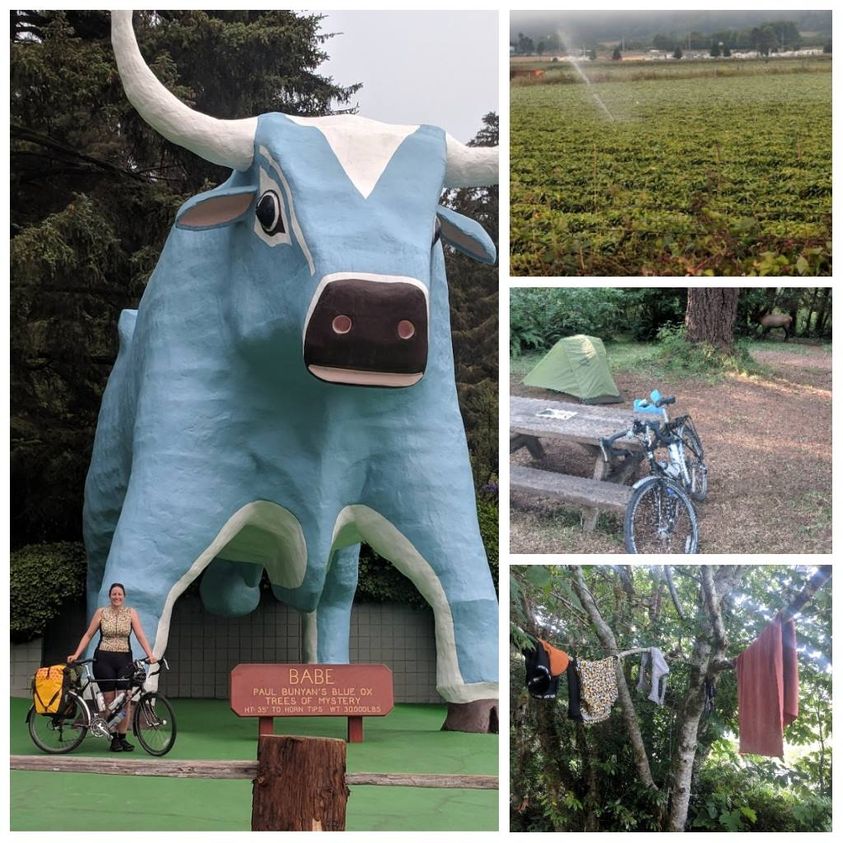
Woo hoo! I made it to California. Went through the Easter Lily capital of the US. Then biked a huge hill and my reward was this awesome photo with Babe the Blue Ox. There are elk and laundry happening in my beautiful redwoods campsite tonight. 63 miles 🚴 #seattletosf

Day 12: Elk Prairie to Eureka

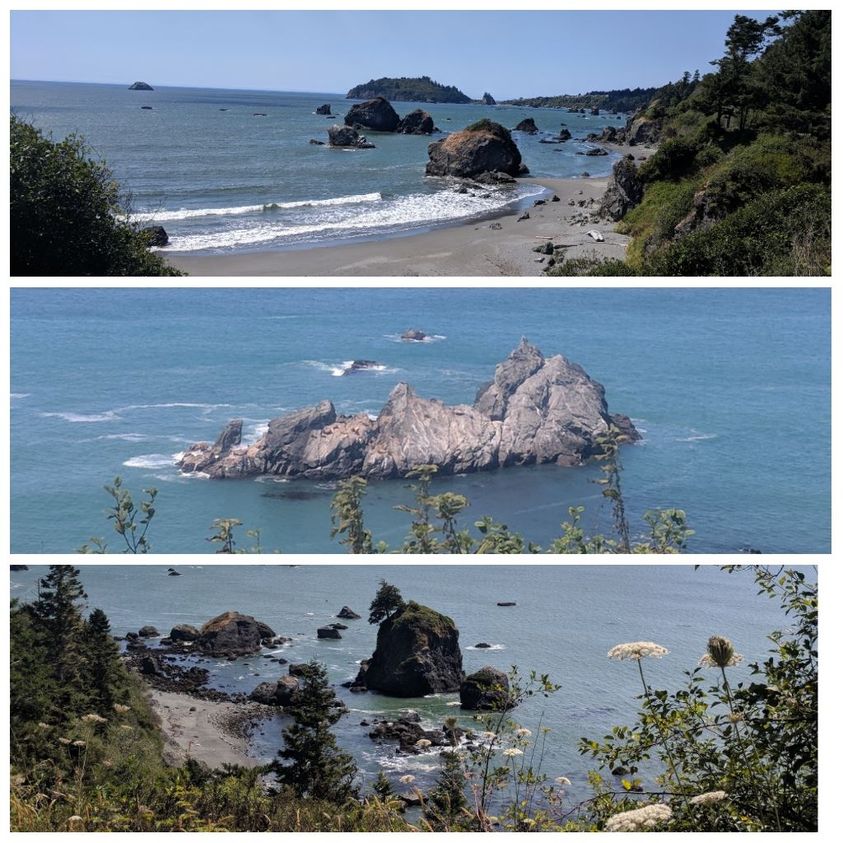
Today was supposed to be easy, but riding on the 101, and then crazy gravel roads off the freeway really took its toll. Curses were muttered, tears were shed, but I made it. Pretty scenery in some parts though. 😊 53 miles 🚴 #seattletosf

Day 13: Eureka to Burlington Campground

Followed some beautiful bike trails to some beautiful rural roads (and Victorian gingerbread houses) and ended in the amazing Avenue of the Giants. Definitely one of the nicer biking days of this trip so far. 56 miles 🚴 #seattletosf

Day 14: Burlington Campground to Standish-Hickey State Park

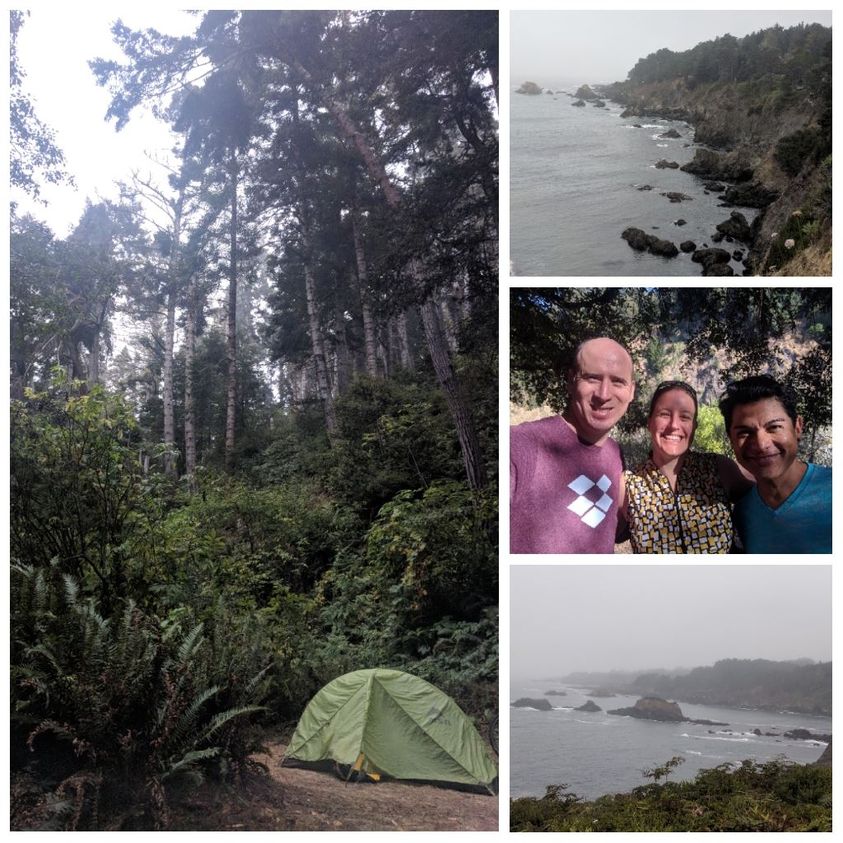
Redwoods are beautiful and shaded to bike through. Being away from the coast is really hot, so hot I had to have a milkshake. 😊 Best part of the day was hanging out on the Eel River in inner tubes with Enrique and Glen. ❤ 47 miles 🚴 #seattletosf

Day 15: Standish-Hickey State Park to Van Damme State Park

Hardest part of today was saying goodbye to my friends this morning after they made me the best breakfast I’ve eaten on trail. Went over the nefarious Leggett Hill (1950 ft) and then the rest of the day was chilly, cold, foggy riding on Hwy 1. I miss the warmth. 55 miles 🚴 #seattletosf

Day 16: Van Damme State Park to Gualala Point Regional Park

Beautiful scenic views on rolling hills all day long with no fog. 49 miles 🚴 #seattletosf

Day 17: Gualala Point Regional Park to Tomales

Started off from a beautiful campsite next to the Gualala River. Midday stop to see the first Russian settlement in California. Lots of elevation but I made it. One more day! 64 miles 🚴 #seattletosf

Day 18: Tomales to HOME!

Peaceful morning next to Tomales Bay. Took this beautiful bike trail across Marin before crossing the iconic Golden Gate Bridge without crashing into any tourists. Probably the fastest bike day of the whole trip. So happy to be home! 58 miles 🚴 #seattletosf

St. Thomas

This island was first Ciboney land, a subgroup of the Taino people who also settled Cuba, Jamaica, and Puerto Rico. They were later supplanted by the Arawaks and the Caribs. In the late 1600s, Denmark decided to claim the island as their own, bringing disease and decimating the local population. The first settlers belonged to the St. Thomas Reformed Church, which is how the island was given its name.

By 1673, the Danes had brought enslaved Africans to the island to work sugarcane plantations. For awhile, the largest slave market in the entire world was on St. Thomas. This was one of the corners of the triangle trade where sugar was sent to New England to make rum, which was sent along with other goods to Africa to buy more slaves. Slaves were emancipated here in 1848.

Fort Christian

In order to protect the land they had occupied, the Danish built a giant fort right at the bay. The tour guide told me that its placement was a joke, easily overrun with no ability to lookout for potential attacks.

pictures of Fort Christian: 1 - view from roof, 2 - view of front facade (a reddish building with arched windows and a clocktower), 3 - cannon on top of roof overlooking bay

inside, outside and a cannon on top

In 1874, the fort was turned into the local jail and used for that purpose until 1983. The most interesting part of the tour was the discussion of the bathrooms and how they had only a tiny opening for someone to squeeze into so most people had to drop their drawers in full view of the officers. The female shower was outdoors and was in a perfect line of sight from the main office.

1 - floor showing a tiny opening to a bathroom, 2 - me looking sad and holding onto a gated door, 3 - a cavernous room with only one small window shining light

remnants of walls built showing the outline of the bathrooms, me locked up in a jail cell, room for 5 female prisoners

Mangrove Lagoon

One of the most beautiful sights on St. Thomas is a well-preserved red mangrove lagoon on the south side of the island. Mangroves are important for helping to prevent the most disastrous effects of tropical storms, especially storm surge. Boats actually come into the mangroves for shelter when hurricanes are coming. Unfortunately, these aren’t always enough. In 2017, Hurricane Irma hit the Virgin Islands then just a few days later Hurricane Maria came through. The first one had tons of high winds and the second brought endless rain. All of the islands are still recovering from the devastation.

Mangroves also do a great job of filtering pollution out of the water and prevent land from being lost to erosion. They also providing a protective nursery for small creatures that contributes to the larger coral reef ecosystem. I’ve seen mangroves before, and always thought of them as swampy and full of muck. However, the mangrove lagoon I swam in was crystal clear and it turned out to be an absolutely delightful experience.

top: four-eye butterflyfish, banded coral shrimp, beaugregory damselfish
bottom: blunt spine brittle star, bristle ball brush algae, red cushion sea star

Water Island & Secret Beach

There are three main islands in the United States part of the Virgin Islands – St. Thomas, St. Croix and St John. However, there is another island, just south of St. Thomas, known as Water Island – which is the fourth largest. There are a bunch of other islands that are even smaller including the island known as Little Saint James, which Jeffrey Epstein converted into his private island of sex trafficking horror. More than one tour guide pointed it out.

While hanging out at Honeymoon Beach on Water Island, I started the snorkeling-oriented part of my vacation. It’s always fun to find organisms that I’ve never seen before. Squirrelfish were new for me and so was this cool looking fireworm, a type of segmented polychaete worm with sensory bristles. When frightened, most bristle worms can release them as a defensive maneuver and the bristles are apparently quite painful when they get lodged into human skin.

saddled blenny, common squirrelfish, orange fireworm

After finishing up on the rocky side, I swam out into the middle of the cove and came upon a couple of turtles that were just hanging out eating seagrass. Much to my surprise, they also had animals hanging out on them! These are remoras, a type of fish that have a giant sucker that can attach to the skin or shell of another organism. At first scientists thought they were cleaner fish eating algae and detritus on the surface of the host, but apparently they mostly consume the feces of their host organism. I’ve seen photos of these on sharks and whales, but never on turtles. What was really interesting for me was watching them detach when the turtle came up to breathe, which is every 5-10 minutes, and then reattach when the turtle came back to the seafloor. For this reason, turtles must be a less than ideal host.

remoras on a green turtle, green turtle, more remoras

There’s a lot of beautiful beaches in St. Thomas, but Secret Beach is pretty great. There is good snorkeling on both sides of the cove, a good restaurant, and not too many people. I found some nice corals and got to see a flounder swimming which is always fun.

top: closeup of great star coral, closeup of great star coral, boulder brain coral
bottom: critically endangered elkhorn coral, peacock flounder hidden in sand, peacock flounder swimming

Birmingham, Alabama

Note: I took this trip during Thanksgiving break last year, but am just getting around to posting about it now.

My good friend Shane moved to Birmingham after getting fed up with the rising prices of the Bay Area. He grew up about an hour away and was ready for a new beginning.

birmingham pano

Panoramic view of the city of Birmingham

Birmingham made its name from the production of iron. The geology of the surrounding area contains not only iron ore, but also coke (a type of coal), and limestone. This unique combination of locally sourced material, made it an ideal place for business. All three of these ingredients were put into a blast furnace and heated up to high temperatures. The melted iron would be directed into molds. Before they were broken apart, these molds shaped the iron into blocks looked like small piglets suckling the mother pig, which is how the name pig iron was derived.

birmingham4

pig iron ingots, 56-foot high statue dedicated to the Roman god Vulcan, molds for making pig iron

Sloss Furnaces

One local company that produced that iron was Sloss Furnaces, which was open from 1882-1971. For years, Sloss used Black convict labor to undertake the backbreaking and exhausting work of feeding the blast furnace. Make no mistake, this was slavery under a different name. Local white cops worked in collusion with the company so that whenever workers were needed, the police would arrest people under the charge of “vagrancy.” They then had to work off their supposed violation at the furnaces where injuries were common.

sloss pano copy

view of Sloss Furnaces

Shane told me that back in the day, this place was used for raves and even now, a haunted house is held there every Halloween. The furnaces are now open to the public and visitors can wander into almost every part of the old industrial site.

birmingham2

bottom of furnace, elevator to dump off raw materials to the top of the furnace, side of blast furnace

birmingham8

Shane and I underneath some factory equipment, Shane looking cute, Sloss water tower

Ruffner Mountain

Shane sent me out on a day of wandering on one of his favorite nature spots in the city, Ruffner Mountain. This was an old iron mine that was generating at its peak about 200 tons of iron ore for Sloss Furnaces. It was originally going to be developed into apartments, but a group of local activists got together and now it is a private nature reserve.

ruffner

beautiful finds on Ruffner Mountain

ruffner2

sunset on Ruffner Mountain

Civil Rights Movement

In addition, Birmingham is known for both the victories and tragedies that occured there during the Civil Rights movement. After being arrested during a protest in April 1963 and frustrated that other clergymen were not engaging or supporting direct action, Martin Luther King published his infamous Letter from a Birmingham Jail.  One line in particular continues to echo forward in time: “Injustice anywhere is a threat to justice everywhere.”

birmingham7

boiled peanuts, Birmingham Jail, shoes from a girl who was killed in the 16th Street Baptist Church Bombing

The famous photo of a teenage boy being attacked by a police dog is from those 1963 Birmingham protests, as are numerous photos of fire hoses being turned on young people. After a solid month of filling the jails with protestors, sometimes with young kids like in the Children’s Crusade, the city eventually agreed to desegregate lunch counters, restrooms, drinking fountains and fitting rooms and to hire black people in stores.

Later that year, angry members of the KKK blew up the 16th Street Baptist Church that killed four young girls: Addie Mae Collins, Cynthia Wesley, Carole Robertson, and Carol Denise McNair. I’d heard of this moment, but it wasn’t until I was in Birmingham in the Civil Rights Institute that I could feel the weight of that loss. People had fought so hard and had finally made change, only to watch these young members of their community be murdered in reactionary violence. The similarity to what’s happening today is eerie. The echoes of the past continue to resonate today.