Velha Goa
After my yoga training, I headed back into the heart of Goa and signed up for a walking tour of Velha Goa (Portuguese for “Old Goa”). This city started out as a Muslim sultanate, but the Portuguese came in with guns ablazing and conquered it in 1510. Most of the Catholic orders sent priests here after it was conquered and each separate order set up a church. I felt, in many ways, like I was walking through an old European city. There’s a common refrain among travelers in Europe about being tired of touring churches and this is probably the only place in India where the same thing might be heard. My walking tour featured five churches that were all within a couple miles of each other. All of the churches and convents in the area are designated a UNESCO World Heritage site.

Viceroy’s Arch, old city walls dating back to the sultanate, closeup of fancy door work
St. Cajetan Church was built by Italian Catholics. Although the Portuguese initially didn’t want the Italian priests to construct a church, one of them went to Portugal and convinced the king to let them build it in the interests of spreading Christianity. My favorite part was finding a garuda carved into the pulpit. As a way of converting locals, symbols from previous beliefs and ideologies were integrated into the architecture.
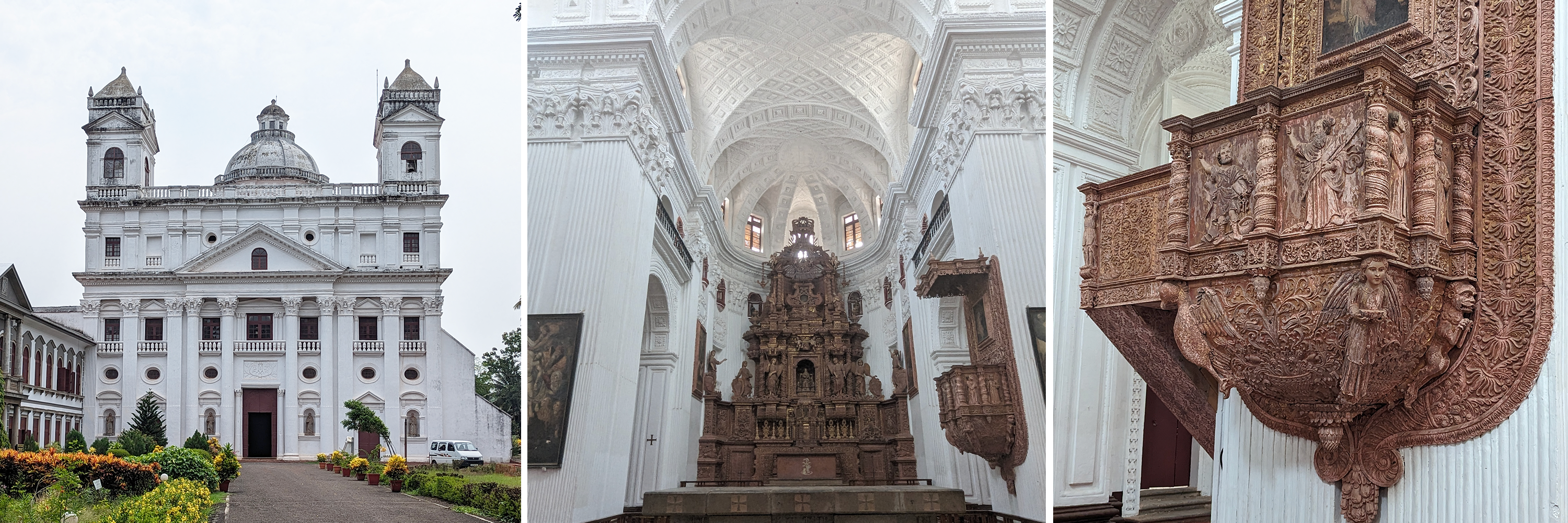
St. Cajetan Church: from the outside, big domed ceiling, upclose of the pulpit with garuda motif
The next two were both built by the Portuguese. The Sé Cathedral is known for two things: it is the largest church in India and it is unsymmetrical since one of the towers fell down and was never rebuilt. The Church of St. Francis of Assisi was built by Portuguese Franciscan priests. The doors leading into this church had fun carvings of cashew and pomegranate fruits.

Sé Cathedral, close-up of fruit motifs in door frame, Church of St. Francis of Assisi
Next up was the tiny Portuguese Chapel of St. Catherine with a lovely brick interior and a colony of bats roosting in the ceiling. Last, but certainly not least, was the famous Basilica of Bom Jesus, built by Portuguese Jesuits. It is a large, sprawling building and many believers make a pilgrimage to visit. The first Jesuit missionary to Japan, St. Francis Xavier, is entombed there.

Chapel of St. Catherine, view of the altar inside St. Catherine, Basilica of Bom Jesus
Goan Food
After the tour of Old Goa, I visited a spice plantation outside of town. I took lots of photos, but most of the plants weren’t actually fruiting when we were there so my pictures aren’t worth sharing. We did get to see kokum, cinnamon, and black pepper trees as well as lemongrass and cardamom plants. Kokum fruits are related to mangosteens and are quite tasty in juice form. The farm also offered a lovely lunch served with a refreshingly salty and sweet drink known as kokum curry and samples of cashew feni, alcohol made from the cashew fruit. To help us deal with the heat, at the end of the tour, they poured a ladle full of scented water down the back of each of our shirts. Although momentarily refreshing, it was so hot our clothes were dry less than fifteen minutes later. Indian heat is no joke.

fresh young coconut, spice plantation lunch, kokum curry, pav bhaji street food
 Meandering Marbles
One thought on “Old Goa”