I stayed in Mérida for three weeks, taking Spanish classes and wandering around the city. The colonial influence is strong here and old money still has a deep hold on the community. In Mexican slang, the word fresa (literally strawberry), refers to spoiled, young people with a lot of privilege and parts of this city definitely have fresa vibes. At one time, the Yucatan was the one of the richest states and Mérida was one of the richest cities in Mexico thanks to the henequen industry, which, of course, I’d never heard of until I got here. Henequen is made from a type of agave (different species than the one used to make tequila), that was twisted into ropes, cords and fabric. People made a lot of money from the plant and their ruthless exploitation of workers. There’s actually a sizeable Korean population in Mérida because of this industry. Originally, a bunch of Koreans signed on to work 5-year contracts on henequen plantations, but earned almost nothing, were frequently beaten, and often didn’t even make enough money to return home. So they stayed and their descendants still live here.
Architecture
Because of the old money in this city, there’s a lot of European style architecture in the rich enclaves of town. Just outside the city center, the architecture switches to square cement houses built right next to each other, forming one contiguous wall on each block, interrupted by fancy windows and doors.
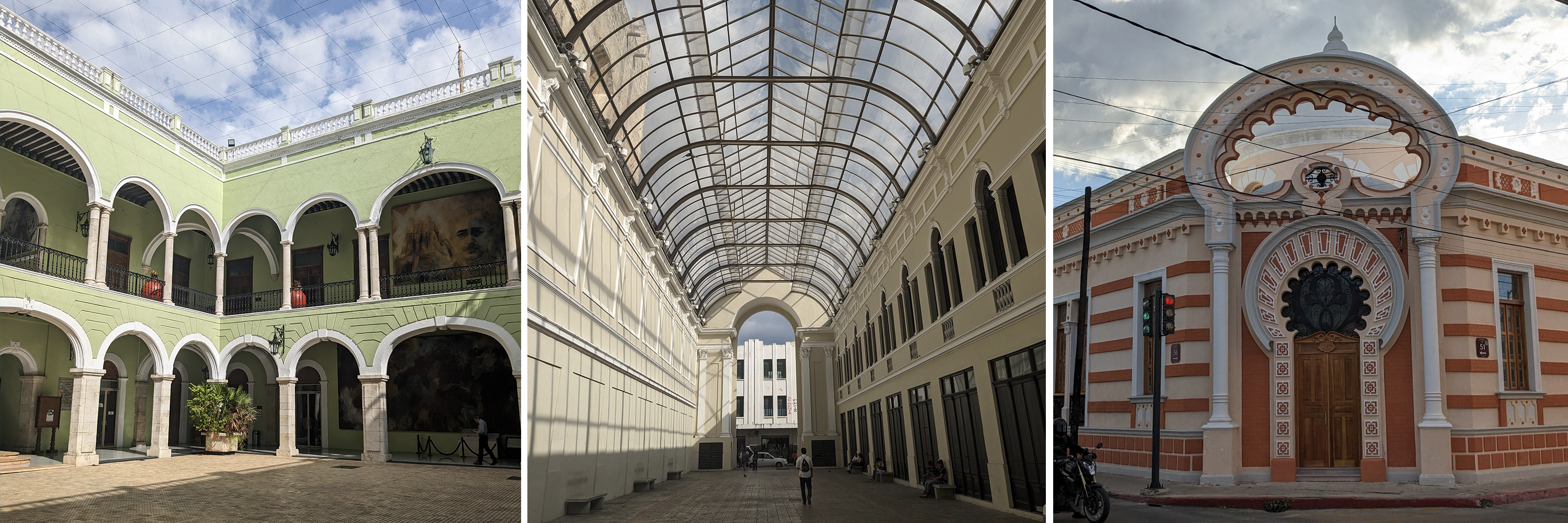
City Center: Palacio de Gobierno, Pasaje Revolución, fancy corner house (by the way, all street corners have this diagonal cutout)

Paseo Montejo: El Minaret, Monumento a La Patria, El Palacio Cantón (home to the Regional Anthropology Museum)
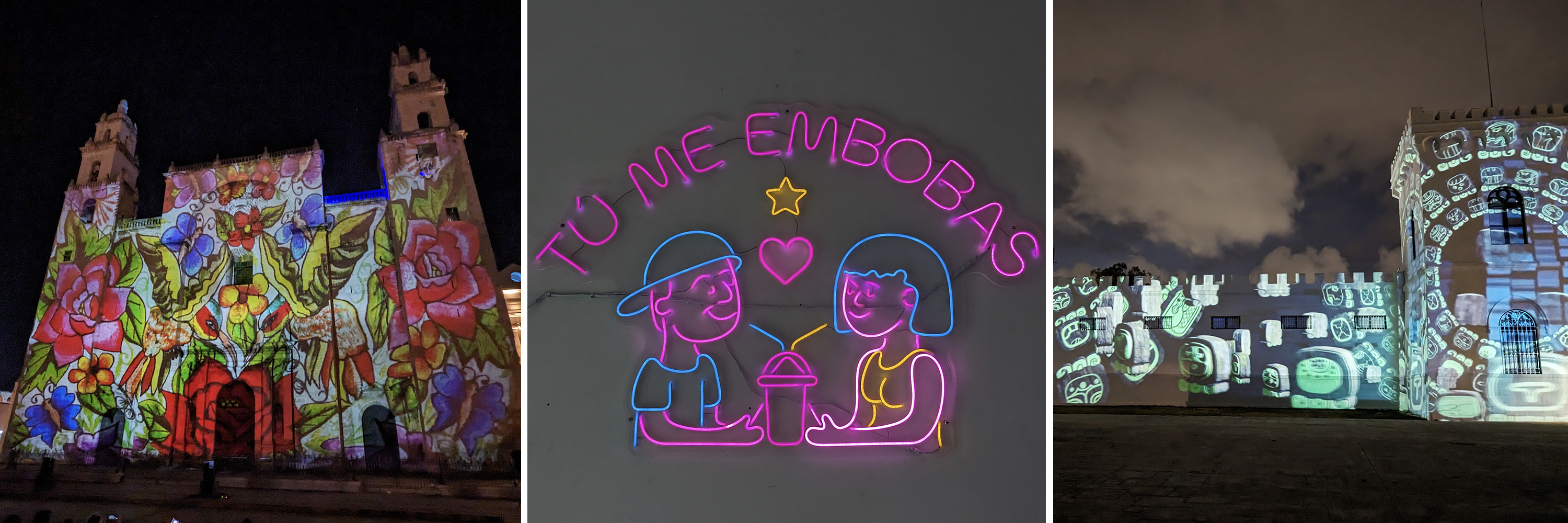
Mérida in Lights: Catedral de San Ildefonso, neon boba sign, old penitentiary lit up with Mayan calendar glyphs
Art
Mérida is definitely a city of museums and lots and lots of art. Every day after school was finished, I would try to get to another museum or gallery.
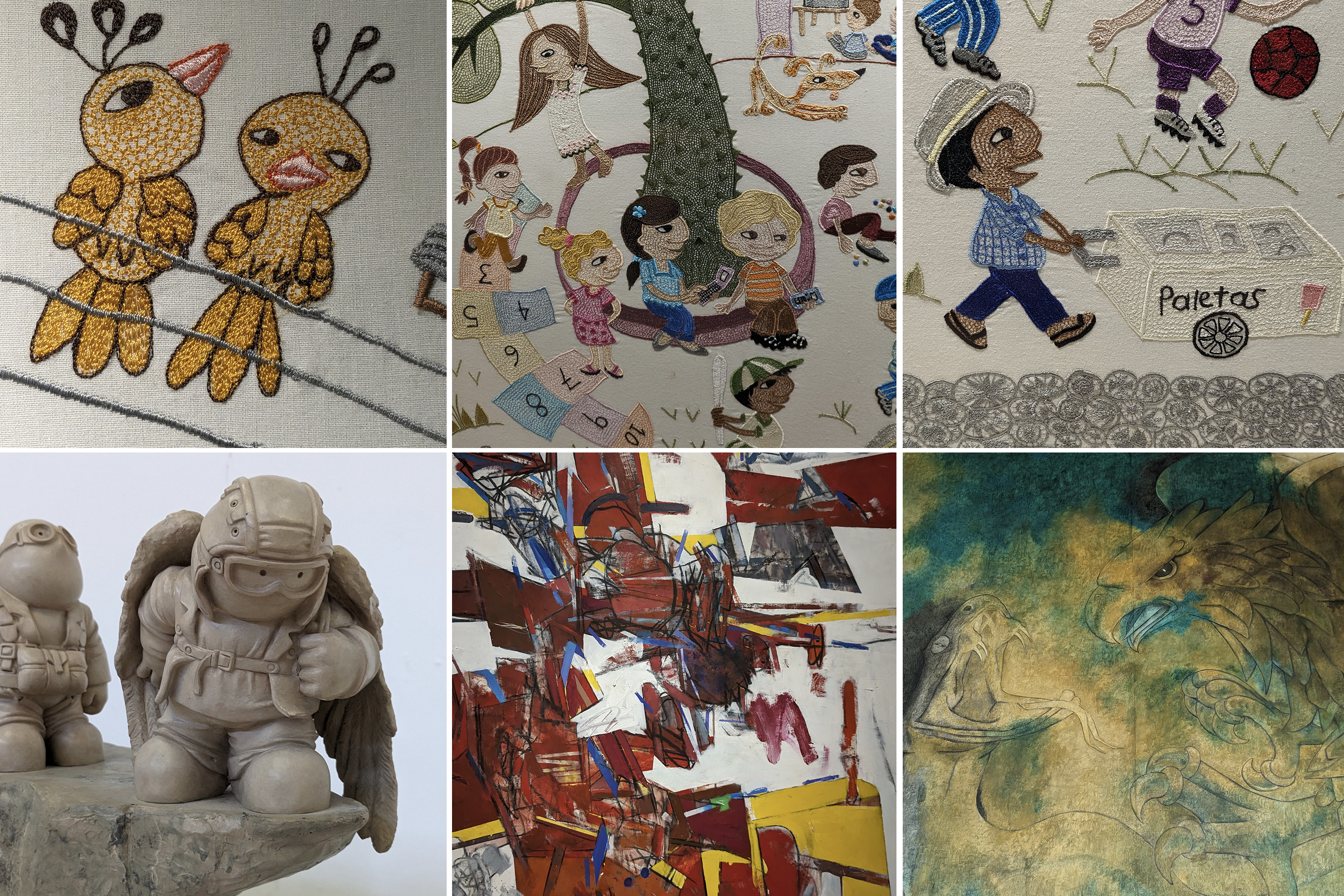
top (l to r): embroidery depicting typical Yucatecan scenes from the Gran Museo del Mundo Maya
bottom (l to r): sculpture in MACAY (Contemporary Art Museum), painting from MACAY, painting in the Palacio Gobierno by Fernando Castro Pacheco
Food
Of course, tacos are available on every other street corner, but the Yucatan has some special regional dishes. Salbutes are basically tacos, but have a puffier base than a regular tortilla. Panuchos are similar to salbutes, but are filled with beans and then fried a bit. There’s some differences in the toppings, but I’m vegetarian, so those subtleties were lost on me. Chaya, the tree spinach I briefly mentioned in an earlier post, gets tossed into a lot of dishes.
Onto the desserts: marquesitas are crepes filled with your choice of sweet toppings (nutella, cajeta (caramelized goat milk), or cream cheese), a bit of fruit (bananas and strawberries are common), and then topped with lots and lots of cheese before being rolled up into an easily portable street treat. Champola is also a speciality of Mérida in particular. It’s simple a sorbet covered in milk, but not blended together. The best flavors are guava, coconut, and mamey (a fruit with a bright orange flesh that I’ve only had while traveling, but apparently does grow in Florida and Hawai’i).

Mayan styled salbutes (with chaya and pepita seeds), vegan tacos de birria (not Yucatecan, but these were amazing), marquesita with nutella and banana
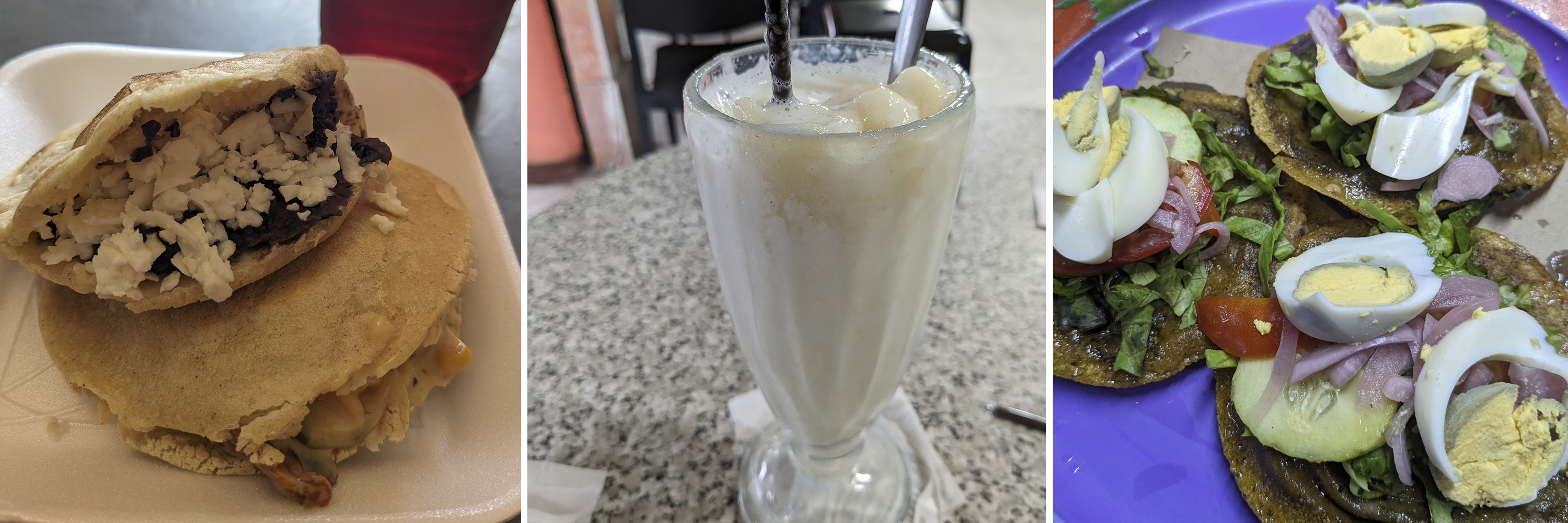
gorditas (stuffed with cheese and beans and mushrooms), coconut champola, panuchos with eggs
 Meandering Marbles
I had no idea about the Korean worker connection! What fascinating history.
LikeLike